St. Croix Weather by Month: NOAA Temps, Rain Days, Sea & Wind
St. Croix guides · Plan your trip24 min readUpdated Aug 2026
Warm, breezy and steady all year: NOAA airport normals for all twelve months, sea temperatures, the trade wind and the Christmas Winds, and sunrise on the East End.
St. Croix is warm and breezy all year: afternoons in the mid-80s to about 90°F, nights in the 70s, a sea between about 79 and 85°F, and a trade wind from the east that keeps it comfortable. This guide puts numbers to it, month by month: the NOAA 1991–2020 climate normals for St. Croix's airport, with average highs and lows, rain inches and days with rain, plus sea temperature, wind, sunrise and sunset, and how the East End differs from the airport and the rain forest. For the season-by-season planner, read the best time to visit, which leans on these figures. Every figure here has a source, and where sources disagree we say so.
How to read the numbers
Almost every St. Croix climate figure you will find online, including ours, comes from one weather station: Henry E. Rohlsen Airport, on the south shore just west of the island's middle. NOAA's National Centers for Environmental Information publish 30-year "climate normals" for it, station VQW00011624, currently the 1991–2020 set. Those normals give an average daily high and low for each month, an average rainfall total, and an average count of days with at least 0.01 inch of rain. We pulled them straight from NCEI's data service for this guide; the record extremes in this guide go back to 1951.
Three notes before the table. First, a normal is a 30-year average, not a forecast: any given February can be wetter than any given October. Second, "rain days" count anything measurable, so a five-minute trade-wind shower at dawn counts as a rain day; that is how a winter month can log 15 or more rain days on about two inches of rain. Third, the airport is not the East End. The airport sits on the flat south coast; the villa sits on the sunny, breezy eastern tip, which gets less rain than the airport. Treat the temperatures as good for the whole island and the rainfall as an upper bound for the East End.
Sea temperature is a different kind of number. There is no NOAA normal for it in the same table, so we use ten-year monthly averages for Christiansted and note where one model runs about a degree cooler. Sunrise and sunset come from Christiansted tables cross-checked against the standard NOAA solar-calculator algorithm; the villa is about six miles east of town, which shifts them by less than a minute. Wind, humidity and cloud figures come from an airport-weighted model, with the airport station weighted at 95 percent, and they are the softest numbers here.
87.0°FAirport annual high
74.5°FAirport annual low
37.0 inRain per year
12–16 mphTrade wind
79–85°FSea range
The year in one table
Here is the whole guide in twelve rows. Highs, lows, rain and rain days are the NOAA 1991–2020 normals for Rohlsen Airport, quoted to the tenth as published; sea temperature is the ten-year monthly average for Christiansted, rounded to the degree; the notes are ours and are expanded in the month sections below. The airport's annual figures are an 87.0°F average high, a 74.5°F average low and 37.01 inches of rain.
Month
Avg high / low °F
Rain (in)
Rain days
Sea °F
Notes
January
84.2 / 71.2
1.94
15.8
~80
Clearest skies of the year. Breezy Christmas Winds spells. Brief showers, mostly before breakfast.
February
84.6 / 71.4
1.35
12.6
~80
Driest month of the year. Fewest muggy days. Cool, breezy evenings.
March
85.0 / 71.5
1.62
12.0
~80
Dry and settled. Steady trade wind. Days pass 12 hours at the equinox.
April
86.0 / 73.4
2.22
10.2
~81
Fewest rain days of the year. Reef often clear off the beach. Days longer than nights.
May
87.1 / 75.4
3.62
11.9
~82
Sea warms to about 82°F. Earliest sunrises begin. Dry, hot mornings.
June
88.7 / 76.9
1.92
11.3
~83
One of the driest months. Longest days of the year. Steady summer breeze.
July
89.2 / 77.3
2.64
16.7
~83
Breeziest month, about 16 mph. Latest sunsets, near 7 pm. Short showers, often overnight.
Warmest sea of the year. Quiet beaches. Glassy mornings.
October
88.4 / 76.0
5.03
16.9
~85
Calmest wind of the year. Sea still about 85°F. Flat water for boat days.
November
86.8 / 74.4
5.30
16.8
~84
Winter season switches on. Trade wind returns. Earliest sunsets, about 5:42 pm.
December
85.1 / 72.5
3.25
17.2
~82
Clearer season under way. Christmas Winds arrive. Brief showers, mostly at night and dawn.
Read across a row and the pattern is obvious: the thermometer barely moves. Read down the rain column and you see the island's rhythm: a dry stretch from late January through April, a few more showers in May, dry again in June and July, then the autumn showers of September to November, before December settles into breezy, mostly clear winter weather. Read the rain-days column alongside it: in winter and midsummer, 15 to 17 rain days add up to only two or three inches. Those are the trade-wind showers, quick, warm and mostly at night or first light. The rest of this guide is the explanation of those three columns.
January and February
These are the months most guests come for: mid-80s afternoons, low-70s nights and a fresh trade-wind breeze. The airport normals put January at an 84.2°F average high and a 71.2°F low, February at 84.6 and 71.4. The record low at the airport since 1951 is 60°F, and you will not see it; a normal winter night is low 70s, and the trade wind makes a light sweater useful on the veranda after dark. Days run about 11 hours 11 minutes in mid-January and 11 hours 34 minutes in mid-February, with sunrise near 6:50 am, an easy hour for coffee on the veranda, and sunset a little after 6 pm.
The rain is light and brief. January averages 1.94 inches on 15.8 rain days; February drops to 1.35 inches on 12.6 days, the driest month of the year. Fifteen rain days in a two-inch month means the showers are short and light: a typical one rides in on the trade wind before dawn, wets the deck, and is gone before breakfast. January is the clearest month of the year, with the sky clear or mostly clear about 80 percent of the time, and February has the fewest muggy days of the year.
Winter also brings the Christmas Winds, spells of stronger trade wind that the National Park Service traces to cold fronts off the U.S. mainland pushing wind down from the north. The fronts do not bring cold air this far south; they add a day or three of fresh breeze, which keeps the veranda cool in the evening, and the chapter on them below has the details. On those days an early boat to Buck Island catches the calmest water of the day.
The sea is about 79 to 80°F, warmer than any New England beach in August. Swimming, snorkeling and boat days are all on, and when a Christmas Winds spell stirs the windward reef for a couple of days, the East End beaches guide shows which coves shelter from which direction.
February also brings Agrifest, the Virgin Islands Agriculture and Food Fair at Estate Lower Love, on Presidents' Day weekend: Senepol cattle, St. Croix sheep, kallaloo and pates, in the driest month of the year.
March is the classic winter week extended: an 85.0°F average high and a 71.5°F low, the trade wind steady from the east without the winter northers, and just 1.62 inches of rain on 12.0 rain days, the second-driest month of the year. It adds a touch more daylight than February, about 12 hours 2 minutes at the equinox, with sunrise around 6:27 am, and the sea is still about 80°F. If settled weather is the priority, March is the month the numbers pick.
April warms a notch, to an 86.0°F high and a 73.4°F low, and has the fewest rain days of the year, 10.2, on 2.22 inches, so more of its days go by without a shower than in any other month. Sunrise moves to about 6 am and sunset to about 6:35 pm, so the day is longer than the night from here through September. The sea starts its climb, to about 81°F.
The National Park Service's Buck Island page calls April to June the stretch with "typically little rainfall," and April lives up to it: a dry, settled month with the trade wind still doing its job. The practical reading for a villa week: every kind of day is on. Boat days are reliable, the reef in front of the house is usually clear enough for snorkeling straight off the beach, and evenings on the terrace need nothing heavier than a shirt. Easter weeks are popular, so book those dates early.
May and June
May brings the sea to about 82°F and the longest days of the spring, just under 13 hours, with sunrise now before 5:50 am. The average high reaches 87.1°F and the low 75.4°F. Rain averages 3.62 inches on 11.9 rain days and comes as afternoon or overnight showers rather than winter's light dawn sprinkles, so a May day with a shower in it usually still has a dry, hot morning. That makes the mornings the time for the beach and the boats.
June is one of the driest months in the normals, 1.92 inches on 11.3 rain days, and it brings the longest days of the year: sunrise at about 5:44 am, close to the earliest of the year, and about 13 hours 12 minutes of daylight around the solstice. The average high climbs to 88.7°F and the low to 76.9°F, and the sea to about 83°F. Summer starts here: long beach days, warm water, and daylight on the terrace until nearly 7 pm.
The breeze picks up too, which is what keeps early summer comfortable. The breezier part of the year runs from June 2 to August 25, with average speeds above 14 mph, peaking in July. Winter has the strong spells; summer has the steady, stiff breeze, and a June afternoon on the East End terrace is rarely still.
June mornings bring some of the clearest water of the year for snorkeling, and the sea is warm enough that nobody asks about a wetsuit. The shallow water in front of the house, protected by the reef, is the first place to try.
The Cerulean
Plan it from the villa.
Five bedrooms, a private swimmable beach, and all of this within a day trip.
Full summer: warm water, long days and a steady breeze. July's average high is 89.2°F, August's 89.5, the warmest of the year, with lows around 77°F and a sea at about 83 to 84°F. July has 2.64 inches of rain on 16.7 rain days, August 3.23 inches on 15.6, the summer version of the winter pattern: short showers, often overnight, between long bright hours. The record high at the airport since 1951 is 98°F; a normal August afternoon is high 80s, with the trade wind taking a few degrees off it.
The breeze is at its steadiest and strongest now by the airport averages, about 16 mph in July, and that is what keeps the East End comfortable in August: the villa faces east into it, and the pool deck and terraces get the breeze first. Plan walks and boat days for the morning and give the pool deck the afternoon. Sunrise is around 5:52 am in mid-July and 6:01 in mid-August; sunset is at its latest, about 6:58 pm in early July, and still 6:45 in mid-August. There is a lot of day.
July also brings mangoes, and the St. George Village Botanical Garden celebrates them with the Mango Melee and Tropical Fruit Festival on a Sunday in July. Boat days and snorkeling are excellent in the summer mornings, before the breeze builds, and the water is as warm as most people will ever swim in.
Summer days are long, too. With sunset near 7 pm, a July day has room for a morning on the water, an afternoon at the pool and an early dinner outside in daylight, with the steady breeze on the terraces from breakfast on.
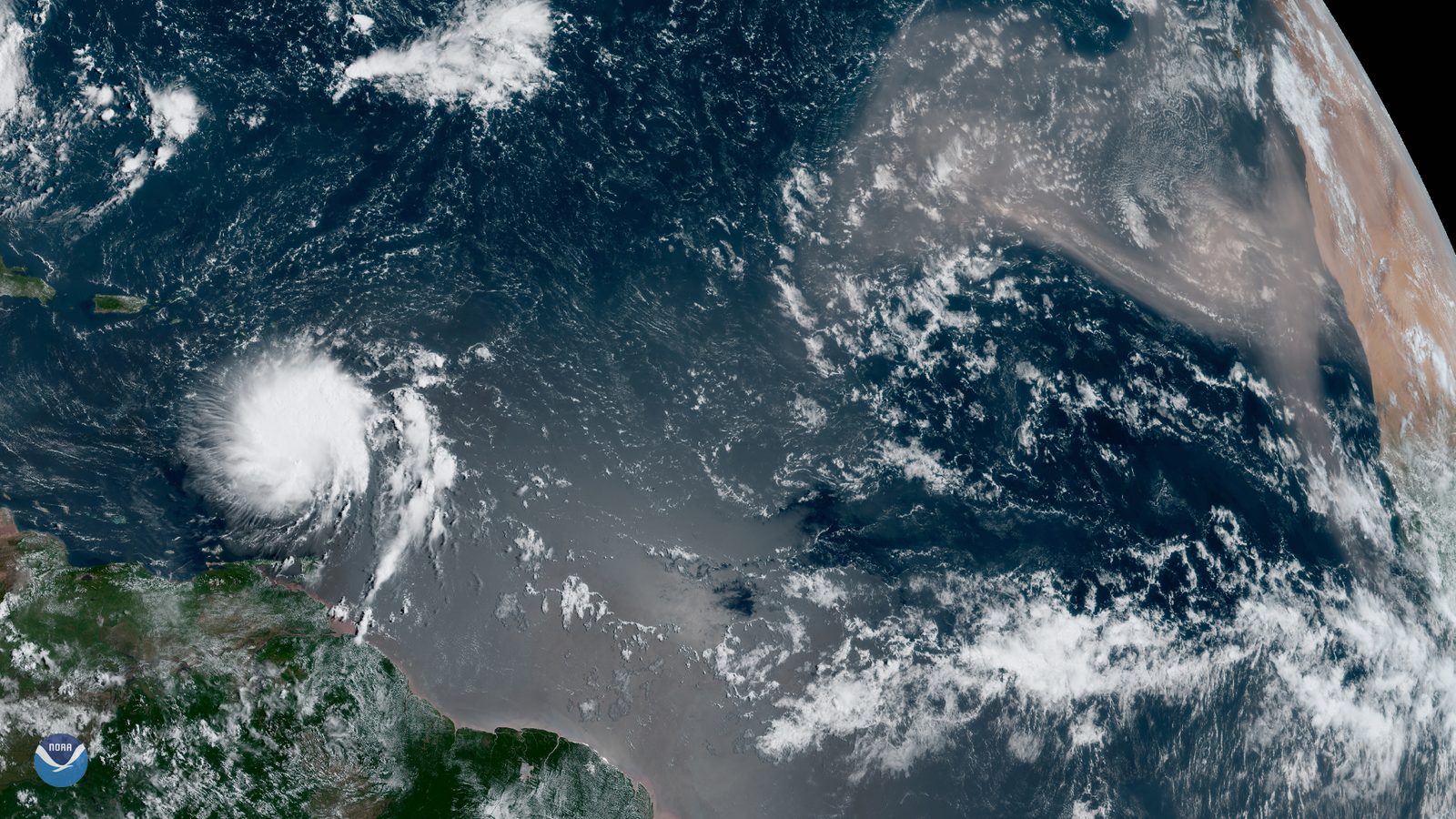
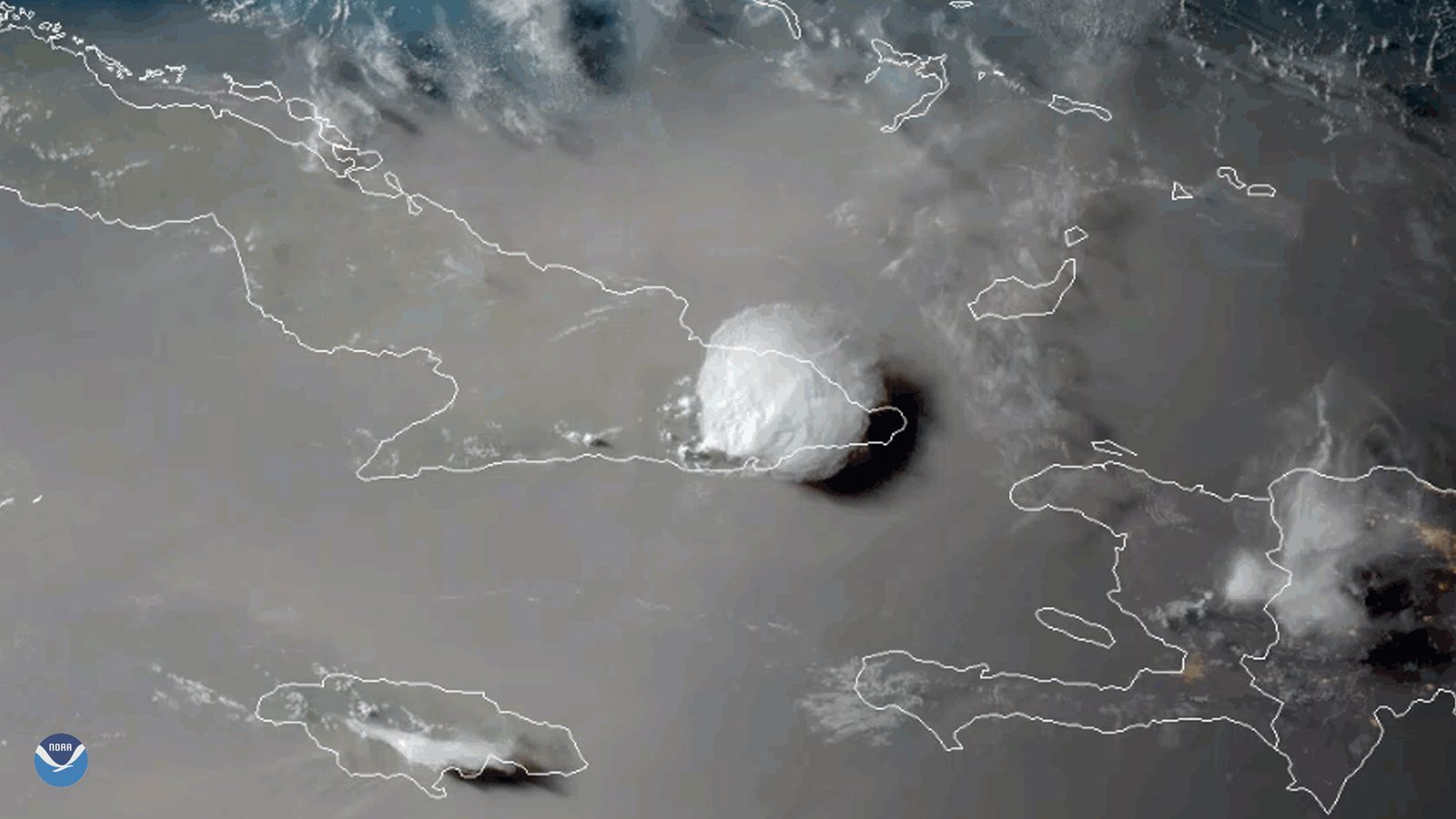
A NOAA satellite view of Saharan dust drifting west across the Atlantic, the fine haze behind the golden-orange sunsets of a Caribbean midsummer.Photo: NOAA Satellites (Public domain)
September and October
September and October bring the warmest sea of the year, about 85°F, soft breezes and quiet beaches. September: 89.0°F average high, 76.6°F low, 4.89 inches of rain on 15.7 rain days. October: 88.4°F high, 76.0°F low, 5.03 inches on 16.9 rain days, and the calmest wind of the year at the airport, an average around 12 mph. Sunrise slides from about 6:07 am to 6:12; sunset from about 6:21 pm to 5:57.
Most September days on the East End are hot and bright. Showers come more often in the afternoon in these months, so the mornings are the time for the reef and the boats, and the rainy-day guide has ideas for a showery afternoon. The lighter wind and warm sea also make the water in front of the house its glassiest, which is why some regulars pick these months for snorkeling.
These are turtle months on the East End, too. Green turtles nest at Jack and Isaac Bay from July to December, where The Nature Conservancy monitors the nests, and hawksbills nest on Buck Island into November; the sea turtles guide has the calendar and the rules for watching. On the water, September and October often bring the flattest sea of the year, with the fewest other boats on the Buck Island run.
What these months offer is warm, still water and uncrowded beaches: the trade wind at its softest and the sea as warm as it gets. On the reef, look without touching and use mineral sunscreen. The season for tropical weather runs June through November, and our hurricane season guide covers what to know.
November and December
November is the month the winter season switches on. The trade wind comes back from its October lull, the average high eases to 86.8°F and the low to 74.4, and the sea is still about 84°F. November rain comes as short showers that pass quickly, and the island is green. Sunrise is around 6:24 am, and sunset comes at its earliest of the year, about 5:42 pm in mid-November, for a day of about 11 hours 18 minutes.
December is the winter island: breezy and mostly clear, with an average high of 85.1°F, a low of 72.5 and a sea about 82°F. The clearer season begins in mid-November, and the Christmas Winds arrive in spells from December. Its 3.25 inches of rain come as brief trade-wind showers, mostly at night and dawn, between long clear stretches. Sunrise is about 6:42 am in mid-December, sunset about 5:46 pm; the shortest day, about 11 hours 4 minutes, falls near the solstice.
For a villa week, the second half of December is hard to beat: warm days, cool evenings on the veranda, sea in the low 80s, and rain that has usually finished by the time the coffee is made. November, in most years, is superb value with warm water, and its middle weeks feel like the winter island a month early: the trade wind is back, the sea is still about 84°F, and the clearer season is beginning.
The turn of the year brings the Crucian Christmas Festival, St. Croix's carnival in Frederiksted, founded in 1952, with its parades in the first days of January. A winter week at the villa can take in the festival and still keep its mornings for the reef.
One tip follows from the sun. Because St. Croix does not change its clocks, December's 5:46 pm sunset feels early to a guest arriving from Eastern Standard Time, since the island runs an hour ahead; plan to be back from Christiansted, about 15 to 20 minutes' drive, before dark on the first evening. The sunrise the villa is built around, meanwhile, comes at a civilized 6:40 to 6:53 am all winter.
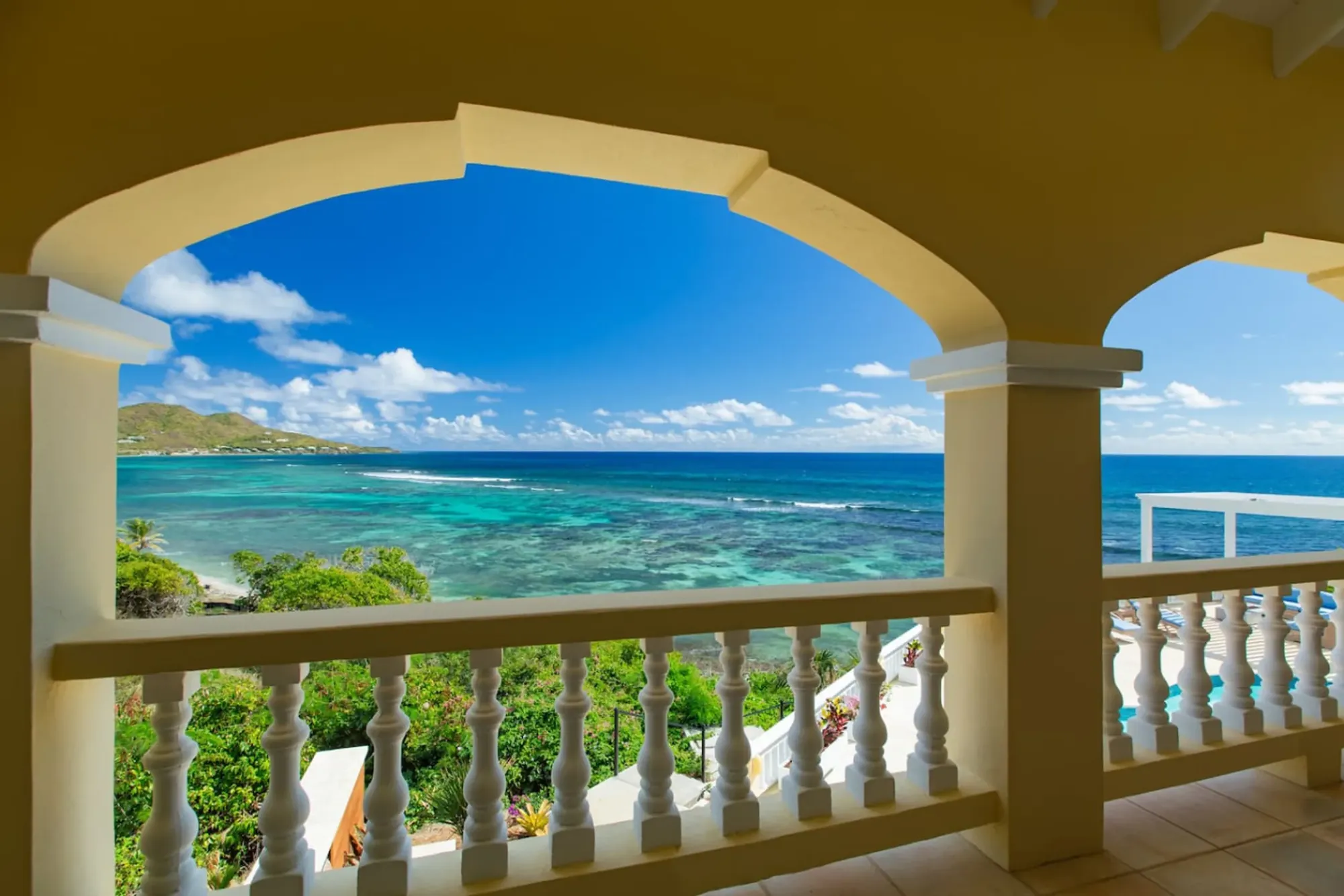
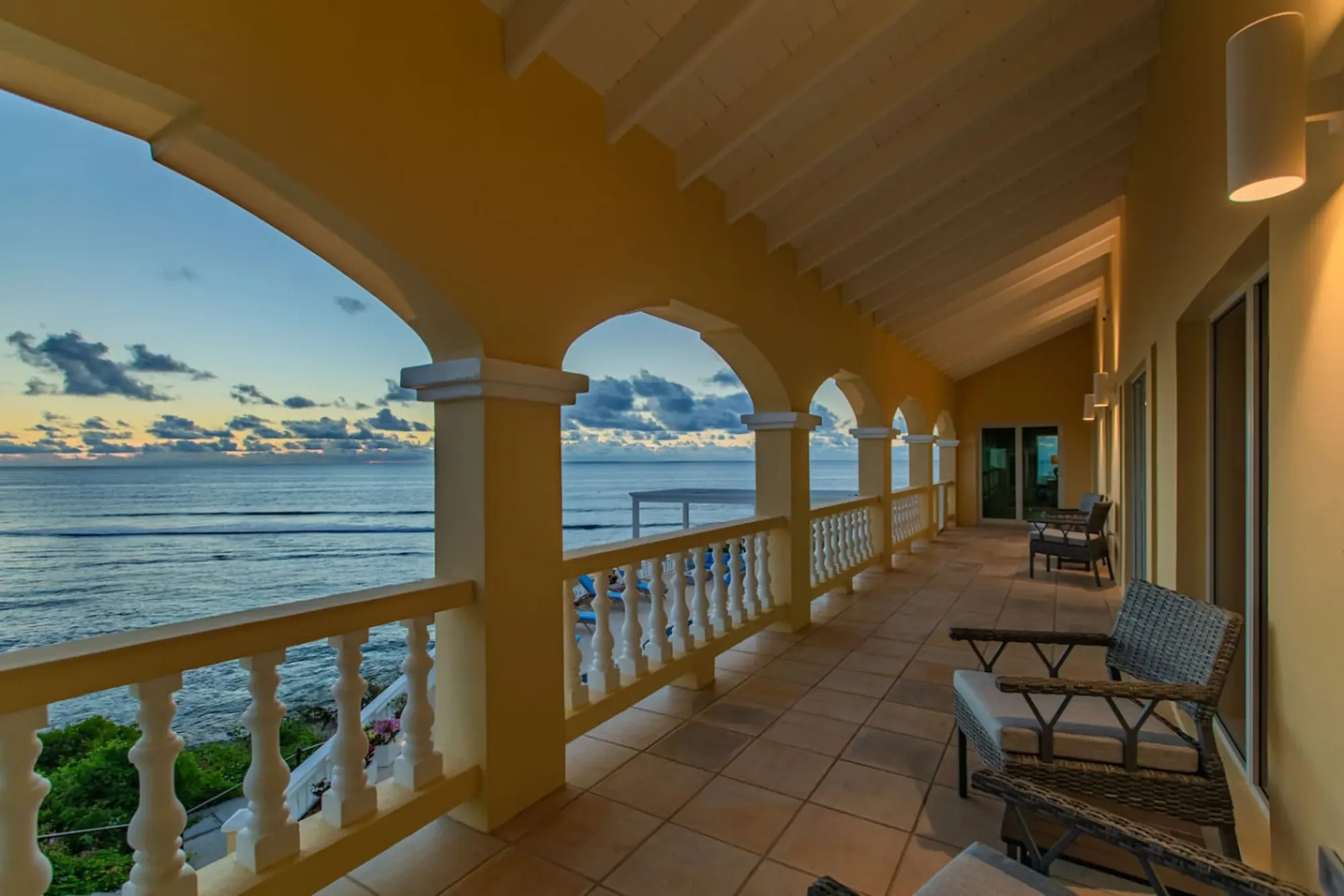
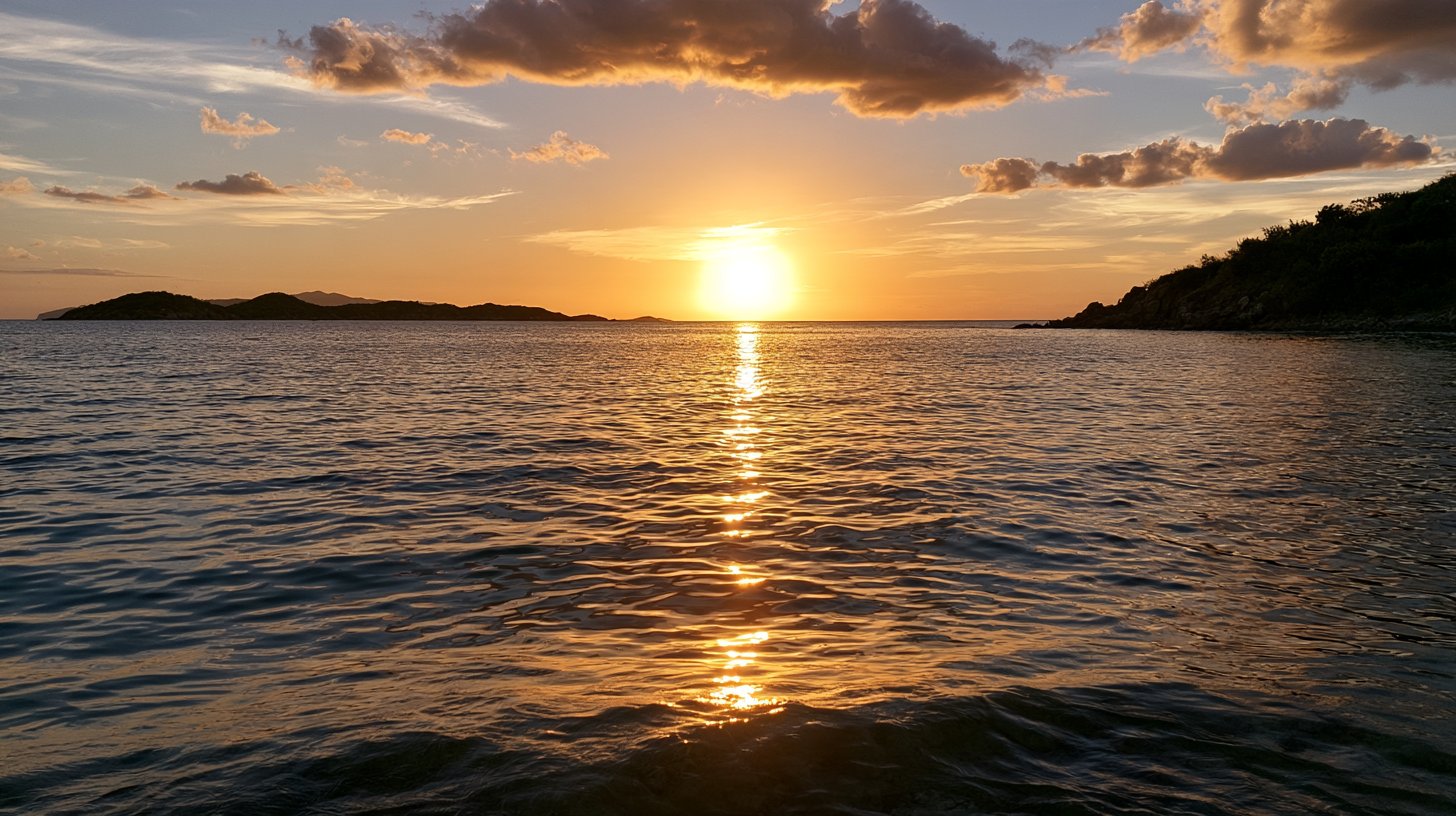
The villa's veranda faces east: sunrise comes up over the water in front of the house every month, between about 5:43 and 6:53 am.Photo: The Cerulean
How the trade wind cools the East End
Temperature on St. Croix barely moves, so the wind is the weather to plan around: it decides which beach is calm, when the boat goes, and how good the East End feels at 3 pm in August. The National Park Service's pages for both Buck Island and Virgin Islands National Park say the same thing in the same words: the trade winds, the Easterlies, blow east to west across the tropical Atlantic and dominate the islands' weather. They blow along the length of the island year-round, and the East End is where they arrive first.
That breeze is the island's natural cooling. A normal August afternoon is in the high 80s, and the trade wind takes a few degrees off it; after dark it keeps the evenings on the veranda fresh. The villa faces east into the wind, so the pool deck, verandas and terraces get it first, straight off the water.
How strong it blows depends on the season and the source. The Park Service says winter tends to bring the stronger winds; by the airport-weighted averages, the breezier part of the year runs from June 2 to August 25, with July the breeziest month at about 16 mph and October the calmest at about 12 mph. Both are describing something real. Summer has the steady, stiff breeze, the trade wind at its most consistent. Winter has the spells, when a front off the mainland stacks the pressure gradient and the wind blows harder for two or three days, then settles.
The Christmas Winds
Those winter spells have a name: the Christmas Winds. The Park Service describes them as winter cold fronts moving off the continent that "sometimes bring the Christmas winds down from the north"; the fronts do not bring cold air as far south as the Virgin Islands, but they can create large waves breaking on north-shore beaches. They come mostly December through February, in episodes of a few days rather than continuously.
On the East End they mean a livelier sea in front of the house, a fresh breeze across the veranda that keeps winter evenings cool and comfortable, and a more spirited morning crossing to Buck Island. On those days the leeward beaches on the west side stay calm, and the west end guide lists the sheltered ones; back at the villa, the pool above the sea is the easy swim.
The practical rule for any month: mornings are calmer than afternoons, the west and south coasts are more sheltered than the north and east, and the villa's east-facing design turns the wind into a feature the rest of the year. If a boat day matters, book the earliest departure; if a still snorkel matters, go at first light or pick October.
St. Croix's rain does not split neatly into one wet season and one dry one, and the NOAA normals show the rhythm month by month. From December the monthly totals fall quickly: 3.25 inches in December, 1.94 in January, 1.35 in February, the driest month, and 1.62 in March. April has 2.22 and May 3.62, then June and July ease back to 1.92 and 2.64, and August has 3.23. September through November bring 4.89, 5.03 and 5.30 inches, the showers that turn the hills green before the clear winter weather returns.
The dry season, then, is roughly late January through April, with February and March the driest pair, and June is an honorary member. That is why the "dry season equals winter" rule you hear across the Caribbean is only half the story here: early summer is as dry as midwinter, with June's 1.92 inches just under January's 1.94.
The rain-days column adds the texture. Winter and midsummer months carry 15 to 17 rain days on two to three inches, which describes light, frequent trade-wind showers, usually before dawn or late in the day, that leave the deck wet and the morning bright. In the autumn months the showers are heavier and more often come in the afternoon, then pass. April, with the fewest rain days of the year at 10.2, is the month when the most days go by without one. What the airport does not tell you is where it rains, and on St. Croix that varies more than when.
Why the East End is the sunny side
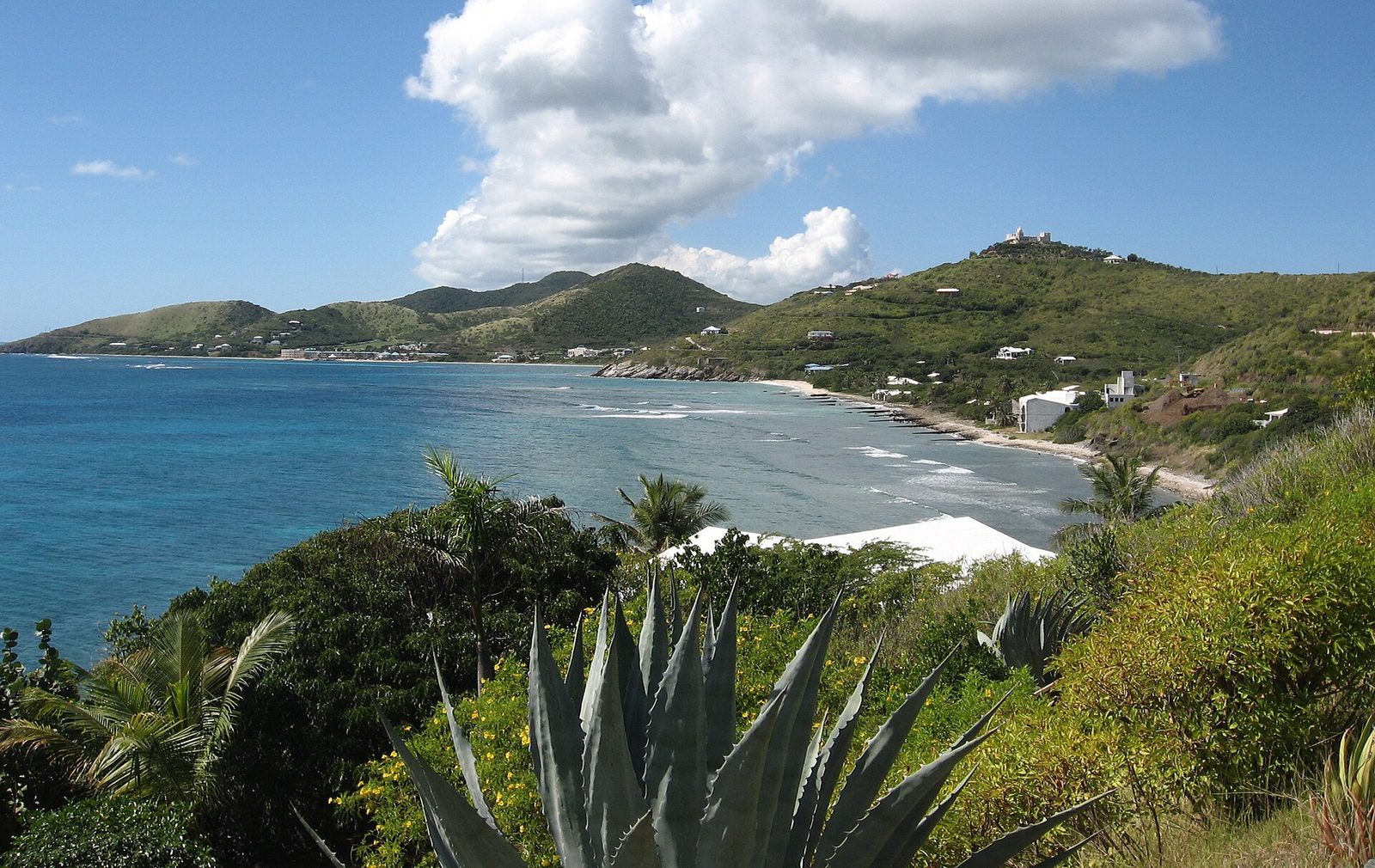
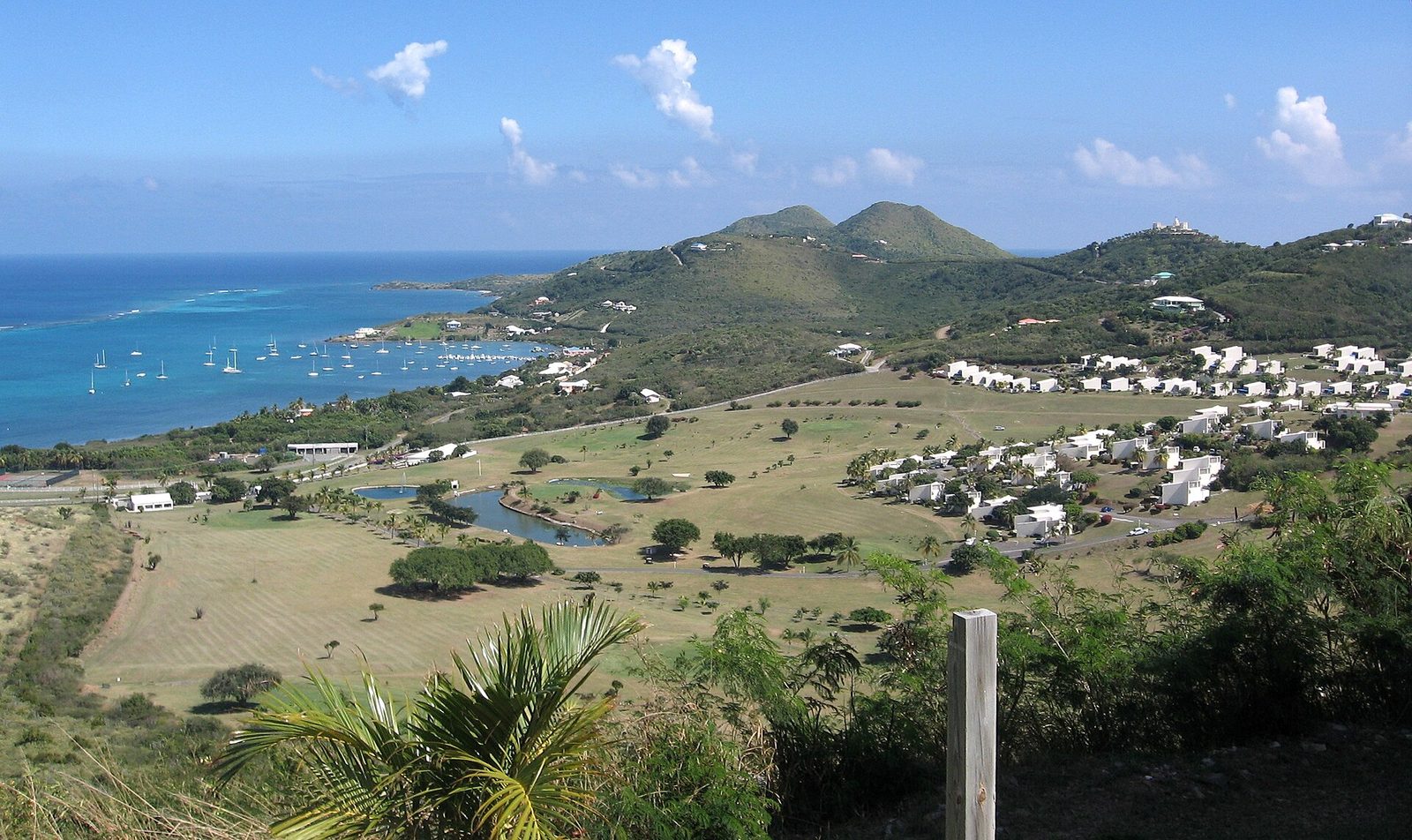
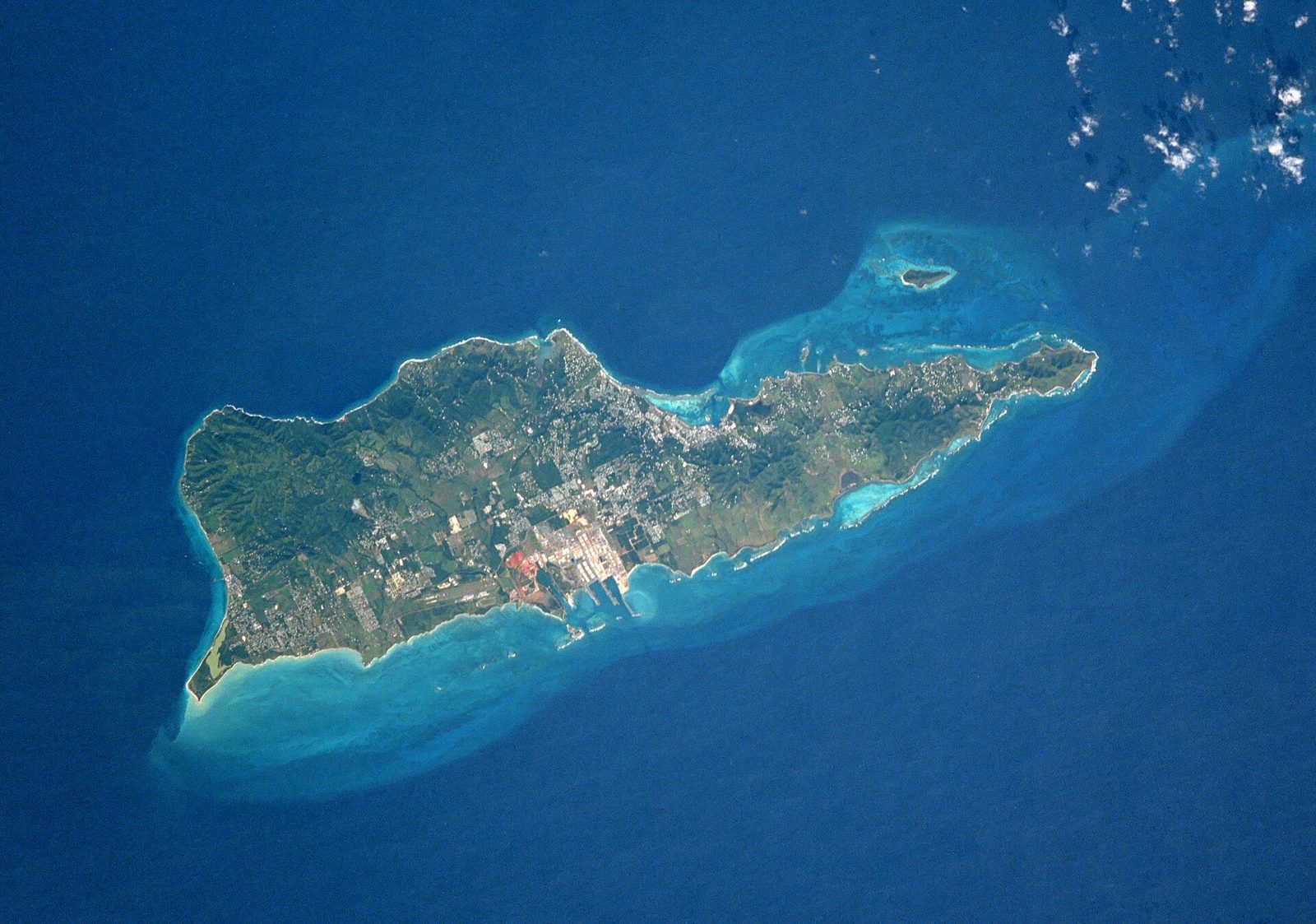
St. Croix is 22 miles long and 7 wide, with its high ground stacked in the northwest, where Mount Eagle reaches 1,165 feet, and its eastern third tapering through low, steep hills to Point Udall. The trade wind blows the length of it, and rain follows the hills: the high northwest hills lift the moist air until it rains, while the East End's low hills barely lift it at all. The island average is around 40 inches a year, the northwest about 50 inches, and the east 25 to 38 inches; an older USGS survey estimates the far east end at roughly 20 inches with the northwestern end above 50. The figures differ, but every source shows the same pattern: more rain in the northwest, less in the east.
You can see it from the road. The west end has the island's rain forest and mahogany, the middle its old cane plain, and the East End is the island's sunny, California-like side: low coastal hills, sea grape, and grasses that go gold between rains. It is also the sunrise side and the windward side, so it is drier, breezier and brighter than the airport normals suggest, with fewer of the heavy showers that stack against the hills. When the forecast says showers for St. Croix, the northwest usually gets more of them and the East End less.
A day that is showery in the western rain forest is often dry at the villa, and the East End's dryness is what makes the sea in front of it clear: less runoff, less sediment, better visibility on the reef straight off the beach. The East End also gets more wind and more sun than the rest of the island, which means the breeze on the veranda and the light on the water. When you read a 37-inch figure for "St. Croix," think of it as the island's middle, with the villa on the dry side of it and the Annaly and Carambola hills on the rain-forest side.
St. Croix from above. The northwest hills catch most of the island's rain, and the East End is the sunny side.Photo: NASA (Public domain)
Sea temperature, month by month
The sea around St. Croix is warm enough for swimming every day of the year. It moves through only about five or six degrees, and it moves late: the coolest water comes in February and March and the warmest in September and October, weeks after the air's own extremes. The ten-year monthly averages for Christiansted run 80.4°F in January, 79.7 in February and March, 80.6 in April, 81.9 in May, 82.9 in June, 83.3 in July, 84.2 in August, 84.9 in September, 84.7 in October, 83.7 in November and 81.9 in December. One model runs about a degree lower across the board, 79 in February to 84 in September. Both describe open water; a shallow cove at 3 pm reads warmer.
The practical translation is simple. There is no month when the water is cold. Even the February low, 79 to 80°F, is warmer than the Gulf of Maine ever gets and roughly what South Florida sees in early summer. Most people snorkel in a rash guard year-round for sun rather than warmth, and the only guests who miss a wetsuit are the ones logging long dives on the wall in winter, when a thin shorty is enough. In September, the water is as warm as a bath.
The reef in front of the villa is a living one, and corals are most sensitive to heat in the warmest weeks of the year, so a light touch matters most then. Keep fins off the reef, do not stand on anything, and use only mineral sunscreen, which the territory has required since 2020. Those three habits keep the coral, the reef fish and the turtles in front of the house the way guests find them.
For swimmers, the summary is one line: the sea in front of the villa is between about 79 and 85°F every day of the year, and the only question is how still it is, which the wind section above answers. For turtles, which use the East End reefs and seagrass year-round, the sea turtles guide has the nesting calendar and the rules.
~80°F, Feb–MarCoolest sea
~85°F, Sep–OctWarmest sea
About 5°FAnnual swing
~5:43 am, early JuneEarliest sunrise
~6:58 pm, JulyLatest sunset
Sunrise, sunset and daylight
The villa faces east, so the sun is part of the weather here. St. Croix sits at about 17.7°N, close enough to the equator that day length changes only about two hours across the year, and it keeps Atlantic Standard Time (UTC-4) all year with no daylight saving. The table gives sunrise, sunset and day length for Christiansted around the 15th of each month, cross-checked with the standard NOAA solar-calculator method; the villa's times are within a minute of these.
Month
Sunrise
Sunset
Day length
January
~6:53 am
~6:04 pm
11 h 11 min
February
~6:46 am
~6:20 pm
11 h 34 min
March
~6:27 am
~6:29 pm
12 h 02 min
April
~6:03 am
~6:35 pm
12 h 32 min
May
~5:46 am
~6:44 pm
12 h 58 min
June
~5:44 am
~6:55 pm
13 h 11 min
July
~5:52 am
~6:58 pm
13 h 06 min
August
~6:01 am
~6:45 pm
12 h 43 min
September
~6:07 am
~6:21 pm
12 h 14 min
October
~6:12 am
~5:57 pm
11 h 45 min
November
~6:24 am
~5:42 pm
11 h 18 min
December
~6:42 am
~5:46 pm
11 h 05 min
A few things fall out of the table. The earliest sunrise of the year is about 5:43 am in late May and early June, not on the solstice, and the latest sunset is about 6:58 pm in early July; the latest sunrise is about 6:53 am in late January and the earliest sunset about 5:42 pm in mid-November. The longest day is about 13 hours 12 minutes around June 21 and the shortest about 11 hours 4 minutes around December 21.
For planning, the other half of the table is the evening. For a sunset over the water, drive west to Frederiksted, about 45 to 55 minutes; in December, leave the East End by 4:30. In June and July, with sunset close to 7 pm, there is time for a full day on the East End before the drive.
Sunrise on the East End
The East End is the sunrise side of St. Croix, and the villa is built to face it. The veranda looks east over the water, so every morning of the year the sun comes up in front of the house, between about 5:43 and 6:53 am depending on the month. A winter sunrise on the veranda is a coffee-in-hand affair at a reasonable hour; a summer one asks you to be up before six, and rewards you with the coolest, stillest hour of the day, when the reef is clearest and the sea flattest.
The sun does not come up in the same place all year. It rises about 24 degrees south of east at midwinter and about 25 degrees north of east at midsummer, a swing of nearly fifty degrees along the horizon, so a January sunrise and a July one light different stretches of the sea in front of the house.
For the full occasion, drive to Point Udall, minutes from the villa and the easternmost point under the U.S. flag. The Millennium Monument above the point, a large stone sundial built for the New Year's celebration of 2000, marks the bearing of the first sunrise of that year on U.S. soil. First light comes roughly 20 to 25 minutes before the sun itself, so arrive 30 to 45 minutes early and bring a layer, because the headland takes the trade wind first. On a clear morning the sun clears the sea in a couple of minutes, and you are back at the villa for breakfast.
Low cloud on the eastern horizon is common, because the trade wind pushes it in from the sea, and it often makes the color before and after sunrise better; the sun clears the bank a few minutes later. Around the equinoxes, in March and September, the sun comes up almost due east, straight out of the open water.
If you want the sunrise to line up with the monument, come in winter, when the sun rises well to the south of east, close to the monument's line, at a civilized 6:40 to 6:53 am. Summer sunrises come earlier, about 5:44 to 5:52 am, and farther north along the horizon, in the coolest air of the day.
JanClearest skies of the year, breezy Christmas Winds spells
FebDriest month (1.35 in), sea about 80°F
MarSteady trade wind, days pass 12 hours at the equinox
AprFewest rain days (10.2), reef often clear off the beach
MaySea about 82°F, earliest sunrises arrive late in the month
JunLongest days (about 13 h 12 min), one of the driest months
JulBreeziest month (about 16 mph), latest sunsets near 7 pm
AugWarmest month, sea about 84°F
SepWarmest sea of the year (~85°F), quiet beaches
OctCalmest wind of the year, glassy water for snorkeling
NovTrade wind returns, clearer season begins mid-month
DecChristmas Winds spells begin, shortest day about 11 h 4 min
Swimming, snorkeling and boat days, month by month
Here is how the numbers turn into a week's plan. Swimming is a yes in every month: the sea is between about 79 and 85°F all year, and the villa's private beach is reef-protected, down a short set of steps from the house. What changes is the surface. December through February, a Christmas Winds spell can liven up the windward side for a few days at a time while the leeward beaches stay calm; March through May, the trade wind is steady and the mornings reliably calm; June through August, the breeze is at its steadiest and stiffest, so first light is the still hour; September and October are the calmest and warmest; and November brings the trade wind back.
Snorkeling follows the same curve with one addition: visibility. The East End's dry hills mean little runoff, so the water in front of the villa clears quickly after rain, and the best visibility tends to be in the calm mornings of March, April and June, and again in September and October. A Christmas Winds spell can stir the shallows for a day or two before they settle. An April 2026 guest, Emily, wrote of "amazing snorkeling right in front of the house in the shallow water protected by the reef," and the months above are when it is most reliably so.
The East End's other beaches, five to twenty minutes from the villa, add calm, family-friendly water. Chenay Bay is shallow and calm close to shore, with plenty of shade and the calmest paddling water on this side of the island; Cramer's Park has shallow, typically very calm water, pavilions and sea grape shade; and Grapetree Bay is calm behind its barrier reef, where turtles grazing the seagrass are the draw. The East End beaches guide has the details for each.
Boat days, meaning Buck Island, the reef trips and the fishing and sailing charters, run year-round; the captains go by the day's sea rather than the season, and if the sea is up they move your trip to another day. Book the earliest departure in any month; the sea is calmer before noon and the wind builds after it. Winter crossings are livelier in a Christmas Winds spell, summer ones are breezy and routine, and September and October frequently bring the flattest water of the year with the fewest other boats.
Put the months together and the water is on all year: clear, breezy winter mornings, a settled reef in spring, warm water and long light in summer, and the glassy sea of September and October. Pick the morning, pick the side of the island in the lee, and the concierge can point you to the calmest water that week.
The packing guide has the full list; the weather case for it fits in a paragraph. Because highs move only from 84 to 90°F across the year, one wardrobe covers every month: light, breathable clothes, a rash guard or two, and a hat with a real brim, since the sun at 17°N is high overhead every month and the UV index is a different animal from a mainland summer's. Because nights are 71 to 77°F and the East End is breezy, one light layer for the veranda earns its place in every season, and in December through February you will use it.
Because the rain comes as showers rather than whole days, a light packable rain shell beats an umbrella, which the trade wind will not respect. Because the sea is 79 to 85°F, nobody needs a wetsuit to snorkel; long-dive winter guests bring a shorty. Because the territory has banned oxybenzone, octinoxate and octocrylene sunscreens since March 2020, bring mineral sunscreen or buy it on island, and bring more than you think for July, when the sun is strongest and the days longest.
Two smaller things follow from the sun table: sunglasses matter more here than at home, especially at sea, and a small light is useful in winter, when it is dark by 6 pm. And one from the humidity: cameras and documents like a dry bag, especially on boat days.
The week before you fly
Open the NOAA/NWS San Juan forecast for St. Croix, which covers the USVI, about five days out.
Find your month in the table above and pack for it: a rash guard for sun, a light layer for the veranda, a packable rain shell.
Pack mineral sunscreen or buy it on island: the territory has banned oxybenzone, octinoxate and octocrylene sunscreens since March 2020.
Look at the sunrise time for your dates and set the first morning's alarm for 20 minutes before it.
Ask the concierge which side of the island is calm that week before you book a boat day.
Questions people ask
What is the coldest month on St. Croix?
By the NOAA 1991-2020 normals for Henry E. Rohlsen Airport, January and February are the coolest months, with average highs of 84.2 and 84.6°F and average lows of 71.2 and 71.4°F. The sea is also at its coolest then, about 79 to 80°F. Records at the airport since 1951 have dipped to 60°F, but a normal winter night is low 70s, and a normal winter afternoon is mid-80s.
What is the hottest month on St. Croix?
August, narrowly. The airport normals put the average high at 89.5°F in August, 89.2 in July and 89.0 in September, with average lows around 77°F. The sea peaks a little later, about 84 to 85°F in September and October. The steady trade wind takes a few degrees off a late-summer afternoon, and the early mornings are the coolest, stillest hours of the day.
When is the dry season on St. Croix?
Roughly late January through April. In the NOAA airport normals February is the driest month, at 1.35 inches, with March next at 1.62, and April has the fewest days with any rain, 10.2. June is one of the drier months too, at 1.92 inches. The rest of the year, rain mostly comes as showers that pass quickly, and the East End gets less of it than the airport.
How warm is the water in St. Croix?
Warm enough to swim every month. Ten-year averages for Christiansted run from about 79.7°F in February and March to about 84.9°F in September; one model runs about a degree cooler, 79°F in February to 84°F in September. Either way the swing is roughly five degrees across the whole year, and even the coolest month is warmer than most mainland beaches in summer.
When are the Christmas Winds?
Roughly December through February, in spells rather than continuously. The National Park Service describes them as winter cold fronts off the U.S. mainland pushing wind down from the north; the fronts do not bring cold air this far south, but they strengthen the trade wind, and they can build large waves on north-facing shores. On the East End they mean breezy, fresh evenings on the veranda and a livelier sea for a few days at a time, while the leeward beaches on the west side stay calm.
How windy is St. Croix?
Breezy all year, which is what keeps the heat comfortable. The trade wind blows from the east across the island in every month. By the airport-weighted averages, the breeziest stretch runs from June 2 to August 25, with July averaging about 16 mph, and October is the calmest month, at about 12 mph. In winter the Christmas Winds add spells of stronger breeze for a few days at a time. Mornings are calmer than afternoons in every month, and the East End, facing east, feels the breeze first.
When is the sea calmest for snorkeling?
In the early morning, in every month, before the trade wind builds. Across the year, September and October have the lightest wind and the warmest water, so the sea in front of the villa is at its glassiest then, and spring mornings, March through May, are reliably calm. The East End's dry hills mean little runoff, so the water clears quickly after a shower. With the sea at 79 to 85°F all year, a rash guard for the sun is all most snorkelers wear.
What time is sunrise on St. Croix?
Between about 5:43 am in late May and early June and about 6:53 am in late January, with the sun setting between about 5:42 pm in mid-November and about 7 pm in early July. Day length runs from about 11 hours 4 minutes in mid-December to about 13 hours 12 minutes in late June. St. Croix stays on Atlantic Standard Time all year, so it matches Eastern Daylight Time in summer and runs an hour ahead of the East Coast in winter.
Is the East End of St. Croix drier than the rest of the island?
Yes. Rain on St. Croix follows the hills: the northwest gets around 50 inches a year and grows the rain forest, while the east end gets roughly 25 to 38 inches, and USGS estimates put the far east end lower still. That is why the East End is the island's sunny side, why it is the breezier side, and why the airport's 37-inch normal probably overstates what falls at the villa.
Planning your week at The Cerulean
The villa was built for this weather. It sits on the East End's sunrise side, facing east into the trade wind, with a private beach and the reef directly in front, a pool and deck above the sea, and verandas and terraces that take the breeze first. On a January morning that means coffee on the veranda before 7 as the sun comes up over the water, in the water by 7:30, and a boat to Buck Island before the wind builds; on an August morning it means an earlier alarm, a stiller sea, and the pool deck for the hot hours.
The house is made for slow days too. Its east-facing design turns the summer breeze into cooling; the pool deck and terraces catch that breeze through the warmest hours; the chef's kitchen, the outdoor kitchen and the fire pit terrace are set up for long dinners at home; and the separate guest cottage gives a big group room to spread out. Christiansted, about 15 to 20 minutes away, has the museums, forts and restaurants for an afternoon in town.
The concierge can read the week for you: which beach is in the lee, which morning the boats are calmest, how clear the reef is that morning, and how to reach Point Udall for the sunrise, minutes up the road. The Getting Here page has the flight calendar that goes with each season.
What the numbers say, finally, is that this is one of the steadiest climates you can fly to from the mainland: a five-degree year, a sea that stays warm in every month, a breeze you can count on, and showers that pass quickly. The rest is what you do with the day, and the house faces the right way for it.
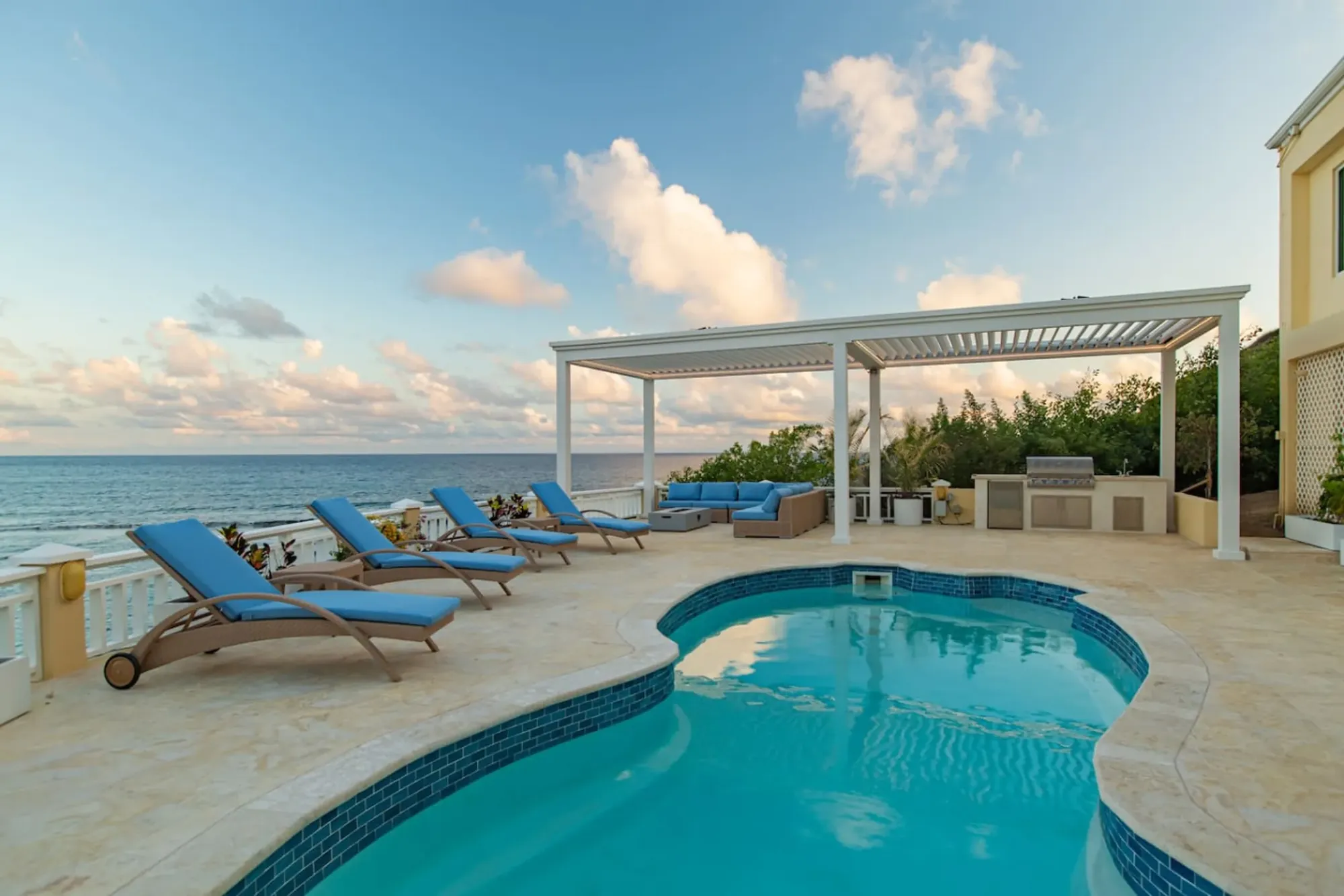
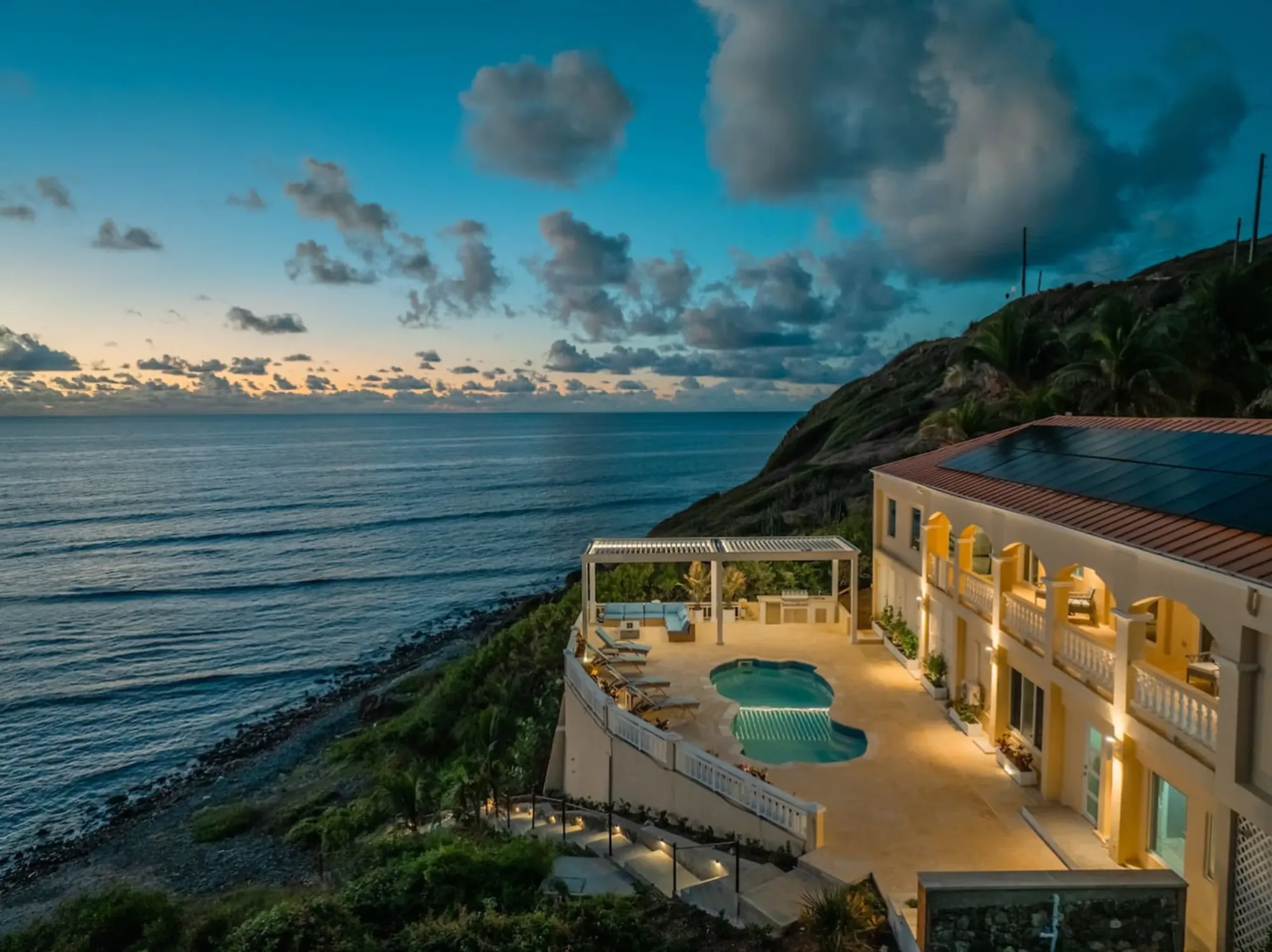
The pool deck above the sea, where the East End breeze arrives first on a warm afternoon.Photo: The Cerulean
The Cerulean
Twelve of you, one private beach.
The Cerulean sleeps twelve on St. Croix's quiet East End — check your dates.
We use essential cookies to run this site and, with your consent, Google Analytics to see which pages visitors use and the Meta Pixel to show The Cerulean’s ads on Facebook and Instagram to people who visited. See our Privacy Policy.