Flying private to St. Croix — a real arrival guide
Private aviation to St. Croix21 min readThe Cerulean · St. Croix
St. Croix has a 10,002-foot runway, U.S. Customs on the field, and one of the Caribbean's best-rated FBOs. Here is how the trip works by private jet, from the ramp to the villa.
St. Croix is easy to reach by private jet, and the reasons are practical ones. It has a 10,002-foot runway, its own U.S. Customs and Border Protection on the field, and an FBO that has run since 1959. This page walks through the airport, the FBO, real distances and flight times from the Northeast and South Florida, which aircraft go nonstop, what customs looks like for U.S. citizens, and how far it is from the ramp to the villa. Prices come from your operator, and every distance and flight time here is a planning figure to confirm when you book.
Why people fly private to St. Croix
Commercial service to St. Croix is real and getting better. American flies nonstop from Miami year-round, with seasonal runs from cities like Charlotte and Atlanta, and United begins a Saturday Newark nonstop on October 31, 2026. Most other mainland cities still connect through San Juan or Miami. For a couple with light bags, that is fine, and we would not talk anyone out of it. For a group of ten or twelve arriving together with dive gear, a folding stroller, and a case of somebody's wine, a connection through San Juan can turn one travel day into two, and a missed connection into an overnight in the wrong city. The point of flying private here is not luxury for its own sake; it is subtracting the parts of the trip that go wrong.
Private aviation buys three things here specifically: schedule control, a single leg instead of two, and privacy from the car door to the ramp. You leave when your family is ready rather than when the airline is; you land at Rohlsen without changing planes in Puerto Rico; and at the FBO you walk from the aircraft to a waiting car in minutes, with customs handled on the field. For an advisor moving a principal, or a family office planning a reunion where everyone's calendar is already a negotiation, that is most of the argument.
None of this requires a large airplane, either. From South Florida a light jet makes the trip nonstop; from the New York area a super-midsize or larger cabin does it without a fuel stop. The runway is long enough for anything anyone would realistically charter, so the question is never whether the airport can take your aircraft. The question is range and cost, and the rest of this page works through both, starting with the airport itself.
If you are planning the trip for a client rather than for yourself, our page for family offices and private advisors covers the discretion-and-single-contact side of a St. Croix stay: whole-property use, direct booking, and one accountable manager instead of a platform. This page stays on the flying, and it pairs with the broader getting here overview if part of your group is coming commercial and meeting the rest on the island.
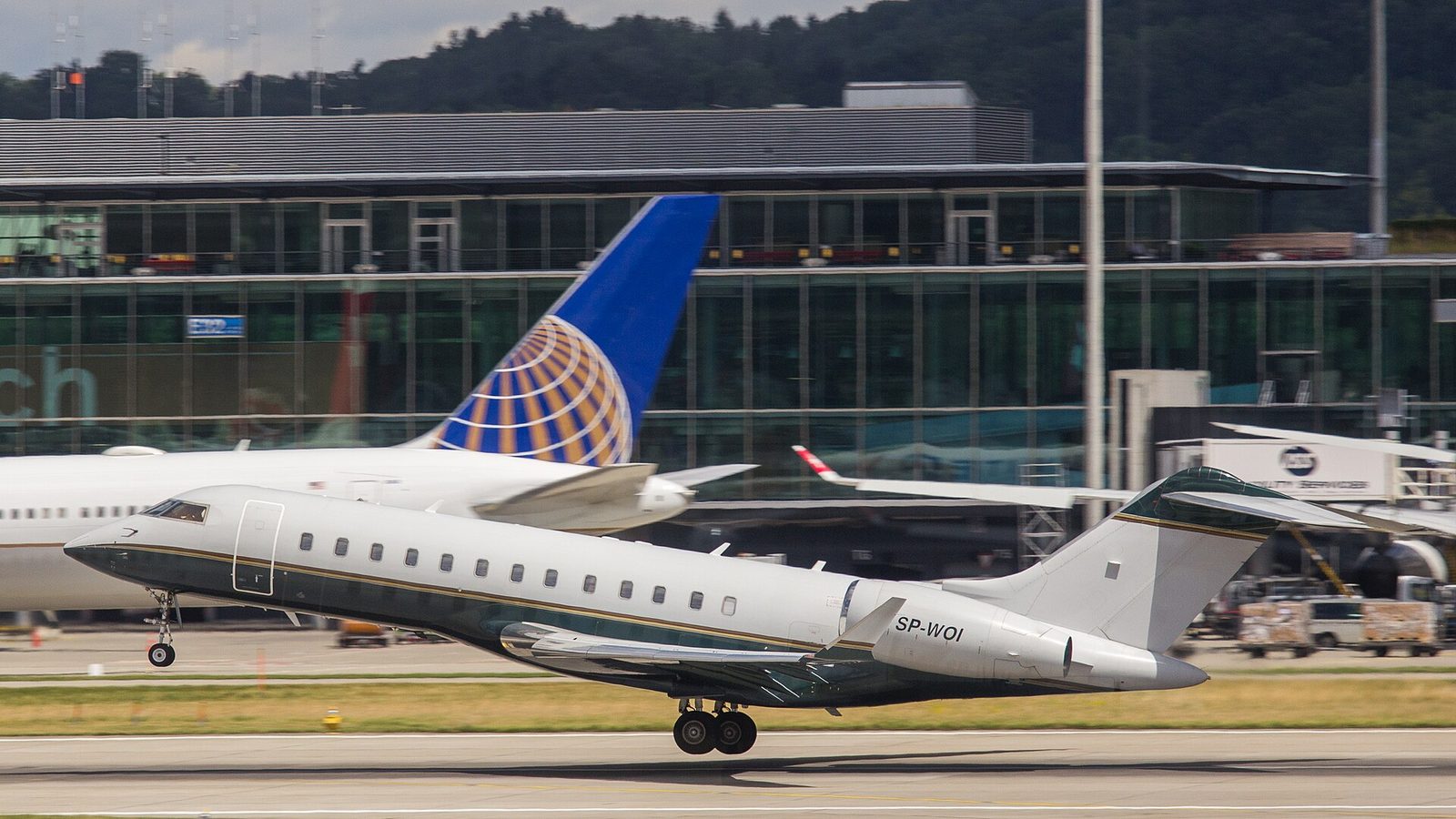
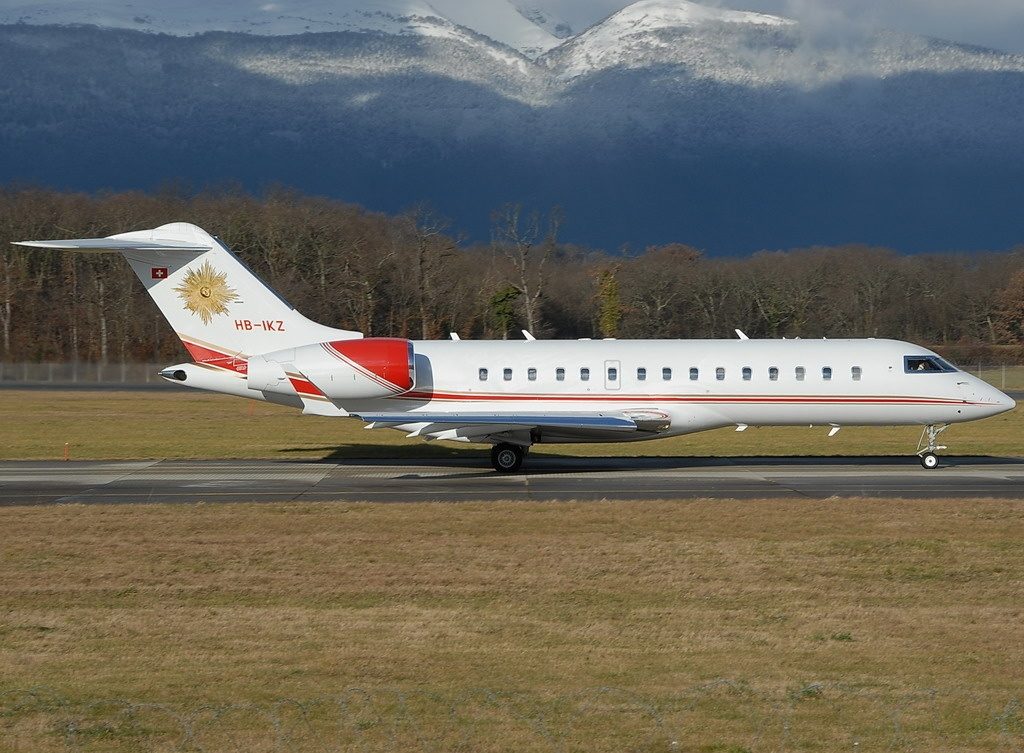
A business jet on an FBO ramp, the class of aircraft that runs nonstop to St. Croix from South FloridaPhoto: Roland Nussbaumer (GFDL)
Henry E. Rohlsen Airport and who it is named for
Every private arrival lands at Henry E. Rohlsen Airport, IATA code STX and ICAO code TISX, in Kingshill near the center of the island. It is a U.S. airport in every legal sense, with U.S. air traffic control, U.S. Customs and Border Protection, and the same federal rules that apply on the mainland. From the field it is a short drive to Christiansted and about half an hour to the East End, where the villa sits at the quiet end of the island.
The airport was renamed in 1996 for Henry E. Rohlsen, a St. Croix-born aviator who served with the Tuskegee Airmen, the celebrated Black military pilots of the Second World War. Before that it carried the name Alexander Hamilton International Airport, after the founding father who spent much of his boyhood on St. Croix. The two names tell you something useful about the island: it is small, but it has a long and specific relationship with the United States that predates the republic itself.
For a traveler, the practical point is that Rohlsen is not a difficult or exotic field. It is a straightforward single-runway airport with a professional FBO, handling scheduled airline traffic and private aircraft on the same ramp. There is no mountain-hugging approach and no famously short strip to psych yourself up for, the way there is at some island airports. It is an ordinary, well-run U.S. field that happens to sit in the northeastern Caribbean.
How it fits the rest of a St. Croix trip is on our page about the island and the practical getting here notes. The next thing worth understanding is the runway, because its length is what removes the constraints that trip up other Caribbean destinations.
The runway that can take a 747
Rohlsen has one asphalt runway, designated 10/28, measuring 10,002 feet by 150 feet, at a field elevation of about 74 feet above sea level. That combination matters more than it sounds. Ten thousand feet of pavement at near-sea-level elevation, even in warm Caribbean temperatures that lengthen takeoff rolls, is enough for large aircraft to operate normally. That is why the field is rated to receive planes up to Boeing 747 size.
The runway has proved it, too. It has handled a Boeing 747, and in 2018 an Antonov An-124, one of the largest cargo aircraft in the world, landed at STX. If the runway can take an An-124, it can take anything in the business-jet fleet with room to spare. There are no weight limits, balanced-field problems, or runway-length concerns for any jet you would charter to the island, at any realistic passenger and fuel load.
10,002 ftRunway
~1,450 nmFrom Teterboro
~990 nmFrom Opa-locka
1959FBO since
For a passenger, this quietly removes a category of worry that comes up with smaller Caribbean strips, where a short paved surface, obstacle clearance, or a steep terrain approach can rule out a large-cabin jet or force a lighter fuel load and an extra stop. Some of the region's best-known island airports are genuinely demanding. St. Croix is not one of them, which widens the fleet you can choose from and keeps the routing simple.
So when you talk to an operator, you can take the airport out of the conversation entirely. The limiting factors on your trip will be the range of the aircraft against the distance you are flying, and the price for the class and the dates. The runway is a solved problem, and it has been for decades.
Bohlke International Aviation, the FBO on the field
The fixed-base operator at Rohlsen is Bohlke International Aviation, a family firm that has served the Caribbean since 1959. It is both a full-service FBO and a Part 135 charter operator, which means it can fuel and handle a visiting jet, arrange the ground logistics, and in many cases fly the trip itself. Longevity counts in this business, and more than six decades on one field is a real credential rather than a marketing line. The people on the ramp have handled a lot of arrivals before yours.
Bohlke was voted Best Caribbean FBO in the 2024 Pro Pilot PRASE survey, the industry's annual poll of professional pilots. That is a more meaningful signal than it might seem, because it is crews rating the places they actually work through, not a consumer award. It is a reasonable proxy for the things you care about: whether the operation runs cleanly, whether the fuel and the paperwork are handled without drama, and whether a flight department would send an aircraft there again.
1959Bohlke founded
1996Airport renamed for Henry E. Rohlsen
2018An-124 lands at STX
The facility itself includes more than 43,000 square feet of covered hangar, both Jet A and Avgas, and the full range of ramp services a flight department expects. Covered hangar space matters in the tropics, where sun and salt air are hard on parked aircraft, and it means an aircraft that stays on the island during your visit can be looked after properly rather than baking on an open ramp for a week.
If you are chartering, there is a good chance Bohlke is either your operator or your handler, and it is worth naming them to whoever books your trip. Their own site lists current services and contacts. Whatever aircraft you arrive on, the concierge who runs your stay at the villa can coordinate directly with the FBO on the timing of your car and your bags, so the two ends of the trip line up.
What Bohlke handles on the ground
The value of a good FBO is in the boring details, and Bohlke covers the list a flight department would want:
Ground power, lavatory service, and quick turns for aircraft continuing on.
Jet A and Avgas fuel, plus aircraft detailing after a salt-air week.
Catering, concierge, and crew or rental cars arranged in advance.
Customs clearance for private arrivals, and medevac support when needed.
For the flight crew that means fuel, cars, and somewhere to rest before the next leg. For you as a passenger it means the plane is looked after while you are on the island, so a same-day repositioning or a next-morning departure is not a scramble. Just as important, because Bohlke handles the customs clearance and the car, a private arrival becomes a short experience rather than a terminal one. The aircraft parks on the FBO ramp, the paperwork is done there, and your car is waiting a few steps from the airstairs.
The rental and crew-car service is the piece that connects most directly to your stay. You can arrange your own vehicle for the week or have transport lined up through the villa instead. Either way, the handoff happens at the FBO, not at a rental counter across the airport. Our page on the villa's concierge explains how that coordination works, and how the same team that meets you at Bohlke also stocks the kitchen before you arrive.
A timing tip: on a quiet afternoon you may be in your car within ten minutes of shutdown, and when several aircraft arrive together, or a scheduled airliner is clearing at the same time, clearance takes a little longer. Let the FBO know your timing in advance so the car and the clearance are ready when you are, and leave a little margin before any tight onward plan.
Flying down from the New York area
For the Northeast, the usual departure point is Teterboro, New Jersey, the busiest business-aviation airport in the New York area and the default for Manhattan and northern-suburb travelers. Teterboro to St. Croix is about 1,450 nautical miles, which works out to roughly three hours and forty minutes in the air on a direct great-circle track. That figure is a planning number, not a promise: actual block time shifts with routing, headwinds or tailwinds, and how much reserve fuel the crew carries, so confirm the real time with your operator when you book.
Other New York-area fields work the same way. Westchester County (KHPN) and Morristown (KMMU) sit at similar distances and times, and the choice usually comes down to which is closer to where your group actually is and where the aircraft is based. A repositioning leg to bring the plane to your preferred field can add cost, so it is worth asking the operator to price a couple of options rather than assuming the closest airport is the cheapest.
The flight itself is a single overwater leg down the western Atlantic, passing well east of the Bahamas and the Turks and Caicos before reaching the northeastern Caribbean. It is a long, quiet cruise rather than a bumpy island-hop, and for a family it is the kind of leg where the length of the trip is mostly a matter of when lunch is served. There are no intermediate customs stops and no connection to miss.
Because it is a long overwater leg, the aircraft class matters more from New York than it does from Florida, and that is the subject of a later section. The short version is that a super-midsize or large-cabin jet handles the run comfortably nonstop, while a light jet from the Northeast may need to stop for fuel. If part of your group is flying commercial from the New York area instead, our New York flights page covers the scheduled routings and where they connect.
Flying up from South Florida
South Florida is the natural staging point for a St. Croix trip, and it is the easiest run of all. Opa-locka Executive (KOPF), just north of Miami, to St. Croix is about 990 to 1,000 nautical miles, roughly two hours and fifty minutes in the air. Fort Lauderdale Executive (KFXE) is in the same range, on the order of 990 to 1,050 nautical miles depending on the exact track. These are the two most-used private fields in the Miami and Fort Lauderdale area, and either works well.
At roughly a thousand miles, this leg is within nonstop reach of a very wide range of aircraft, which keeps the options open and the cost comparatively contained. A shorter leg means less fuel, more payload flexibility, and a bigger fleet competing for the trip, all of which tend to work in your favor. It is the reason South Florida is the region's jumping-off point for the Caribbean generally, not just for St. Croix.
It is also why many longer trips from elsewhere in the country stage through South Florida. A crew repositions the aircraft to Opa-locka or Fort Lauderdale, the passengers join there, and the final leg to the island is a short, straightforward hop. For families splitting the journey, an overnight in Miami before the island leg is a common and comfortable pattern that also builds a weather buffer into the trip.
If you are coming from the Southeast, the Gulf Coast, or Texas, it is worth asking your operator whether a nonstop makes sense or whether a quick fuel stop in Florida is cleaner and cheaper. The answer depends on the aircraft and the winds. What does not change is the last leg: from South Florida, St. Croix is an easy afternoon's flight, and the runway at the far end will take whatever you arrive on.
Distances, times, and the San Juan question
It helps to see the anchor points together. The table below lays out the two main mainland departures and the region's connecting hub. Treat the distances as great-circle figures and the times as air time on a direct track; real routing and winds move them around, so use them to compare options rather than to set a firm schedule. Your operator's flight plan is the number to trust on the day.
From
Distance
Typical time
Teterboro (KTEB)
~1,450 nm
~3h 40m
Opa-locka (KOPF)
~990 nm
~2h 50m
San Juan (SJU)
~40 nm
short hop
San Juan, Puerto Rico (SJU / TJSJ) is the piece that surprises people. It is only about 40 nautical miles from St. Croix, close enough to be a short hop by a light jet or a Cape Air turboprop. For decades it has played two roles for the island: the classic technical or fuel stop for aircraft that cannot quite make the mainland run nonstop, and the main connecting hub for the wider Caribbean and for onward flights to the mainland.
That proximity is useful in both directions. If a light jet from the Northeast needs to top off before the final leg, San Juan is a convenient place to do it, and it barely lengthens the day given how short the last hop is. And if part of your group is arriving from somewhere the private aircraft cannot reach directly, San Juan is where a commercial or charter connection to St. Croix is easiest to arrange, on frequent schedules.
The takeaway is that the 40-mile gap is a feature, not a friction. It gives you a nearby fuel and connection option that most single-island destinations do not have, and it means a plan that hits a snag on the direct routing usually has an easy fallback. When you price a trip, it is reasonable to ask the operator to show both a nonstop and a San Juan option so you can see what the stop actually costs in time and money.
Which jets make the run nonstop
Aircraft range is worth reading closely: the numbers below are typical manufacturer ranges, and real-world range falls with more passengers, more bags, headwinds, and the fuel reserves a careful crew carries. Published maximum range is measured under favorable conditions that rarely match your actual day. Always confirm the specific tail and mission with your operator rather than assuming a book figure applies.
From South Florida, at roughly 1,000 nautical miles, most light jets make the trip nonstop. A Phenom 300 or a Citation CJ-series aircraft is a common example, and anything midsize or larger has ample margin. This is the run where you have the widest fleet to choose from, which usually helps on both availability and price, and where a full cabin of passengers and bags is least likely to force a compromise on fuel.
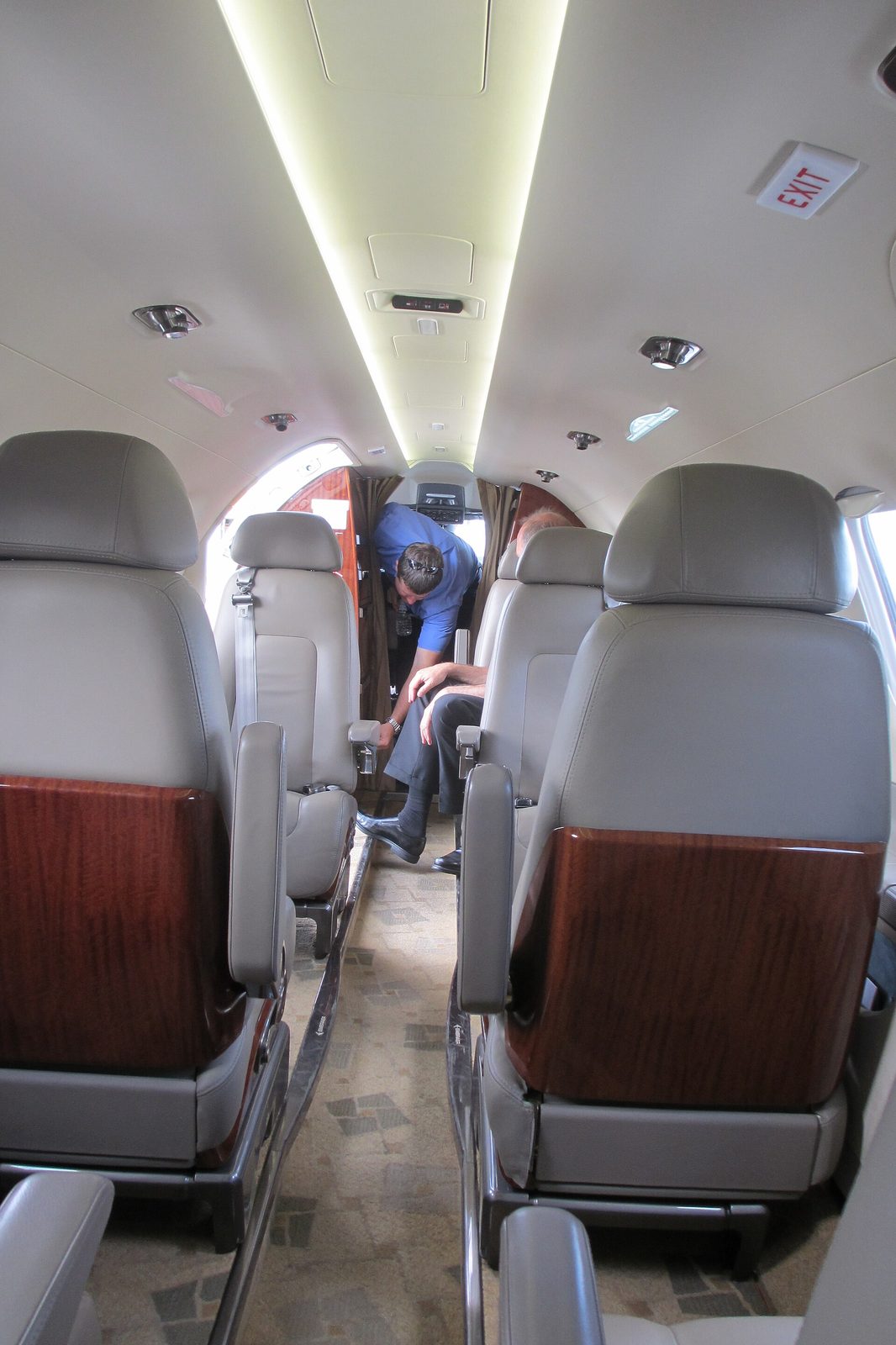
From the New York area, at about 1,450 nautical miles, a super-midsize or large-cabin jet does the trip comfortably nonstop. Aircraft in that group include the Challenger 300 and 350, the Praetor 600, and the larger Gulfstream, Bombardier Global, and Dassault Falcon families. Those cabins also make the longer leg more pleasant, with room to stand, a real galley, and a lavatory that a group will appreciate over nearly four hours in the air.
A light jet from the Northeast may need a fuel stop, commonly San Juan or somewhere in South Florida, and that is worth planning for rather than being surprised by. Some light jets can still make it nonstop: the Phenom 100E's roughly 1,970-nautical-mile range is an example of an aircraft that could cover the Northeast run, but that figure is payload-dependent, so it must be verified for your passenger count and bags. The safe move is to let the operator match the aircraft to the mission.
Arriving on U.S. soil without a passport
The U.S. Virgin Islands are an unincorporated U.S. territory, which changes the arrival in a way that is genuinely convenient. For U.S. citizens flying in from the mainland, St. Croix is effectively a domestic arrival: no passport is required. You should still carry a government-issued photo ID such as a driver's license, and a passport never hurts if you happen to have one, but the trip does not carry the friction of a foreign entry or the paperwork that goes with it.
Rohlsen is a U.S. port of entry with Customs and Border Protection on the field, and Bohlke handles the customs clearance for private arrivals. In practice that means the formalities happen at the FBO, quickly, rather than in a crowded international hall with a long queue. It is one of the quiet advantages of choosing an American Caribbean island over a foreign one: you get the water and the weather without the passport control, the visa questions, or the currency exchange, since the dollar is the local money.
There are two practical points to keep in mind. First, non-U.S. citizens still need their normal travel documents; the no-passport convenience applies specifically to U.S. citizens arriving from within the United States, and anyone on a foreign passport should plan accordingly. Second, even a domestic-style arrival is still a customs process, so allow a little time if you have a tight onward connection or an evening dinner reservation you are trying to make.
Our guide on why no passport is needed in the USVI walks through the rules in more detail for anyone who wants the specifics before they plan, including the ID recommendations and the handful of situations where a passport is still the simpler document to carry. For most American travelers, though, the headline is the one that matters: you can reach a Caribbean beach without ever leaving the United States.
Weather, wind, and the flying calendar
St. Croix keeps the Atlantic Standard time zone all year and does not observe daylight saving, so the clock difference from the mainland shifts by an hour between summer and winter. That is worth checking when you set a departure time, because a slot that looks like a comfortable morning departure on the mainland can arrive later in the island afternoon than you expect, and it moves an hour depending on the season you are traveling.
The dominant weather feature is the trade winds, which blow steadily from the east most of the year and generally make for smooth, predictable flying. Brief afternoon build-ups, the short tropical showers that pass through and clear within the hour, are common and rarely a problem for a jet. They are more likely to shape whether you are on the pool deck or under cover for twenty minutes than whether your flight can operate.
Summer and fall have their own appeal for a private trip: warm sea, the steady trade-wind breeze, and the same easy afternoon's flight from South Florida. The season for tropical weather runs June through November, and our hurricane season guide covers what to know when you plan.
The 10,002-foot runway and the FBO operate year-round, and airlines and private jets fly in and out through every season, so you can pick the dates that suit your group. For the fuller picture on seasons, crowds, water conditions, and prices across the year, see our guide to the best time to visit St. Croix.
What private charter really costs
Charter is quoted per trip, and the price depends on the aircraft class and the routing more than anything else. A light jet from Florida and a large-cabin jet from New York are different orders of magnitude, and the same route can vary with the season, the day of the week, and how far ahead you book. That is why the best quote starts from your exact trip: the cities, the dates, the group, and the bags.
One lever is worth understanding: empty legs. When an aircraft has to reposition without passengers, an operator may sell that leg at a discount to fill it. If your dates and times are flexible, an empty leg heading toward St. Croix or back toward your departure city can lower the cost meaningfully. A tip for catching one: empty legs follow the operator's schedule, so tell your operator your window early, ask them to flag any repositioning flight that fits it, and treat a match as a welcome bonus on top of your plan.
How to get a real quote
Decide your departure city, your dates, and your group size and bags.
Ask a Part 135 charter operator or Bohlke to quote by aircraft class and routing.
Get both a nonstop option and, where it applies, a fuel-stop option to compare.
Ask whether any empty-leg repositioning flights fit your window.
Confirm the block time and the total, not just the hourly rate.
The practical move is to get a firm quote from a Part 135 operator or from Bohlke, tell them exactly what you need, and compare it against the alternatives, including flying commercial for part of the group and meeting on the island. For a family that travels together twice a year, the math often works out better than people assume once you count the connections and the day saved. Either way, the steps above will get you a clear quote to compare.
Charter, jet cards, or owning the aircraft
How you access the aircraft is a separate decision from where you land. On-demand charter is the simplest and usually the right choice for an occasional St. Croix trip: you pay per trip, commit to nothing, and can shop each flight on its own terms, which is where empty legs and seasonal pricing help most. Jet cards trade a prepaid deposit for committed availability and steadier pricing; fractional and whole-aircraft ownership go further still, carrying tax, management, and crewing questions well beyond a villa page and best run with your aviation advisor. None of it changes the St. Croix side: the runway, the FBO, and the customs arrangement are the same whether you charter once or own a fleet.
Inter-island hops and the seaplane
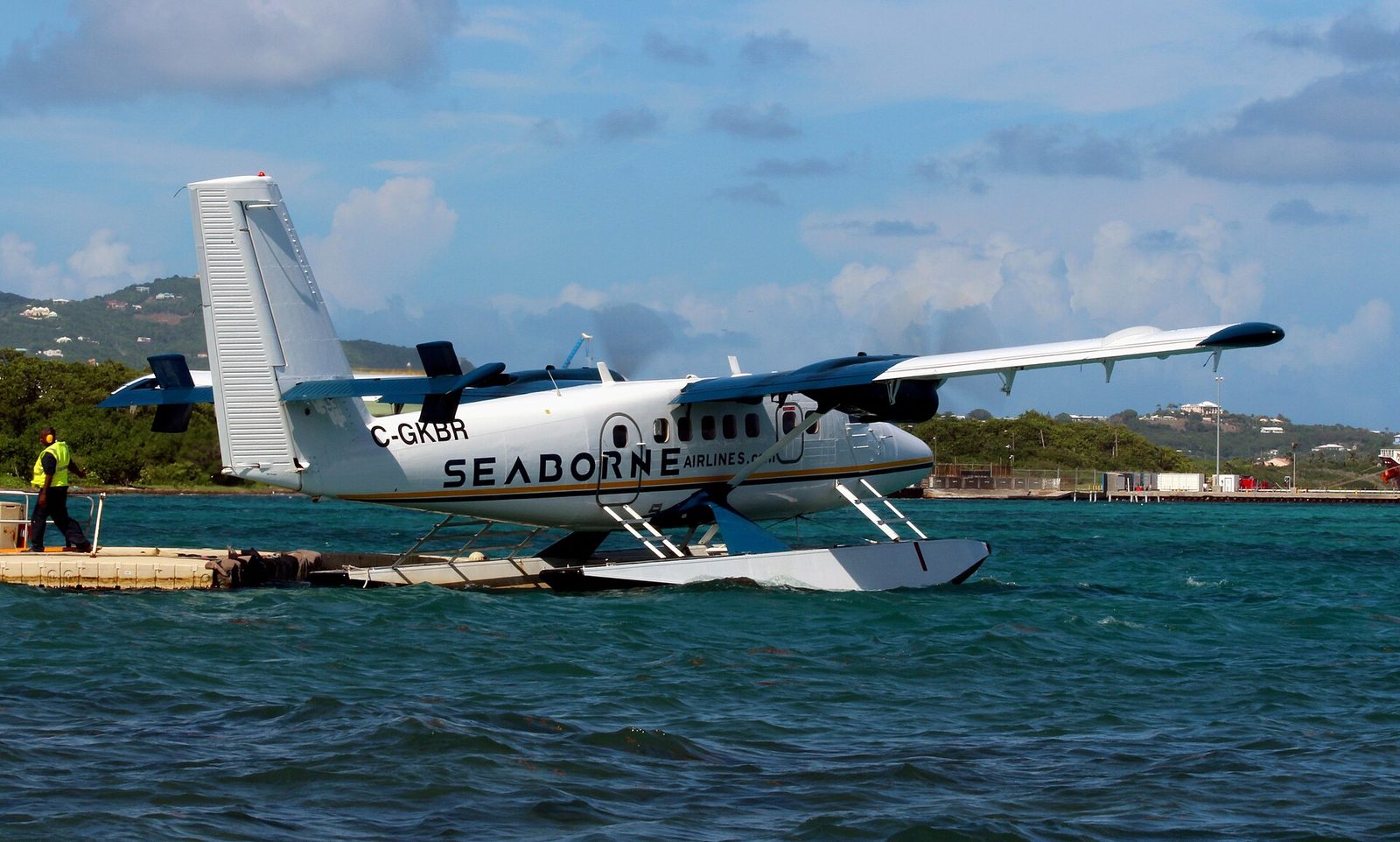
St. Croix is also a good base for exploring the wider territory and Puerto Rico, and the short-haul options are more charming than you might expect. Cape Air runs frequent turboprop service linking St. Croix with San Juan and St. Thomas, and Seaborne operates a seaplane that lands right in Christiansted harbor, a few minutes from the historic waterfront rather than out at the airport. It is a rare thing, a scheduled seaplane that drops you in the middle of town.
For a private traveler, these connections are useful in two ways. If part of your group is arriving from another island or from San Juan, a Cape Air hop or the seaplane can bring them straight to St. Croix without a mainland connection or a long drive at either end. And if you want to spend a day on St. Thomas or in Old San Juan mid-stay, the same links make it a day trip rather than a production, with the villa still your base to come home to.
Most guests, though, land once at Rohlsen and stay put, because the reason to come to St. Croix is that it is quieter and less trafficked than its neighbors. If you would rather get out on the water than back in the air, the island's boat charters run day trips to Buck Island and the reefs, and the concierge can arrange the whole day from the villa without anyone touching an airport.
The drive east to the villa
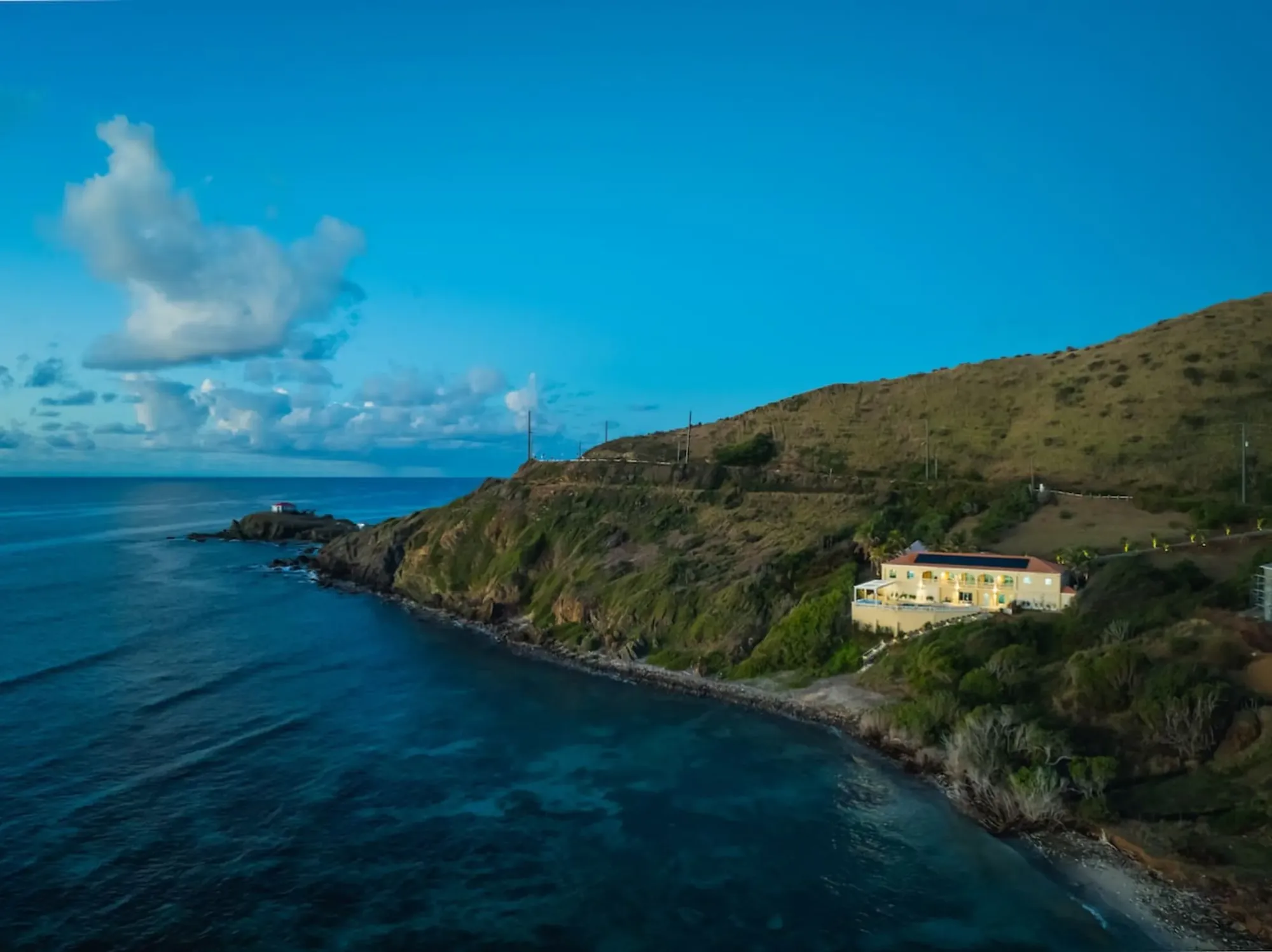
From the FBO, the villa is about 25 to 30 minutes east, out toward the quiet East End where the island narrows and the traffic thins. The route runs past Christiansted and along the northeastern coast, and the last stretch is a gated private drive down to the water. It is a short, easy transfer, and it is the moment where a private arrival really pays off: no rental counter, no line, just a car and the road, with the airport already behind you.
The villa's point and the East End coastline, about half an hour east of the airportPhoto: The Cerulean
The concierge and Sterling Point, the villa's manager, can have a vehicle waiting at Bohlke and provisioning done before you arrive, so a group of twelve goes from the ramp to a stocked kitchen and a private beach without a detour. You can also arrange your own vehicle for the week; the island's car rentals are covered in the directory, and the villa's concierge can set it up either way. Most guests want at least one car on the property for the flexibility of a mid-week run into town.
The drive is also your first real look at St. Croix, which is bigger and more rural than people expect, with cattle pastures, old sugar-estate ruins, and long views to the sea. Christiansted's Danish-era waterfront slides past on the way out of town, and then the road opens up. There is no highway and no rush, just a two-lane road that follows the coast toward the point. By the time you turn down the private drive, the airport feels like it belongs to a different day, and the pace of the island has already taken over.
The Cerulean
Plan it from the villa.
Five bedrooms, a private swimmable beach, and all of this within a day trip.
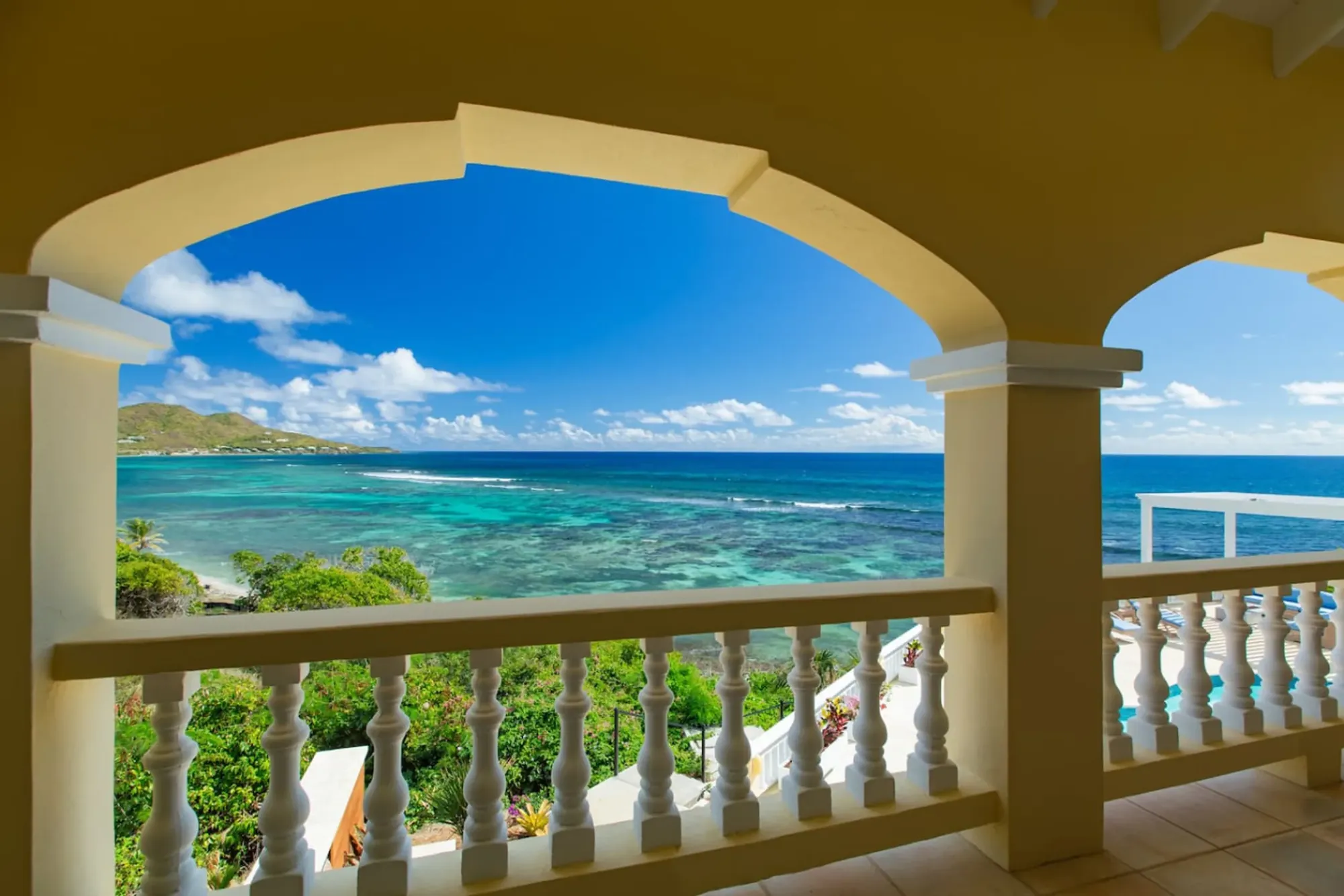
The Cerulean is a five-bedroom oceanfront villa on the East End, built for whole-property use rather than for splitting into rooms. It sleeps twelve across four bedrooms in the main house plus a separate guest cottage with its own kitchen, living room, and bedroom, and an upstairs loft with the sixth bed. That layout lets a multi-generational group or a set of couples spread out and still gather, with the cottage giving one part of the party its own front door.
The rest reads like the checklist a private traveler actually cares about after a long flight: a private pool and a large deck above the water, an outdoor kitchen with a gas grill and a fire pit, a chef's kitchen that guests have singled out as the best-stocked they have rented, and east-facing views that put the sunrise over the water. The whole place was recently renovated, and it is booked and managed directly through Sterling Point, so there is one accountable contact rather than a booking platform between you and the house.
The location is the point. The property has its own beach with direct access to reef-protected water, with snorkeling a few strokes out, and the property is gated and private at the quiet end of the island. Point Udall, the easternmost point in the United States, and the Jack and Isaac Bay preserve are close by, and Christiansted is only fifteen to twenty minutes back the other way when you want a restaurant or a shop.
If you are the one planning the trip, the useful pages from here are the villa overview, the private beach, and the bedrooms for how the twelve beds lay out. When you know your dates and your group, contact Sterling Point directly and the concierge will take it from there, including the car at Bohlke. Flying private is the fast part; the East End is the reason you went to the trouble.
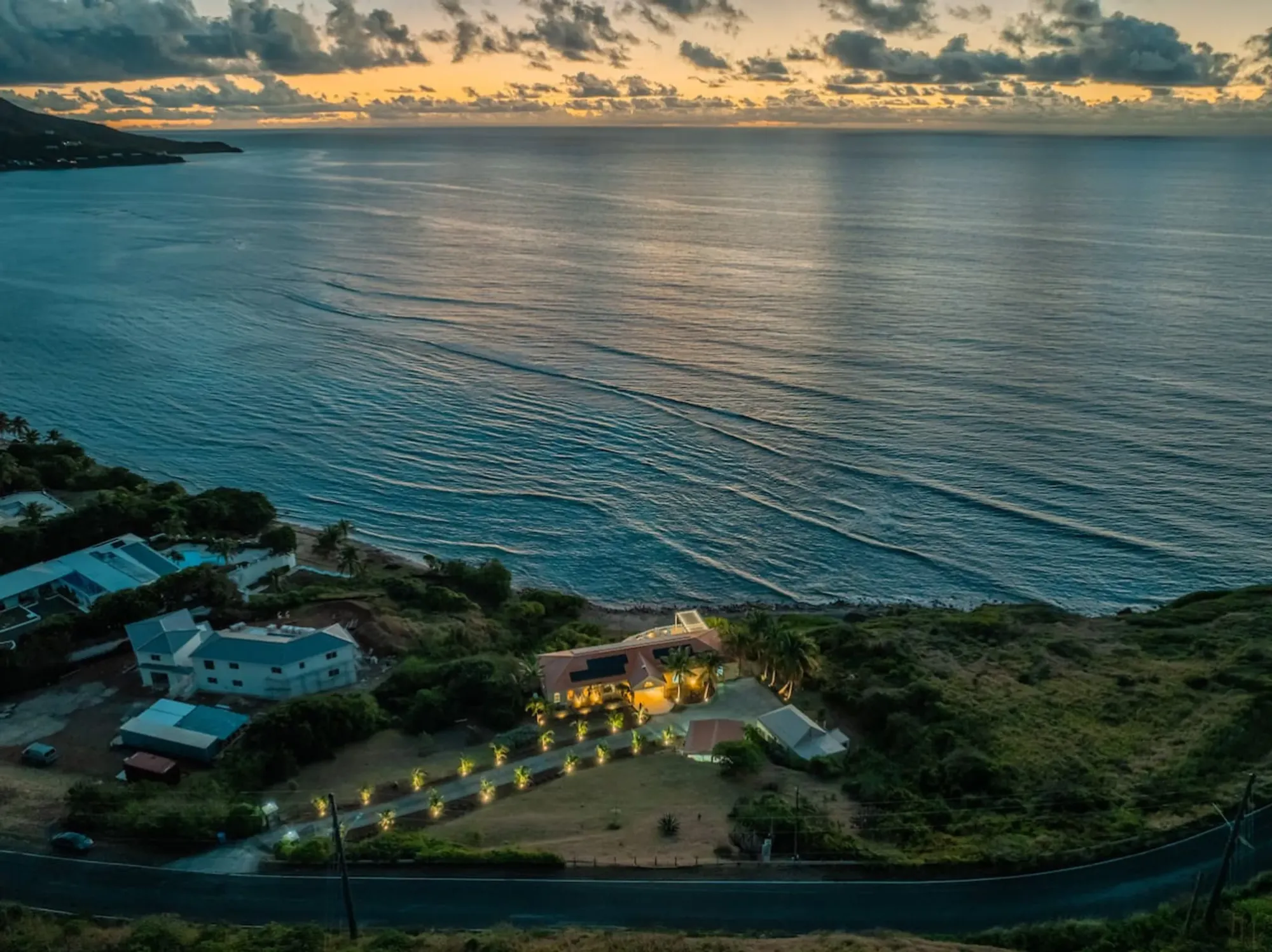
Sunset over the Caribbean Sea from above the East EndPhoto: The Cerulean
Questions people ask
Can a private jet land on St. Croix?
Yes. Henry E. Rohlsen Airport (STX) has a single asphalt runway of 10,002 feet by 150 feet, long enough to receive aircraft up to Boeing 747 size. It has handled a 747, and an Antonov An-124 landed in 2018, so every business jet and airliner that serves the island operates here with room to spare.
Which airport do private jets use on St. Croix?
Henry E. Rohlsen Airport, IATA code STX, ICAO code TISX, in Kingshill near the middle of the island. Private arrivals are handled by Bohlke International Aviation, the fixed-base operator on the field. Bohlke manages fueling, customs clearance, ground handling, and crew or rental cars, so passengers move from the aircraft to a waiting vehicle in minutes.
Do I need a passport to fly private to St. Croix?
The U.S. Virgin Islands are a U.S. territory, so U.S. citizens arriving from the mainland do not need a passport; it is effectively a domestic arrival. Carry a government photo ID such as a driver's license. Non-U.S. citizens still need their normal travel documents. Bohlke clears customs for private arrivals with U.S. Customs and Border Protection on the field.
How long is the flight from New York by private jet?
Teterboro to St. Croix is about 1,450 nautical miles, roughly three hours and forty minutes in the air on a great-circle track. Actual block time varies with routing, winds, and how much reserve fuel the crew carries, so treat it as a planning figure and confirm the real number with your operator when you book the trip.
Can a light jet fly nonstop from Florida to St. Croix?
Usually, yes. South Florida to St. Croix is about 990 to 1,000 nautical miles, and most light jets such as a Phenom 300 or a Citation CJ-series make that nonstop, with midsize and larger cabins certainly able to. From the Northeast, a light jet may need a fuel stop, commonly at San Juan. Ranges depend on payload and winds, so verify with your operator.
Is there an FBO on St. Croix?
Yes, Bohlke International Aviation, a full-service FBO and Part 135 charter operator that has served the Caribbean since 1959 and was voted Best Caribbean FBO in the 2024 Pro Pilot PRASE survey. It has more than 43,000 square feet of covered hangar, Jet A and Avgas, ground power, quick turns, catering, customs clearance, concierge, crew and rental cars, and medevac.
How far is the villa from the airport?
The Cerulean sits on the East End, about 25 to 30 minutes east of Rohlsen by car. Sterling Point, the villa's manager, and the concierge can have a vehicle waiting at Bohlke and arrange provisioning before you arrive, so a group can go from the ramp to the private beach in well under an hour without stopping for a rental counter or a grocery run.
Do I have to clear customs when I land?
St. Croix is a U.S. port of entry with Customs and Border Protection on the field. For U.S. citizens arriving from the mainland it works like a domestic arrival, and Bohlke handles the clearance for private aircraft. It is quick compared with a busy international terminal, but build a little margin into your plans in case the CBP officer is working another arrival.
How much does it cost to charter a jet to St. Croix?
There is no single price. Charter is quoted per trip by aircraft class and routing, so a light jet from Florida and a large-cabin jet from New York are very different numbers. Empty-leg repositioning flights can lower the cost when your schedule is flexible. Get a firm quote from a Part 135 operator or from Bohlke, and compare it against the season and the group size.
Can I connect to another island after I land?
Yes. San Juan is only about 40 nautical miles away and is the region's main connecting hub, a short hop by Cape Air or a light jet. Seaborne's seaplane and Cape Air also link Christiansted with San Juan and St. Thomas, so guests continuing on can do so without a long drive. The concierge can help line up the onward leg alongside the ground car.
Sources
Facts in this guide were checked against these primary sources in 2026. Hours, prices and schedules change — confirm before you go.
We use essential cookies to run this site and, with your consent, Google Analytics to see which pages visitors use and the Meta Pixel to show The Cerulean’s ads on Facebook and Instagram to people who visited. See our Privacy Policy.