

The CeruleanSt. Croix · U.S. Virgin Islands
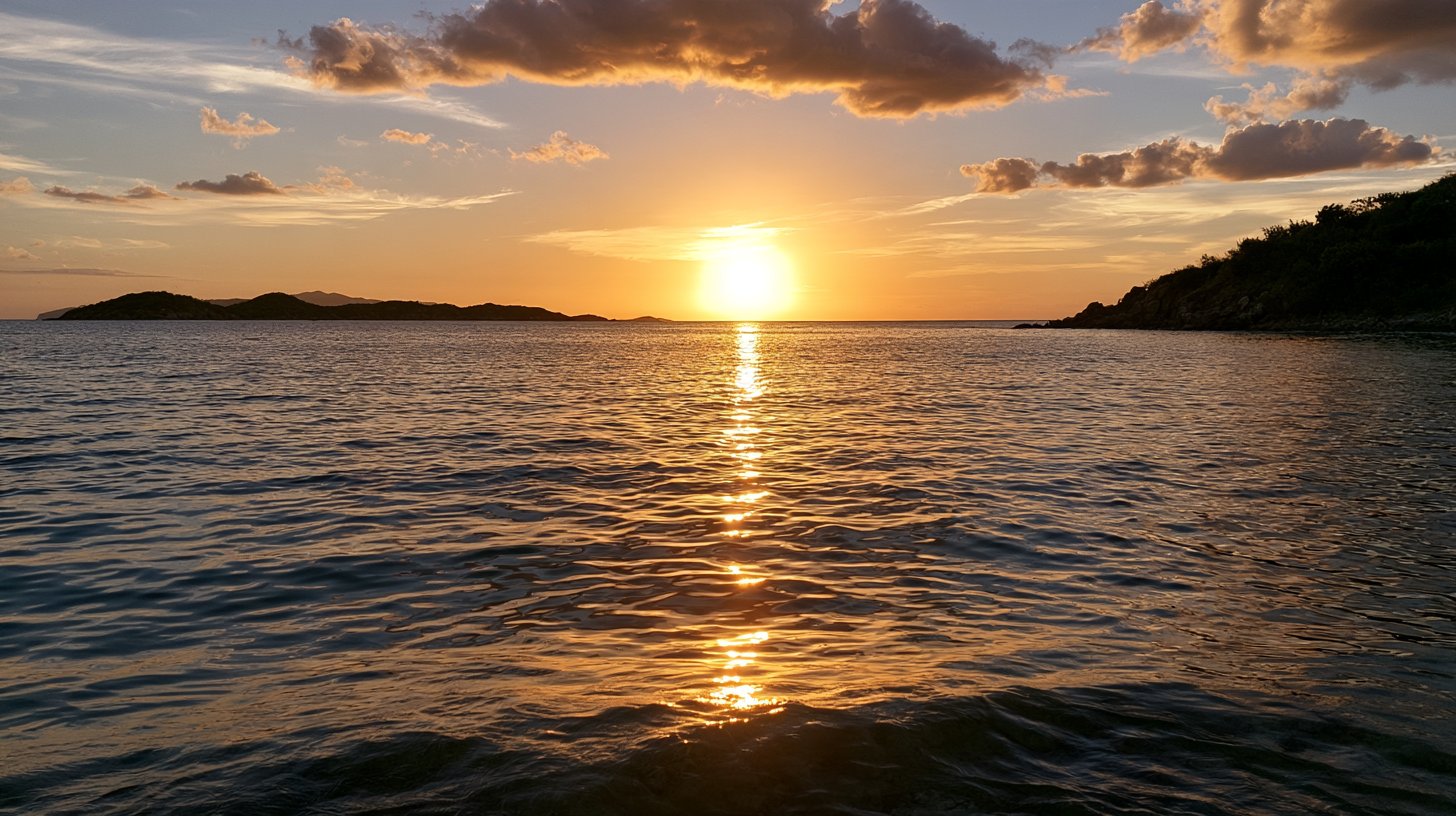
An original illustration of a Caribbean sunset over calm water

The Best Time to Visit St. Croix: Month by Month

St. Croix's East End month by month: 84°F winters, the Christmas Winds, festival dates, when the nonstops run, and what each month is best for.

Original illustration

There is a good week on St. Croix's East End in every month of the year, and the island changes with the calendar in ways worth knowing when you choose yours. The airport's highs move only from about 84°F in January to about 89°F in August; what changes through the year is the breeze, the festival dates, the flights and how far in advance the villa's calendar fills. This guide walks through the year month by month.

The short answer

If you want the classic Caribbean winter, come between mid-December and April. February and March are the driest months in the NOAA normals for the airport, January is the clearest by cloud cover, highs sit in the mid-80s, and the events calendar stacks up: the Crucian Christmas Festival at the turn of the year, Agrifest on Presidents' Day weekend, and Taste of St. Croix in the spring. It is also the most popular stretch of the year, so the best weeks book early, and it is when the mainland nonstop schedule is fullest.

If you want most of that at a gentler price, come in May or June, or in November. Rates ease, the sea is warmer than in winter, and the roads and beaches are quieter. Late spring brings calm water for boat trips and the longest days of the year, with sunrise before six by June; November brings the trade winds back, a sea still in the low 80s, and the green hills of late fall.

If you want the best rates and the emptiest beaches, late August through October is the window. Days are hot and bright, the sea is as warm as it gets, and October brings the year's lightest winds, often the easiest conditions for a dive on the north shore's wall. Keep the boat days flexible and enjoy the quiet.

That is the whole guide in three paragraphs. The rest is the why, with the numbers behind it; where a date is in the future, we say so, because island schedules can move.

How the year works on St. Croix

Start with temperature, because it barely changes. The 1991–2020 NOAA normals for Henry E. Rohlsen Airport, on the south shore, put the average daily high at 84.2°F in January and 89.5°F in August; the average low runs from 71.2°F in January to 77.4°F in August. That is a five-degree swing across the whole year. Pack for warm and you have packed for every month.

Rain here mostly means a passing shower. The airport averages about 37 inches a year, and much of it falls in short bursts before dawn or late in the afternoon; a day that counts as a rain day in the records is often ten minutes of rain at dawn and then a bright morning. The driest stretch is February and March, at 1.35 and 1.62 inches in the normals, and June, in the middle of summer, stays nearly as dry at 1.92. The showers of late spring and fall are what keep the hills green, and the table further down has every month's numbers.

The trade wind is the third variable and the one visitors underrate. It blows from the east most of the year, and it is why the East End, where The Cerulean sits facing the sunrise, feels cooler than the numbers suggest. Weatherspark's data for the island puts the windiest stretch from early June to late August (July averages about 16 mph) and the calmest in October (about 12 mph), with the winter's Christmas Winds arriving in bursts rather than as an average.

The sea barely changes at all: about 79°F at its coolest in February, about 84°F at its warmest in September, per Weatherspark. Daylight runs from about 11 hours in late December to about 13 hours in June, and sunrise on the East End comes at roughly 5:41 in early June and 6:51 in mid-January. St. Croix stays on Atlantic Standard Time all year, so in summer it matches Eastern Daylight Time and in winter it is one hour ahead of the East Coast.

84°FJanuary high
89°FAugust high
79–84°FSea range
Feb – MarDriest months
11–13 hoursDaylight

The high season, mid-December through April

This is the St. Croix on the postcards, and the postcards are accurate. From the week before Christmas through Easter, the island runs on its dry-season settings: highs from about 84 to 86°F, lows in the low 70s, and, in the airport normals, three of the year's four driest months (February, March and January; June, oddly, is the other). Weatherspark's cloud-cover data marks January as the clearest month of the year, with skies clear or mostly clear about 80 percent of the time, and its "clearer" season running from mid-November to late April. The sea is at its coolest, which on St. Croix still means 79 to 80°F.

The calendar stacks in high season, and that is half the appeal. The Crucian Christmas Festival fills Frederiksted from late December into the first days of January, with the Festival Village, J'ouvert, and the Children's and Adults' Parades on King Street. Agrifest, the territory's biggest agricultural fair, takes over Estate Lower Love on Presidents' Day weekend in February. Taste of St. Croix has traditionally landed in mid-April. Jump Up nights in Christiansted come around quarterly. If a festival is the reason you are coming, read the events section below before you commit to dates, and for the holidays themselves our Christmas and New Year's guide has the festival schedule, the holiday flights and the island's Christmas food.

A little planning makes the season easy. The villa's holiday and Presidents' week dates go first, and the boats and restaurants that everyone wants fill early, so book those as soon as your dates are firm. Airfares are highest around Christmas, New Year's, the February school breaks and Easter, and this is also the only stretch when all five mainland nonstop cities are in the schedule at once. The Christmas Winds bring full sails and lively boat crossings for a few days at a time. And on the East End the mornings are the show: in January the sun comes up out of the sea in front of the veranda at about ten to seven. For a spring break week, our spring break and Easter guide has the 2027 school calendars, the spring flights and the island's Easter weekend.

In short: if this is your one Caribbean week of the year and you want the surest weather, book high season and book it early. The weather-by-month guide has the finer numbers; the Getting Here page has the flight schedule for the winter you are looking at. And whichever month you choose, St. Croix is U.S. soil, so a Caribbean villa week here needs no passport — a flight and a REAL ID.

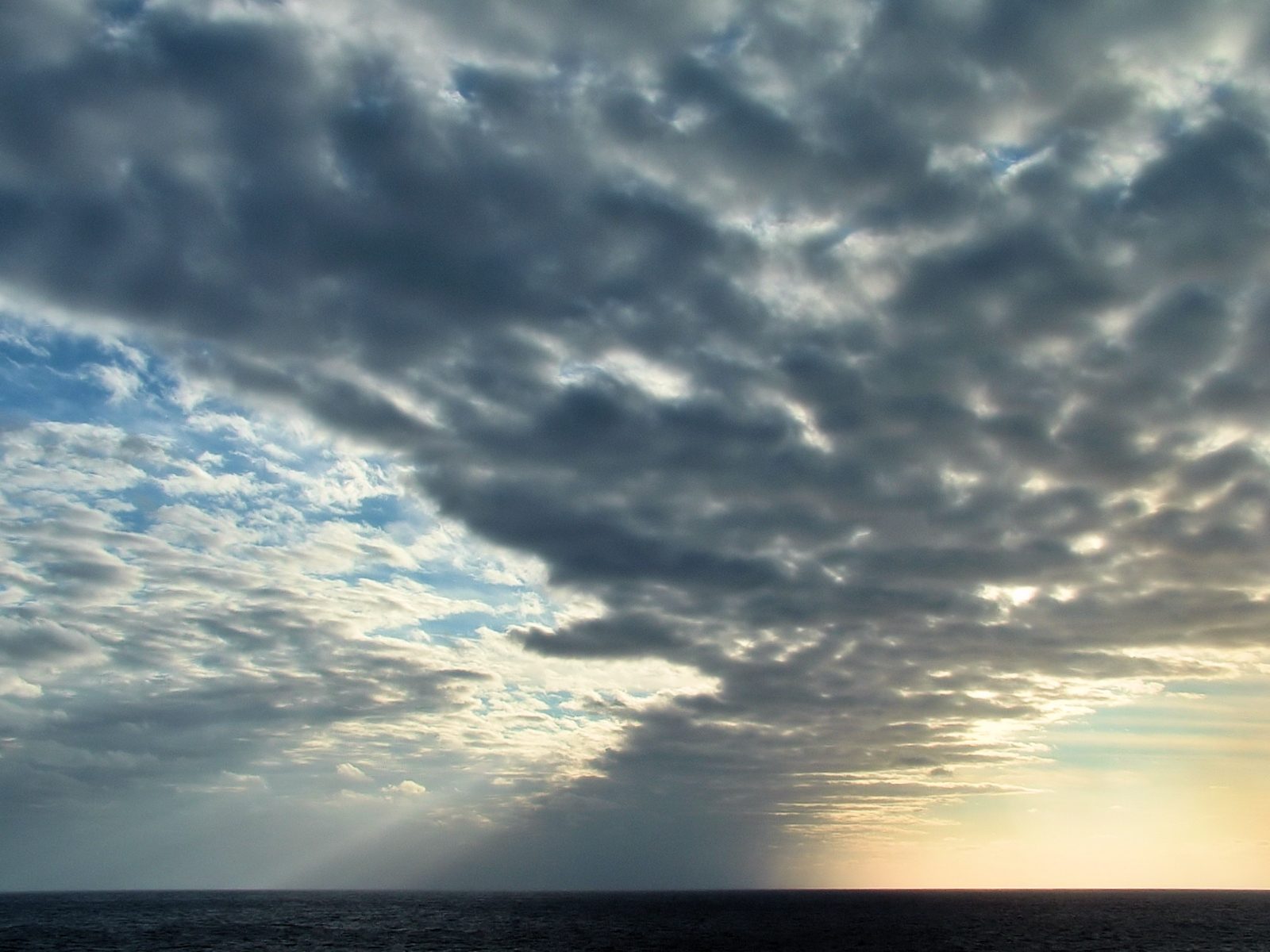
Sunrise over Caribbean Sea
A sunrise over open water. On an east-facing coast the first light comes straight up out of the sea, and winter mornings come up clear more often than any other season. Photo: Paul Harrison (CC BY-SA 4.0)

The Christmas Winds on the East End

Every winter guide to the Caribbean mentions the Christmas Winds and few explain them. The short version: from roughly mid-December into January, high pressure to the north of the islands strengthens, the pressure gradient across the trade-wind belt tightens, and the easterly trades that blow at 12 to 15 mph most of the year run harder for days at a time. Sailors writing in Cruising World note that such conditions "blow like this for a few days, but rarely a week," and between spells the wind drops back to normal.

What that means for a visitor depends entirely on which coast you are on. On a north-shore beach, a strong winter trade wind and the winter swells from the north can bring surf, which makes it a day to snorkel somewhere else; the north-facing shore is also where the island's dive wall drops off, and dive shops pick the site to suit the day. On the south and east shores the same wind is a fresh breeze off the water. At The Cerulean the verandas face east into it, so the wind that livens up a north-shore beach is, on the deck, the house's own ventilation.

The practical adjustments are small. Boat operators watch the forecast and move departures or destinations; a Buck Island morning in the Christmas Winds is often a lively crossing followed by a calm lagoon, since the reef takes the sea. Kites fly. Hair does not stay put. If a calm-water day is essential to you (a nervous first-time snorkeler, a toddler at the shoreline), pick a west-side or protected south-shore beach for that day, and keep the villa's own beach for the mornings before the wind builds.

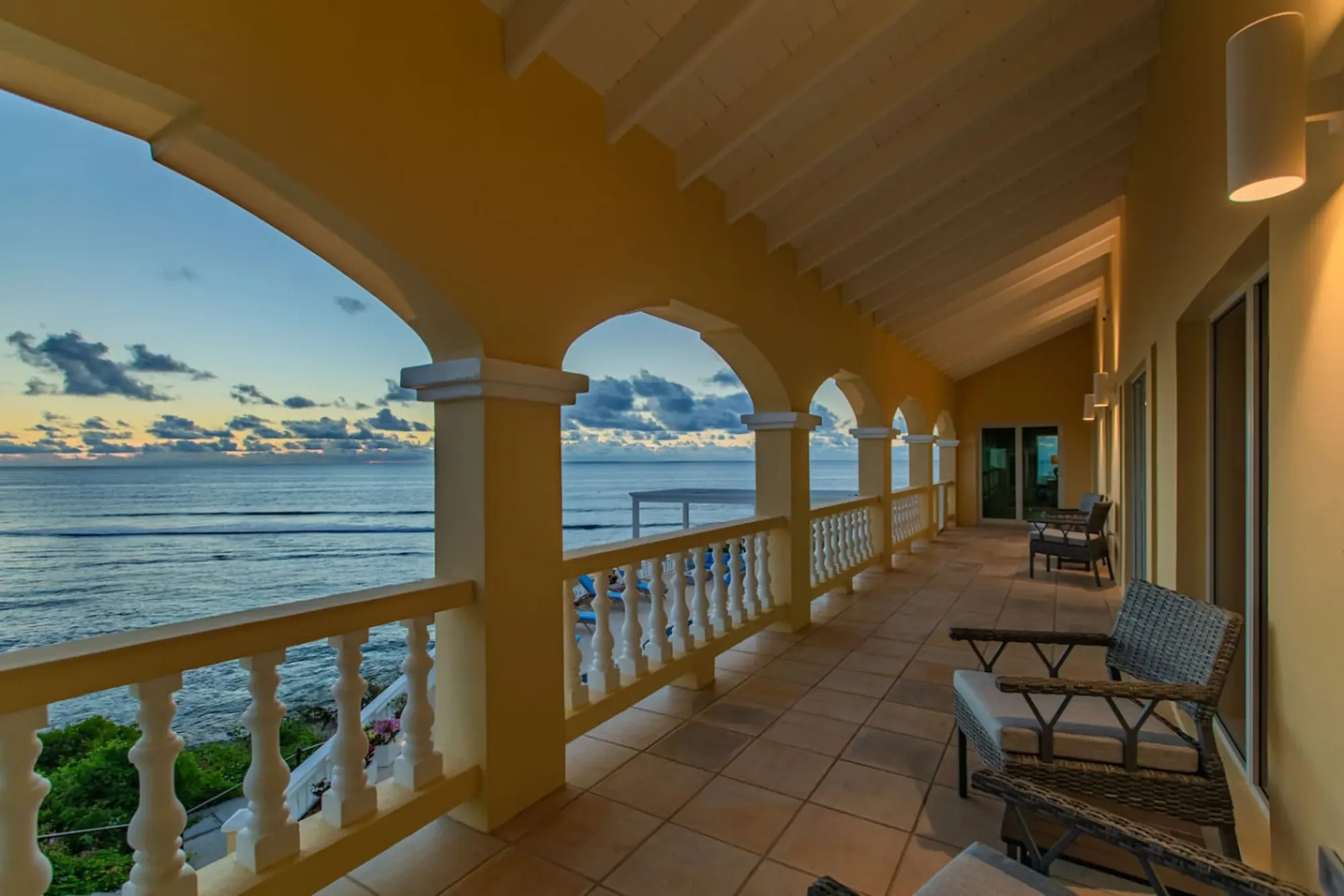
The arched veranda faces east: in winter the trade wind comes straight across it, and the sunrise comes up out of the sea in front of the villa.
The arched veranda faces east: in winter the trade wind comes straight across it, and the sunrise comes up out of the sea in front of the villa. Photo: The Cerulean

May and June, the first shoulder

May and June are the connoisseur's months on St. Croix, and the numbers back that up more than the brochures do. Highs edge up to about 87 to 89°F at the airport, the sea climbs into the low 80s, and demand drops sharply the moment the mainland's spring breaks end. Rates ease, the flights settle into their summer schedule, and the beaches that were busy at Easter go back to a handful of people. For a group that wants the winter island at a summer price, this is the window.

Late spring is also an easy stretch on the water. From April through June the boat crossings are usually calm, which makes these good months for a first Buck Island trip or a nervous snorkeler, and the days are the longest of the year, about 13 hours and 13 minutes of daylight in June, with sunrise at roughly 5:41 by early June. May's showers usually come overnight and leave a washed-clean morning behind them, and June is one of the four driest months in the airport normals, at 1.92 inches. The first hour of a June day, with the sun up before six, is the coolest and stillest hour on the beach, which is the best argument there is for an early swim.

May and June are turtle months, too. Leatherbacks are nesting at Sandy Point on the West End, and the first hatchlings appear from mid-May; the story is in the sea turtles guide. Greens and hawksbills work the reefs on the East End all year, and the sea is warm enough now that a long snorkel off the villa's beach needs no wetsuit at all.

The one thing to plan around: Taste of St. Croix's 2026 edition was moved from its traditional mid-April slot to mid-June, and the organizers had not published a 2027 date at the time of writing. If a food festival is on your list, check before you fix the dates. Otherwise, come in late May or the first half of June, book a boat for a weekday, and have the island's spring calm with a summer-warm sea.

July and August, full summer

July and August are full summer: airport highs of 89.2 and 89.5°F, lows around 77°F, and, by Weatherspark's reckoning, the breeziest stretch of the year, which runs from early June to late August with July averaging about 16 mph. The breeze is what makes a 90-degree afternoon on the East End comfortable, and the villa's verandas face straight into it. Showers come and go quickly; sunrise is around 5:45 to 6:00, so the beach day starts early and the pool takes the afternoon.

Summer is also the season for turtle outings. In June and July the St. Croix Sea Turtle Project runs daytime Turtle Tracks and Shells walks and evening Sunset Watch sessions at Sandy Point, where the leatherbacks nest into July and the hatchlings dig out at night and make their run for the water. Closer to the villa, green turtles start nesting at Jack and Isaac Bay in July, and the villa's own reef is warm enough for a long look. The rules are simple: keep your distance and skip lights and flash.

The long days are the other summer gift. The sun sets latest of the year, close to 7 pm in early July, so a beach morning, a slow afternoon at the pool and dinner on the terrace while it is still light all fit into the same day. The sea is in the low 80s and climbing toward its September high, comfortable for a whole morning in the water without a wetsuit, and the trade wind keeps the shade on the veranda comfortable through the afternoon.

Summer also brings quiet beaches, school-break dates for families, mangoes, and Mango Melee, the botanical garden's July fundraiser (Sunday, July 12 in 2026, $10 for adults). Early July carries one of the island's most important dates: July 3 is Emancipation Day, which marks the day in 1848 when Governor-General Peter von Scholten proclaimed emancipation at Fort Frederik in Frederiksted, and the Fourth of July follows the next day. Late August is quieter still, and island rates start easing toward their yearly low. Bring a rash guard, use reef-safe mineral sunscreen, and treat the mornings as the main event; that is what the packing guide is for. For a family week in June or July, our family summer guide has the 2027 school dates, the summer flights and a day-by-day plan.

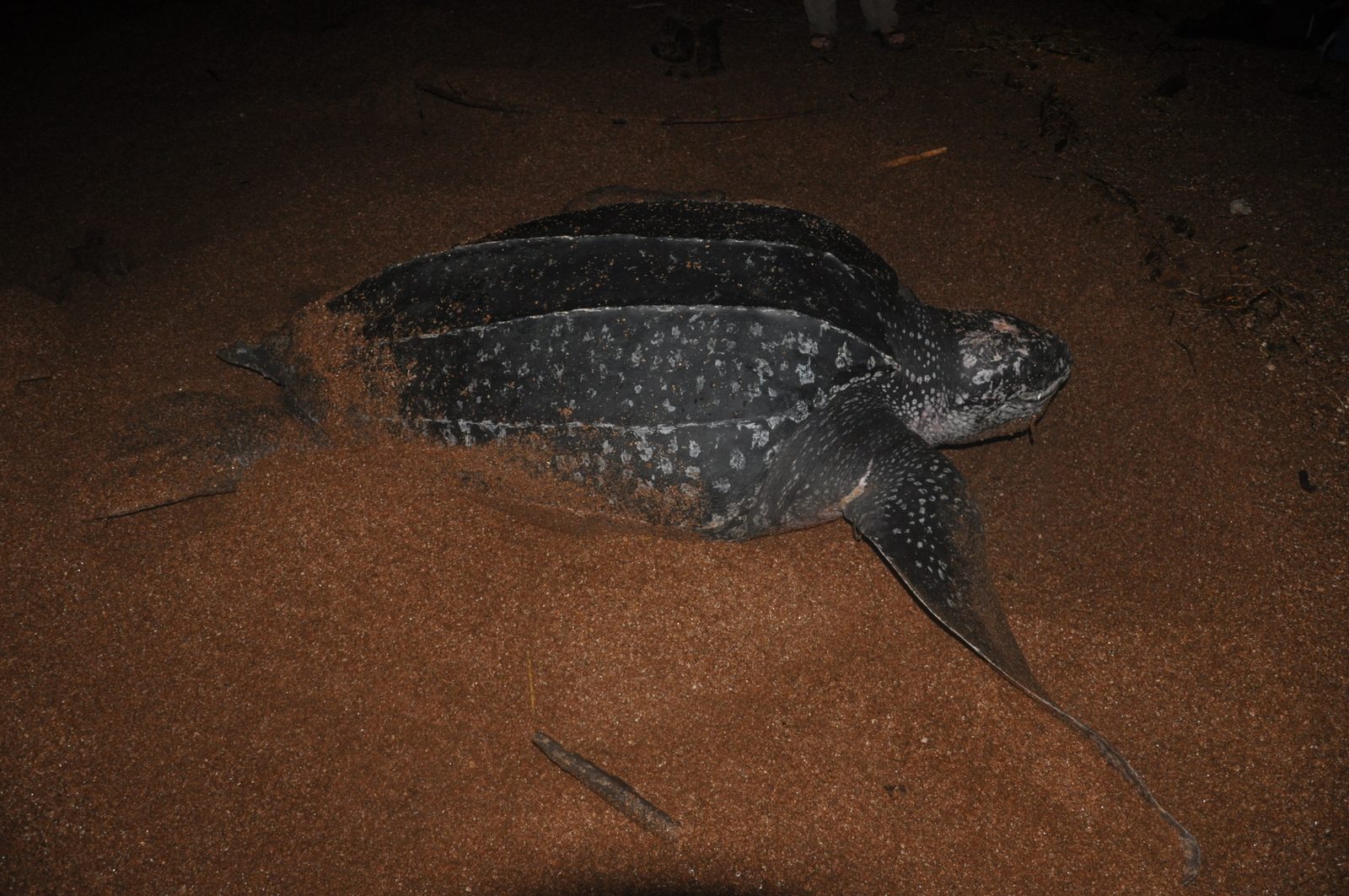
Dermochelys coriacea Leatherback Turtle returning to the sea after laying - panoramio
A leatherback turtle returning to the sea after nesting. In U.S. waters, NOAA puts the leatherback nesting season at March to July, and the eggs hatch about two months after they are laid. Photo: Marco Farouk Basir (CC BY-SA 3.0)
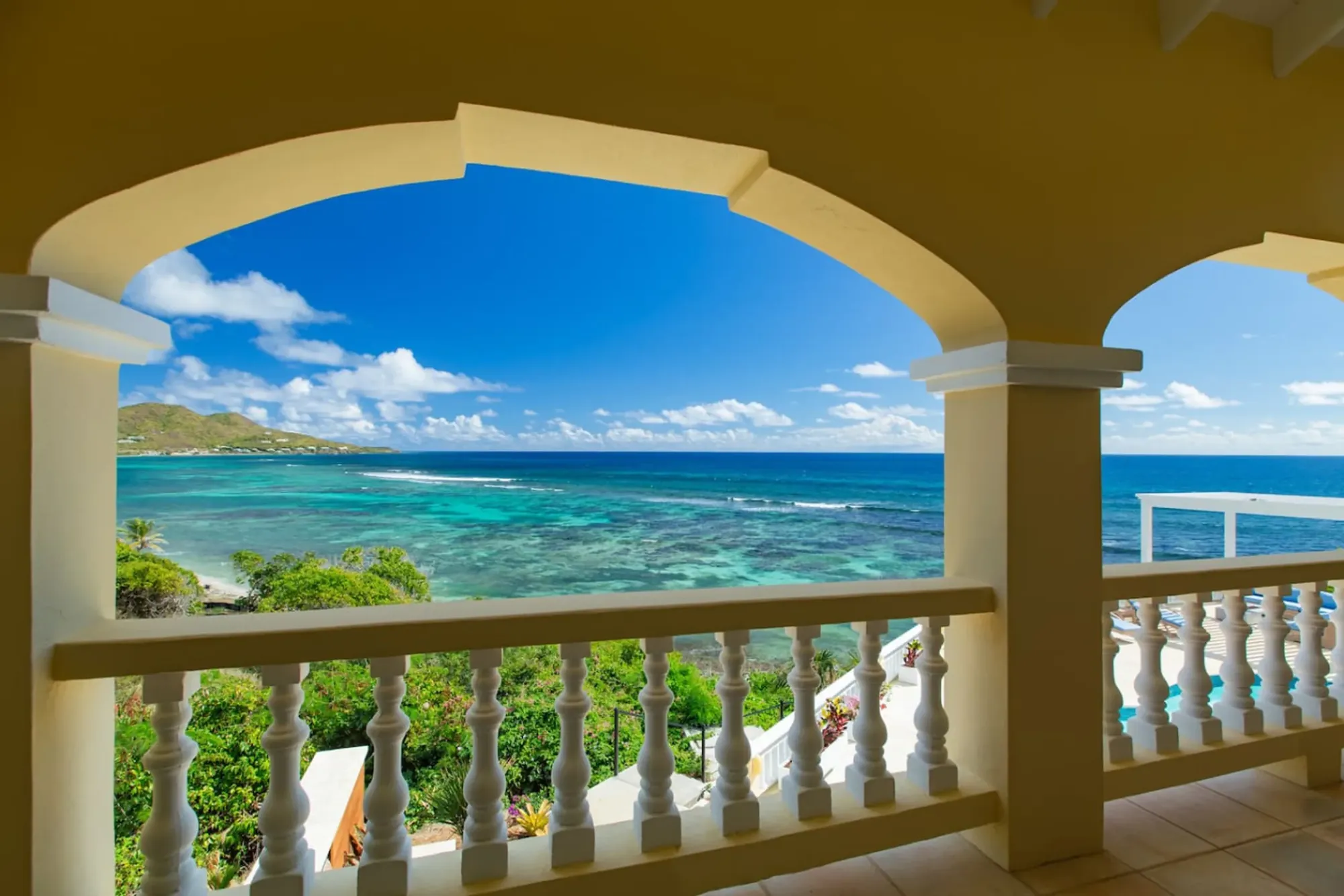
Turquoise bay framed by the villa's arched veranda
The Cerulean

Plan it from the villa.

Five bedrooms, a private swimmable beach, and all of this within a day trip.

Sleeps 12 · 4.90 ★ · rates by season

September and October, the quiet months

These are the island's quietest months. The sea is at its warmest of the year, about 84°F in September by Weatherspark's average, and October is the calmest month for wind, at about 12 mph. The hills are green, the showers that come through are quick, and the calendar is empty in the way only a Caribbean island in September is empty: beaches to yourself, restaurants happy to see you, boats with room.

This is also the best value of the year. Island lodging and airfares generally reach their lowest now, and the villa's calendar has the most open weeks, so a September or October week brings the same house, beach and reef at the year's softest pricing. October's light winds often make for the year's easiest sea conditions on the exposed north shore, where the dive wall is, and the warm water means long, comfortable snorkels off the villa's beach. At Cane Bay the wall is a shore dive: a surface swim of roughly 100 to 200 yards from the beach to a mooring in 25 to 40 feet of water, then a short swim over the reef to the lip, and two of the island's dive shops guide it. Our wall diving guide has the details.

A few tips make the season easy. Keep the itinerary loose so a boat day can move to whichever morning is calmest, and call ahead before a lunch out, since some places keep shorter hours in the fall. The season for tropical weather runs June through November, and our hurricane season guide covers what to know. For everything else, the concierge can tell you which boats and restaurants are running in your week.

Who loves these months: repeat visitors who know the island and want it quiet; divers; couples who would rather have the beach than the festival; families whose children are not yet in school; anyone who wants the warmest sea of the year and the reef almost to themselves.

November, the second shoulder

November is when the island turns toward winter, and it is a lovely month to be here. The trade winds settle back in, highs ease to about 87°F, lows to the mid-70s, and the sea stays warm at about 83°F. The hills are green from the fall showers, which come mostly at night and between long bright stretches, and Weatherspark's "clearer" season begins in mid-November.

The island gears up for the season, too. Thanksgiving week is the first busy week of the winter, and, from October 31, 2026, United's Saturday Newark nonstop is in the schedule, the first New York-area nonstop to St. Croix in more than 30 years, which makes a late-November East End Thanksgiving a one-flight trip for a New York family. In 2026 the holiday falls on Thursday, November 26, and our Thanksgiving guide has the flights, the weather and the long weekend's events. Christiansted's galleries traditionally stay open late for Art Thursday on the third Thursday of each month from November through May, and Frederiksted's free Rhythms at Sunset waterfront concert is listed for Friday, November 20. Some years the Beauty and the Beast Triathlon, the locally run successor to the old Ironman 70.3 St. Croix, is on the calendar in late fall.

The village of Frederiksted starts building toward the Crucian Christmas Festival in December, and December grows busier every week toward Christmas. If you want the winter island before winter prices, the second and third weeks of November are the sweet spot: the trade winds are back, the holiday premium has not started, and the calendar is as empty or as full as you choose.
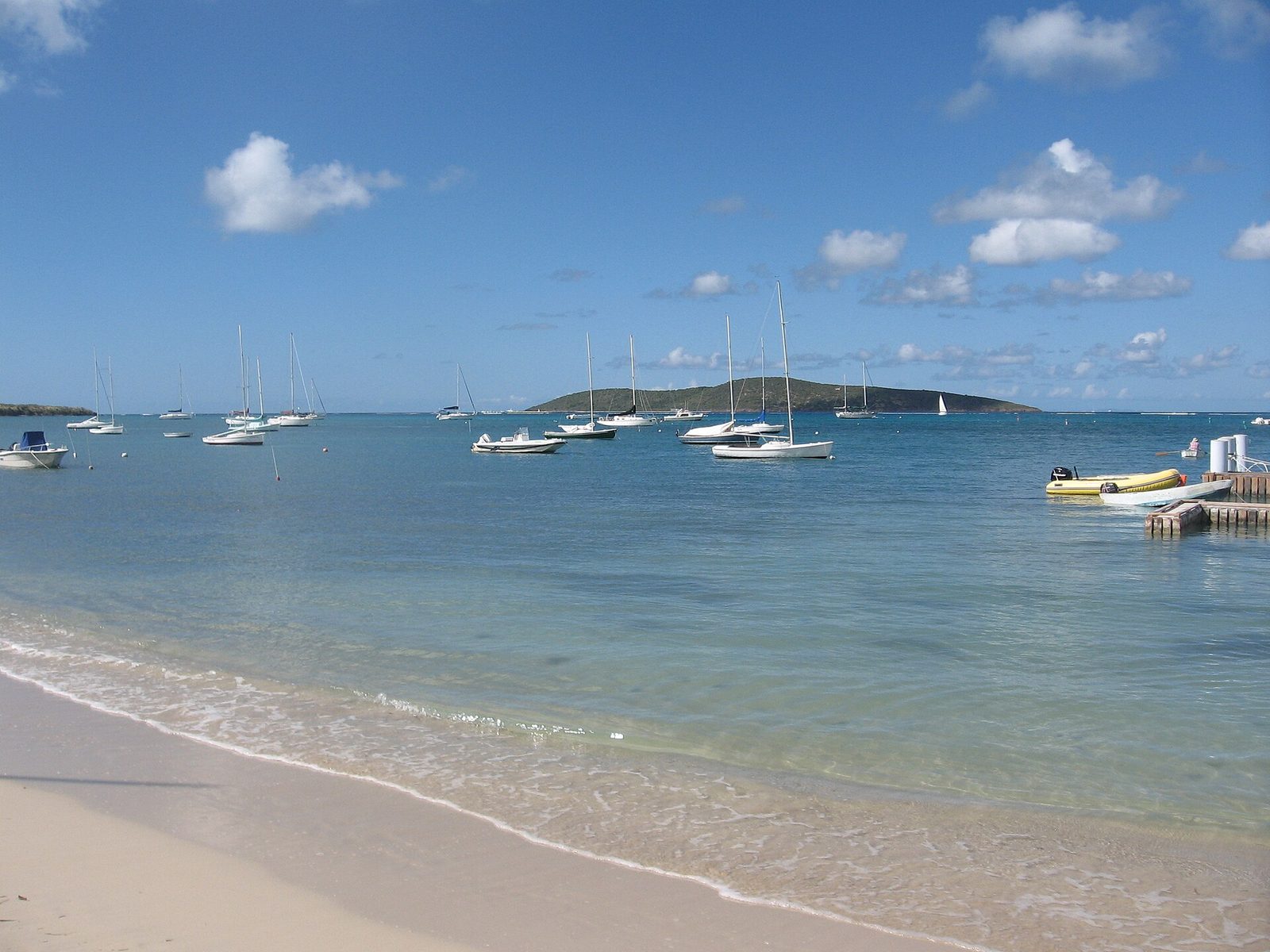
2008-01-27 Teague Bay Beach St. Croix USVI
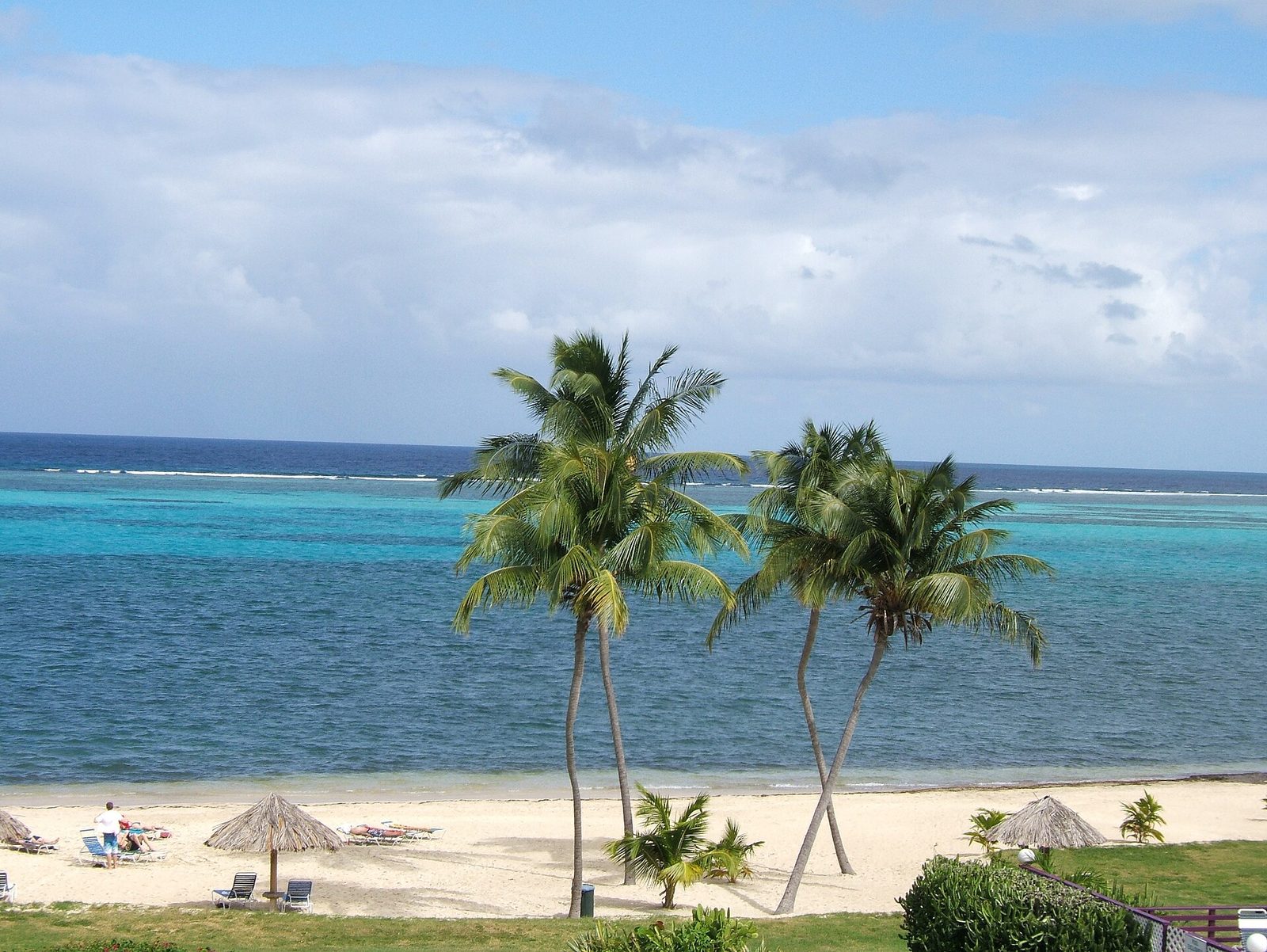
St. Croix's East End bays: the windward side of the island, where the trade wind arrives first and where the villa faces the sunrise. Photo: Jpheym Jason P. Heym / Seascape Pool Center Inc. (CC BY-SA 3.0)

The month-by-month table

The table below is the whole guide in twelve rows. Temperatures and rainfall are the NOAA 1991–2020 normals for Henry E. Rohlsen Airport (rain rounded to a tenth of an inch); sea temperatures are rounded from Weatherspark's average curve for the island (about 79°F at the February low, about 84°F at the September high) and are approximate; the notes are ours. Every future event date should be confirmed with the organizer before you build a trip around it.

MonthAirport high / lowRain (in)Sea (approx.)Highlights
January84.2 / 71.2°F1.9~80°FClearest skies of the year. Christmas Winds spells. Festival parades in the first days. Peak season.
February84.6 / 71.4°F1.4~79°FDriest month. Agrifest on Presidents' Day weekend. School-break weeks book early.
March85.0 / 71.5°F1.6~79°FSecond-driest. Steady trades. The classic winter week. Book boats early.
April86.0 / 73.4°F2.2~80°FEaster weeks, then quiet beaches. Turtle Watch nights at Sandy Point. Taste of St. Croix's traditional month.
May87.1 / 75.4°F3.6~81°FRates ease. Calm boat days. Leatherbacks nesting, first hatchlings. Warm sea, few crowds.
June88.7 / 76.9°F1.9~82°FLongest days of the year. Warm sea for long snorkels. School breaks begin. Value month.
July89.2 / 77.3°F2.6~83°FBreeziest month. Mango Melee. Turtle walks and Sunset Watch. Families on break.
August89.5 / 77.4°F3.2~83°FWarm sea. Quiet beaches. Island rates start to ease. Summer family weeks.
September89.0 / 76.6°F4.9~84°FWarmest sea of the year. Emptiest beaches. Best value of the year.
October88.4 / 76.0°F5.0~84°FCalmest winds. Easiest north-shore diving. Lowest rates. Green hills.
November86.8 / 74.4°F5.3~83°FTrade winds return. Clearer skies from mid-month. Thanksgiving. Newark nonstop from Oct 31, 2026.
December85.1 / 72.5°F3.3~81°FChristmas Winds arrive. Festival Village opens late month. Holiday weeks book early. All nonstops running.

A few readings from the table that are easy to miss. From the coolest month to the warmest is about five degrees of air temperature and five of sea, so every month is a beach month; nobody is coming for the thermometer. June's light rainfall makes early summer a second prime season for people who do not need to be here in February. And the quietest months are also the best value, which is why September and October suit travelers with flexible dates so well. If you take one thing from twelve rows, take this: February and March for the classic winter week, May and June for value and a warmer sea, November for the winter island a month early, and September or October for the warmest sea and the emptiest beaches.

Events worth planning around

St. Croix's big festival dates are well known and, in most years, firm enough to plan around. The Crucian Christmas Festival is the largest. Formally established in 1952, with roots in the Christmas-week celebrations of the enslaved in the early 1800s, it runs from December into the first week of January, with the Festival Village in Frederiksted, food vendors, pageants, calypso and soca competitions, cultural fairs, a before-dawn J'ouvert, and the Children's and Adults' Parades down King Street a block up from the waterfront. The published dates for the coming season are December 26, 2026 to January 2, 2027; the season traditionally runs toward Three Kings Day on January 6. The festival guide has the schedule and the etiquette.

Agrifest, the Agriculture and Food Fair, is Presidents' Day weekend at the Rudolph Shulterbrandt Agricultural Complex in Estate Lower Love: three days of livestock judging, local produce, plants, crafts, food stalls, donkey-cart rides and music, billed as the largest agricultural festival in the territory. The 2027 dates are February 13 to 15, admission around $6 for adults. Read the Agrifest guide if food is your reason for the trip; the local food alone justifies the drive.

Taste of St. Croix, the island's chef-and-restaurant showcase, has been held since 2001 and traditionally lands in mid-April at Divi Carina Bay on the island's southeast shore. Its 2026 edition was moved to mid-June, and as of this writing the organizers list the 2027 date as to be announced, so treat "April" as a tradition rather than a promise. Mango Melee, the St. George Village Botanical Garden's biggest fundraiser, was a Sunday in July in 2026 (July 12, 11 am to 5 pm, $10 adults, $5 for children 5 to 12) with more than 100 vendors, a 4 pm mango-eating contest, and Cruzan Rum bars. Jump Up closes Christiansted's streets four times a year. The island's triathlon course lives on, too: the Ironman 70.3 St. Croix, the May race that once anchored the spring, has given way to the locally run Beauty and the Beast Triathlon, which has carried the course, with its swim in Christiansted harbor and "the Beast" climb, in some years since, generally late in the year. Check whether it is on before you promise anyone a race.

  1. Dec 26, 2026 – Jan 2, 2027Crucian Christmas Festival: Festival Village, J'ouvert and the parades in Frederiksted
  2. Feb 13–15, 2027Agrifest at Estate Lower Love, Presidents' Day weekend
  3. Mid-April (traditionally)Taste of St. Croix at Divi Carina Bay (2027 date to be announced)
  4. April, Friday and Saturday nightsTurtle Watch at Sandy Point with the St. Croix Sea Turtle Project, by advance sign-up
  5. A Sunday in July (Jul 12 in 2026)Mango Melee at St. George Village Botanical Garden
  6. Four times a yearJump Up street party in Christiansted
  7. Oct 31, 2026United's first Saturday Newark–St. Croix nonstop
  8. Dec 17 and 19, 2026Winter nonstops start: Charlotte daily, then Atlanta daily and Chicago Saturdays

Nature's calendar of turtles and sunrise

The island runs on a second calendar that no festival committee controls, and for a villa on the East End it matters more than the first. Sea turtles set much of it. Leatherbacks, the giants, nest at Sandy Point on the West End from about March into July, and the refuge is set aside for them from April 1 through August 31; the rest of the year it opens on weekend days, and in April the St. Croix Sea Turtle Project's Turtle Watch takes visitors out on Friday and Saturday nights, by sign-up well ahead. Greens and hawksbills use the reefs and seagrass year-round, and guests have met turtles on the reef in front of the house. The rules are simple and the sea turtles guide spells them out: distance, no lights, no flash, mineral sunscreen.

Closer to the villa, the turtle year runs even longer. Hawksbills nest at Buck Island roughly from April through November, and The Nature Conservancy's preserve at Jack and Isaac Bay, about five minutes from the villa, holds the largest nesting populations of green and hawksbill turtles on St. Croix, with a nesting season that runs from July to December. Put the species together and some turtle is nesting somewhere on the island in every month except, roughly, January and February. A quiet morning snorkel off the East End, in any season, is a fair chance to meet one feeding in the seagrass.

And sunrise sets the day, every day, because the villa faces it. From the sunrise-sunset.org tables for Christiansted, the earliest sunrise of the year is about 5:41 am in early June and the latest about 6:51 am in mid-January; the sun sets earliest around 5:42 pm in late November and latest around 6:59 pm in early July. Day length runs from about 11 hours 6 minutes at the December solstice to about 13 hours 13 minutes in June. In winter you can watch the sunrise from the veranda at a civilized hour and be in the water by 7:30; in summer, the light is up before six and the coolest, stillest hour of the beach day is the first one. Either way, the mornings are the point, which is what our journal keeps saying.
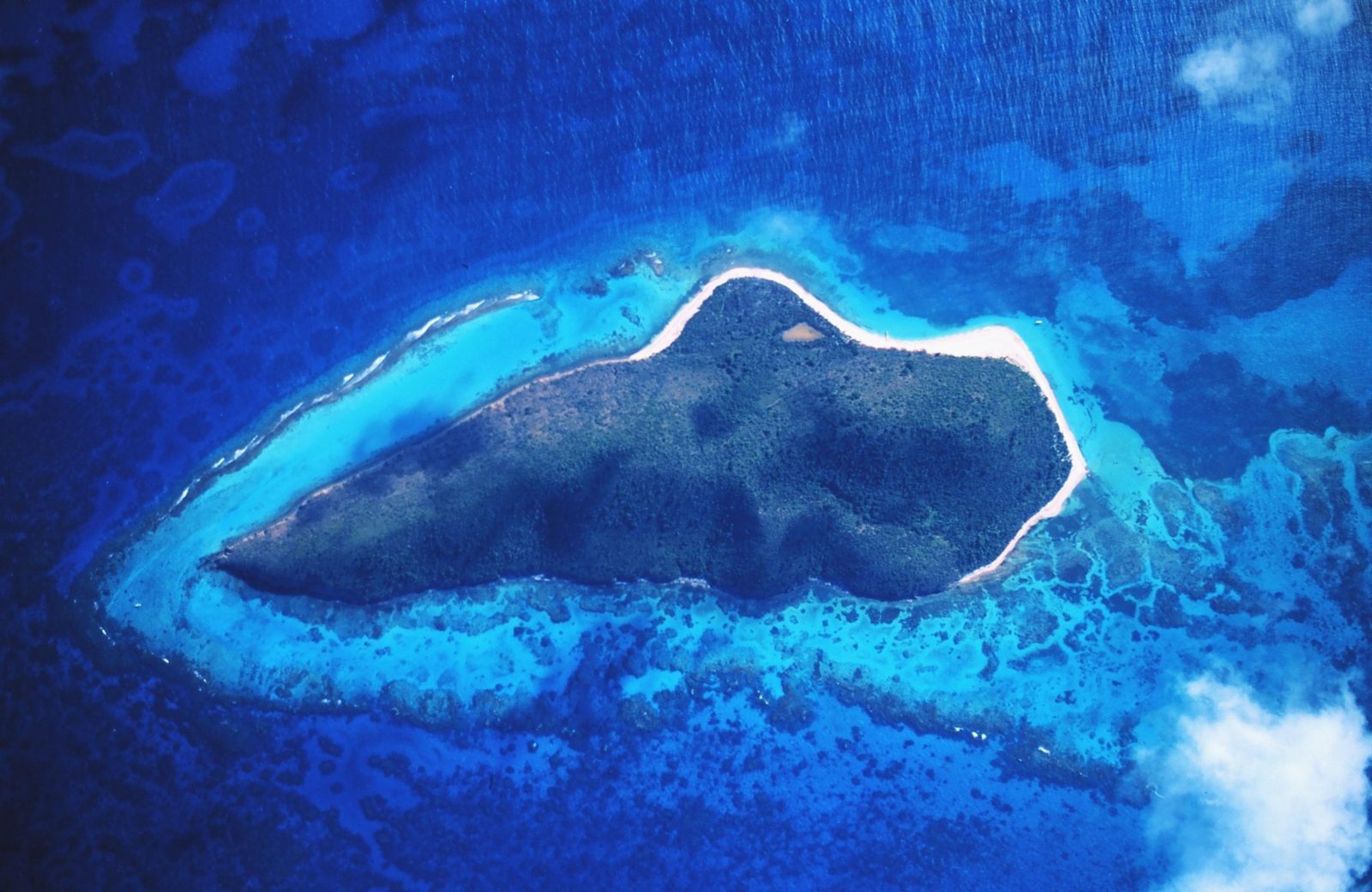
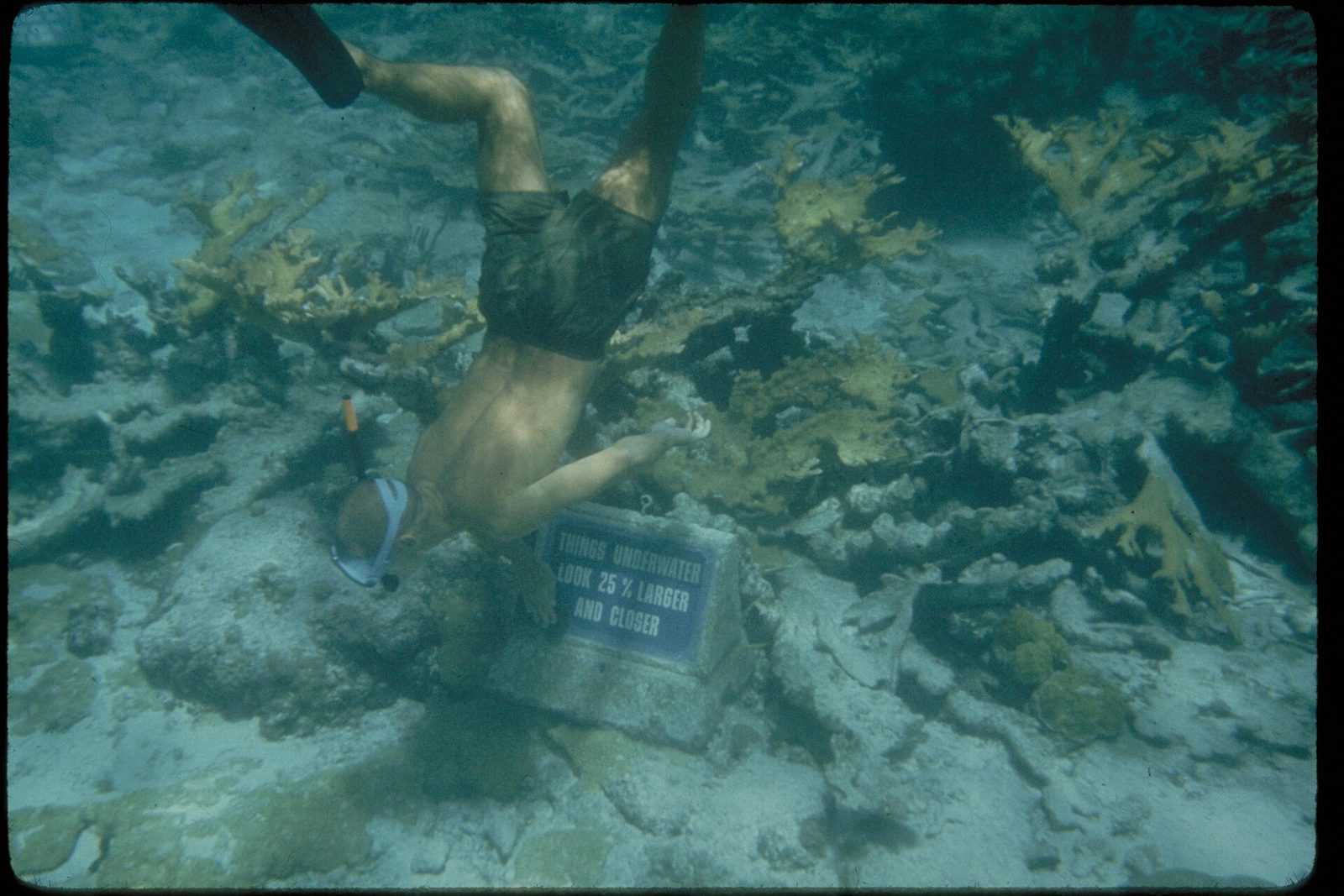
BuckIslandReedNM
Photo: Wikimedia user Russavia (Public domain)
Buck Island Reef National Monument, Virgin Islands (06523f05-6c64-4c00-abe8-c14d9a46efab)
Photo: NPS staff (Public domain)
Buck Island Reef National Monument, Virgin Islands (c767a876-7ce9-4867-84ac-d366f93a918f)
Photo: NPS staff (Public domain)

When the nonstops run

Airfare is the part of "best time" that most guides skip, and on St. Croix it is seasonal in a specific way. One route runs all year: American's Miami to St. Croix nonstop, one to two flights a day, about three hours in the air. Everything else from the mainland is winter-weighted. As published in August 2026, American's Charlotte nonstop is Saturday-only in the off-season and goes daily from December 17, 2026 (about 3¾ hours); American's Chicago O'Hare nonstop runs winter Saturdays from December 19, pausing from January 3 to February 12 (about 4¾ hours); Delta's Atlanta nonstop is Saturday-only now and goes daily from December 19 (about 4 hours); and United's new Saturday Newark nonstop starts October 31, 2026 (about 4½ hours), the first New York-area nonstop to St. Croix in more than 30 years.

The practical reading is this. In winter, five mainland cities have nonstops, three of them daily or nearly so, and a family from Chicago, Charlotte, Atlanta, Newark or Miami can reach the East End with no connection. In summer and fall the schedule contracts to Miami daily plus Saturday flights from Charlotte and Atlanta (and, from late October, Newark), so an off-season trip from most cities means either a Saturday-to-Saturday week or a connection through Miami, or JetBlue to San Juan and the short Cape Air hop across. Cape Air also flies from St. Thomas in about 25 minutes. None of it requires a passport for U.S. citizens; St. Croix is a domestic flight.

Fares track demand: highest at Christmas and New Year's, over Presidents' Day and the February and March school breaks, and at Easter; lowest in September and October; reasonable in May, June and November. Saturday-only routes sell out early on holiday weeks, since there is only one plane. If your dates are firm, book the flight the day you hold the villa; if your dates are flexible, let the nonstop schedule choose your Saturday. Our Getting Here page and the city pages, such as St. Croix from New York, carry the current schedule and drive times from the airport to the East End.

Booking a winter week

  1. Pick the week first: the holidays, Presidents' Day weekend and Festival week are the first to go.
  2. Check the nonstop schedule for your city on Getting Here, then hold the villa dates.
  3. Book the boat days and the tables you care about as soon as the dates are firm.
  4. Check which festivals fall in your week in the events section above, and plan a night or two around them.
  5. Build the first morning around the sunrise off the veranda, not around the airport.

Villa rates and availability

The Cerulean's rates vary by season and by the exact dates, the way every villa's do, and the booking calendar is the only source that is ever current. See live rates there for your exact dates; as across the island, rates generally run higher over the winter holidays and lower in the off-season; check the calendar for minimum-stay rules on holiday dates. For a house that sleeps 12 across five bedrooms and five baths, with a private beach, a pool and a chef's kitchen, the arithmetic per person is what makes a villa week make sense against five hotel rooms, and it makes more sense the fuller the house is.

Availability follows the same shape as everything else in this guide. Christmas and New Year's, Presidents' week and Easter fill first, often many months out; a group that wants those weeks should be looking a year ahead. February and March fill next. Late spring and early summer usually have room a few months out. September and October have the most open weeks and the softest pricing. November and early December are the quiet chance at a winter week before the holiday premium starts. Guests who stay long tend to pick winter: one of the villa's reviews is from a guest who stayed two months in early 2026.

The house itself is the same in every season: the main house with four bedrooms and the separate guest cottage with its loft, the pool and deck above the sea, the outdoor kitchen and fire pit, the gated drive, the reef in front and the private beach below. The villa pages lay it out room by room, and this guide covers what is going on around it. Booking runs through Sterling Point Real Estate, and the concierge can answer the questions that depend on your exact week: which boats run, which festivals are confirmed, and what the sea has been doing.

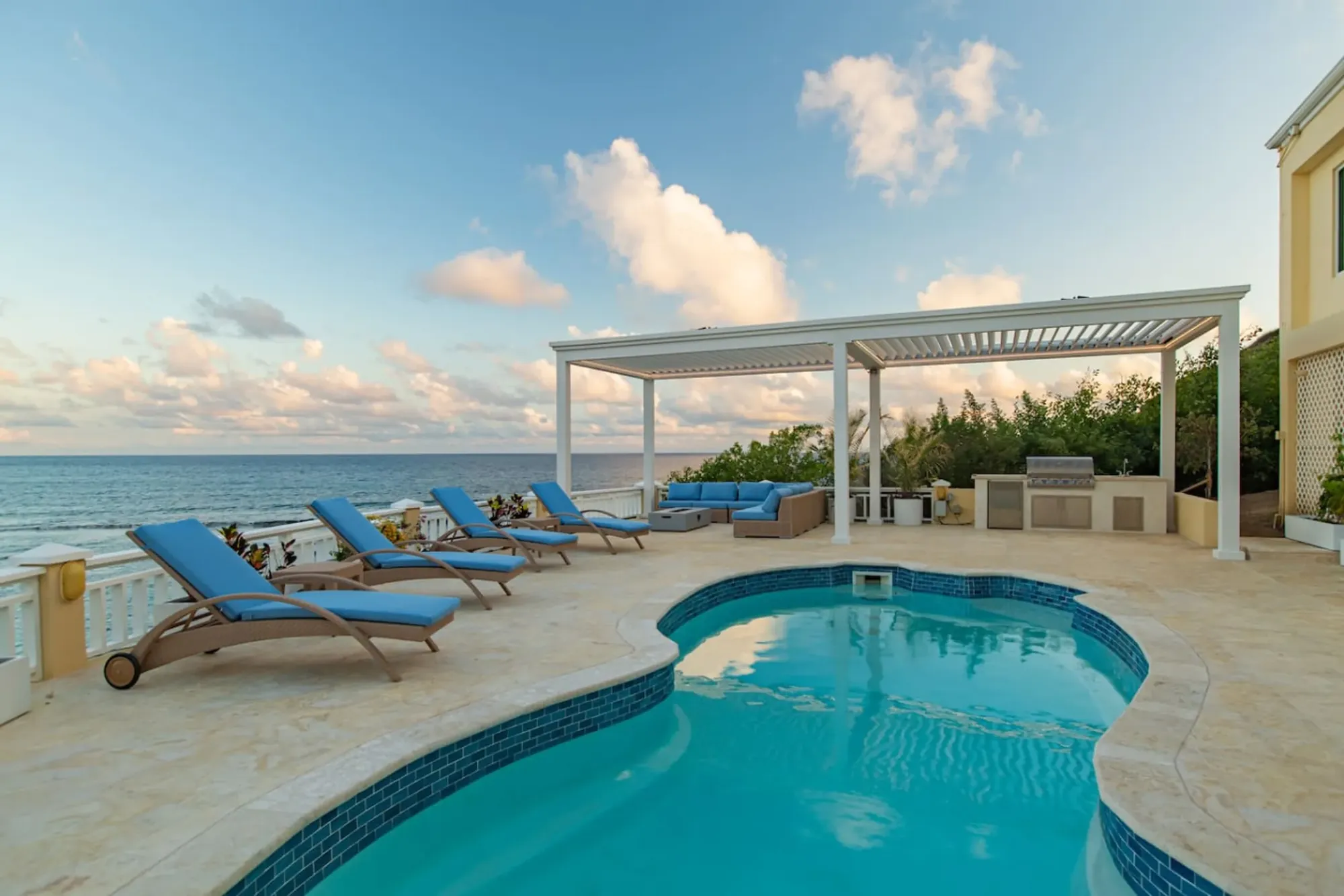
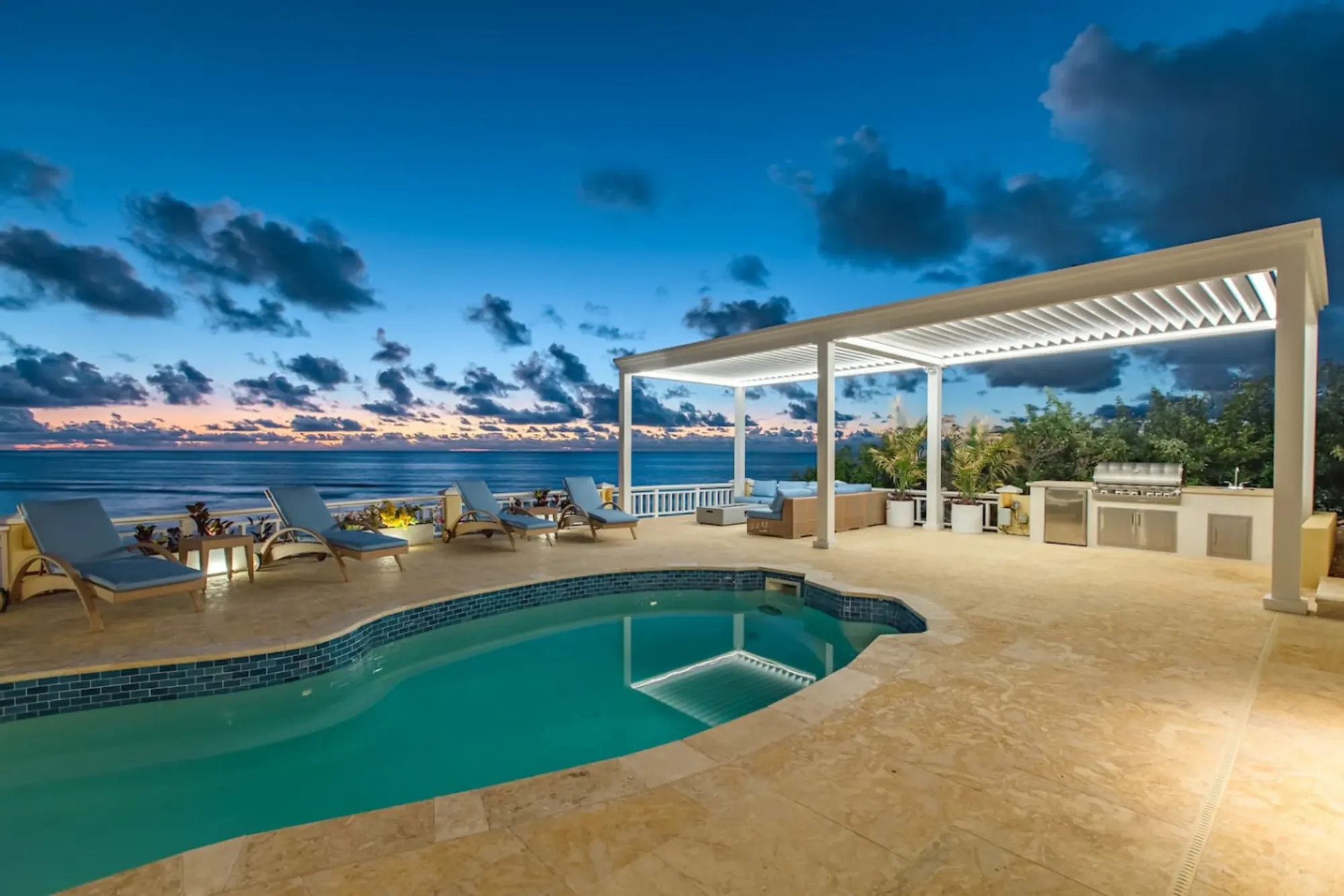
The pool deck above the sea: in summer it is where the afternoon goes when the sun is high; in winter it is where the group ends up after the morning swim.
The pool deck above the sea: in summer it is where the afternoon goes when the sun is high; in winter it is where the group ends up after the morning swim. Photo: The Cerulean

Picking your week by who is coming

Families with school-age children usually have the decision made for them: Christmas break, February break, spring break, or summer. Of those, February and spring break give the surest weather and the busiest island; Christmas break gives the Festival and the Christmas Winds, and books earliest; summer gives a warm sea, quiet beaches, long days and good value. The villa makes a summer week easy, with the private beach for the morning and the pool for the afternoon.

Couples and small groups without a school calendar should look hard at late May, June and November. They get the winter island's weather at close to summer prices, the shoulder-season quiet, and, in June, a warm sea and sunrise before six. It is the window we would pick for a couple with no school calendar to obey.

Multi-generational groups, the villa's specialty by the reviews, have two especially easy windows: April through June, when boat crossings are calmest and the days are longest, and late November into early December, when the trade wind is back and steady but the Christmas Winds have not fully arrived. The school-break weeks work well too, Presidents' Day weekend included, when they are booked far ahead.

Festival chasers: late December for the Crucian Christmas Festival, mid-February for Agrifest, and, provisionally, mid-April for Taste of St. Croix. Divers and snorkelers: the calm months, roughly April to June and again October to early December, though the East End reef and Buck Island's lagoon work in the Christmas Winds too. Photographers: January for the clearest skies and the hardest blue sea, or September and October for the calmest sea and the greenest hills. Budget-first travelers: September and October, with flexible dates. People who simply want to be warm while their city is not: any week from January to March, which is what the fly-from pages exist to prove.

Choosing dates for a group

Most groups at The Cerulean start from a date that is already fixed: a milestone birthday, an anniversary, a reunion, or the one week when three families' school calendars line up. Start there and let the island fill in around it. The house sleeps 12 across five bedrooms, with four en-suite bedrooms in the main house and a separate guest cottage, about twenty steps away, with its own kitchen and a loft bed up a spiral stair, so two or three families can share a week and still have corners of their own.

Next, look at how everyone gets here. In winter, nonstops run from Miami, Charlotte, Atlanta and Newark, plus Chicago on Saturdays around the holidays and again from mid-February, so families in those cities can usually reach the East End without a connection. In summer and fall most nonstops fly on Saturdays, with Miami every day, which makes a Saturday-to-Saturday week the natural shape for a group. Check-in is at 4 pm, and cousins flying in from several airports tend to land at different times, so plan the first night as an easy grill dinner at the house and save the chef night and the boat day for later in the week.

Then hold the dates as soon as the group agrees on them. A holiday week is worth holding a year ahead; for other weeks, the planning timeline in our groups and celebrations guide starts about ninety days out: lock the dates and the house, book the flights the same day, then line up a boat for twelve and the chef nights. Tell the concierge who is coming when you book, including ages, anyone who would like an easy walk, and whether you need the travel crib, high chair or baby gates, so the house is ready the afternoon you arrive.

Whatever the month, the groups that enjoy their week most keep the plan simple: one anchor dinner, usually a private chef on the terrace for the birthday or the anniversary night, one anchor outing, usually a boat to Buck Island, and the rest of the week left to the beach, the pool, the sunrise and the fire pit.

Planning tips for any month

Hold the busy weeks early. The Crucian Christmas Festival, Presidents' Day and Easter are when the villa, the boats and the best tables go first; if the calendar is the reason for the trip, it is also the reason to book ahead.

Confirm event dates before you fix the flights. Festival and food-event dates come from the organizers and can shift from year to year, so check the latest listing before you plan around one. The food events guide and the festival guide carry the dates as they are published; confirm them, then commit.

Give the boat day some room. A Buck Island crossing in the middle of a Christmas Winds spell is a livelier ride than the same trip in April; the crews handle it well, and a first-time snorkeler can ask for the calmest morning of the week. Booking the boat for the second or third day of the stay, rather than the first, leaves room to move it.

Pack mineral sunscreen, since the territory bans oxybenzone, octinoxate and octocrylene formulas and mineral bottles are what the island sells. And set your watch to Atlantic Standard Time, which St. Croix keeps all year: a January visitor from the East Coast is an hour ahead and a July visitor is on Eastern time, which matters for the flight home and for the sunrise alarm.

“super private location, incredible sunrises”

Suzanne Temple, guest, March 2026

Questions people ask

What is the best month to visit St. Croix?

For the classic mix of dry weather, steady breeze and a full events calendar, February and March are hard to beat: they are the driest months in the NOAA normals for the airport (about 1.4 and 1.6 inches), highs run about 85°F, and the sea sits near 79 to 80°F. January is the clearest month by cloud cover. If value matters most, May and June deliver most of the same days at lower rates, with a warmer sea.

Is November a good time to visit St. Croix?

Yes. November is when the island turns toward winter: the trade winds settle back in, airport highs ease to about 87°F, the sea stays near 83°F, and Weatherspark's clearer season begins in mid-November. The hills are green from the fall showers, which mostly pass quickly. Thanksgiving week is the first busy week of the winter, and from October 31, 2026, United's Saturday Newark nonstop joins the schedule. For winter weather before the holiday premium, look at the second and third weeks of the month.

What is the cheapest time to visit St. Croix?

Late summer and early fall, roughly late August through October, is when island rates and airfares are usually at their lowest, and when the villa's calendar has the most open weeks. Those months also bring the warmest sea of the year and the emptiest beaches. May, June and November are good value too: quieter than winter and usually cheaper than the holidays. Villa rates vary by season and by the exact dates, so check the calendar rather than assuming.

Is St. Croix good in the summer?

Yes. June through August brings a warm sea (low 80s, rising toward 84°F by September), the breeziest stretch of the year by Weatherspark's data, which makes afternoons around 89°F comfortable on the East End, and the longest days, with sunrise before six. Kids are out of school, Mango Melee lands in July, turtle hatchlings are emerging at Sandy Point, and the mornings are the best hours of the day.

What are the Christmas Winds?

A spell of stronger-than-usual trade winds that shows up in the Caribbean from roughly mid-December into January, when high pressure to the north strengthens the easterly flow. Sailors describe spells of noticeably stronger wind that last a few days, rarely a week. On St. Croix's East End that means a fresh breeze across the verandas, livelier seas for boat crossings, and superb kite-flying weather. Between spells, the wind drops back to the usual trades.

How far ahead should I book a villa week on St. Croix?

It depends on the week. Christmas and New Year's, Presidents' week and Easter fill first, often many months out, so a group that wants one of them should be looking a year ahead. February and March fill next. Late spring and early summer usually have room a few months out, and September and October have the most open weeks. Saturday-only nonstops sell out early on holiday weeks, so book the flights the day you hold the villa.

When are the big St. Croix festivals?

The Crucian Christmas Festival runs late December into early January (Dec 26, 2026 to Jan 2, 2027 for the coming season) in Frederiksted. Agrifest is Presidents' Day weekend at Estate Lower Love (Feb 13 to 15, 2027). Taste of St. Croix has traditionally been mid-April at Divi Carina Bay, though the 2026 edition moved to June and 2027 is TBA. Mango Melee is a July Sunday at the botanical garden. Jump Up in Christiansted happens four times a year. Confirm dates before you book around them.

When do the nonstop flights to St. Croix run?

American flies Miami to St. Croix daily year-round. The rest is seasonal: Charlotte goes daily from December 17, 2026, Chicago O'Hare runs winter Saturdays from December 19 (with a pause from January 3 to February 12), Atlanta on Delta goes daily from December 19, and United's Saturday Newark nonstop starts October 31, 2026, the first New York-area nonstop in more than 30 years. In summer most of those cities are Saturday-only or connect through Miami or San Juan.

When can I see sea turtles on St. Croix?

Leatherbacks nest at Sandy Point from about March into July, and the refuge is set aside for them from April 1 through August 31, with guided Turtle Watch nights in April; the rest of the year it opens on weekend days. Greens nest at Jack and Isaac Bay, about five minutes from the villa, from July to December, and greens and hawksbills use the reefs and seagrass year-round; guests have met them on the reef in front of the villa and at Buck Island. Keep your distance, skip flash and lights, and use reef-safe mineral sunscreen, since the territory bans three chemical filters that harm coral.

Doing it from The Cerulean

The Cerulean sits on the East End of St. Croix, facing the sunrise, about 15 to 20 minutes from Christiansted and about five minutes from Jack and Isaac Bay, and the calendar in this guide reads a little differently from its veranda. In winter, the trade wind and the Christmas Winds arrive at the house first; the sea in front is at its hardest blue; the sunrise comes up around a quarter to seven and the whole group is on the deck for it. In summer, the same east-facing position means the first light before six, the coolest hour of the day for the beach, and the pool for the afternoon when the sun is at its highest.

The house suits the months when a group wants to stay in: a chef's kitchen and an outdoor kitchen for the nights the group would rather eat at home, a fire pit terrace for the winter evenings when the wind drops, five bedrooms across the main house and a separate cottage, so that a multi-generation family or a few couples can spend a shoulder-season week without stepping on each other. The concierge can arrange the things this guide only schedules: a Buck Island boat on the calmest day of your week, a table for Taste of St. Croix if the date holds, a car for Agrifest, a chef for the night nobody wants to leave the house.

If you asked us to pick, we would say this. For a first visit with the surest weather and the fullest calendar, come between mid-January and March and book it early. For the best value, come in late May, June or the middle of November. For a warm sea and long days with the family, come in early summer. For the warmest sea of all, come in September or October, and you will have the East End almost to yourself. Whatever the month, the best hour is the first one, and the house faces it.

The estate at dawn: the villa faces east over its reef and beach, so first light reaches the house before it reaches most of the island.
The estate at dawn: the villa faces east over its reef and beach, so first light reaches the house before it reaches most of the island. Photo: The Cerulean
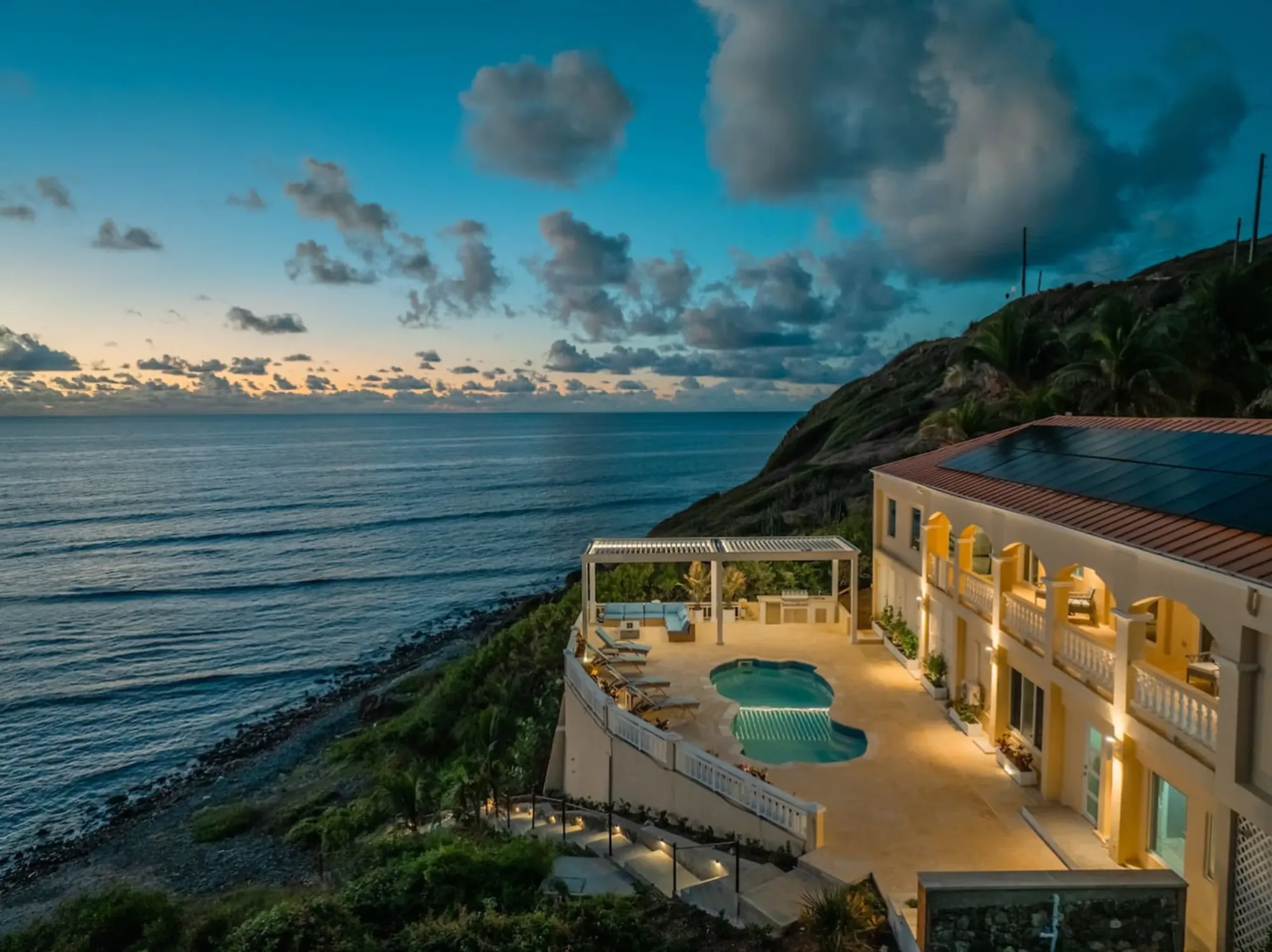
The Cerulean's pool at sunset above the sea
The Cerulean

Twelve of you, one private beach.

The Cerulean sleeps twelve on St. Croix's quiet East End — check your dates.

Sleeps 12 · 4.90 ★ · rates by season
Keep reading

Related guides.

The Cerulean villa at dawn above the sea
The Cerulean

Read it here. Live it from the villa.

Five bedrooms, a private beach, and all of this within a day trip.

Sleeps 12 · 4.90 ★ · rates by season