

Who wrote it down: Chanca, Cuneo, and the gaps
The day-by-day story of Salt River comes chiefly from two letters written by men who were in the fleet. Chanca's is the long one — a report home to Seville, dated 1494, that walks through the crossing, the islands, the plants and animals and people, and the arrival on Hispaniola. It has been printed and translated many times; the Wisconsin Historical Society's American Journeys project has a public-domain nineteenth-century English translation online, and a scanned copy of the same translation circulates as a PDF. Cuneo's is shorter and rougher, the letter of a gentleman adventurer to a friend, and it is the source for the ugliest detail of the day.
Later chroniclers and historians built on those two, and the modern summaries on the NPS pages and in the NPCA piece all go back to them. That is why the numbers are so consistent: seventeen ships, about 25 men, three or four men and two women in the canoe, two Spaniards hit, one dead. When you see a different number, ask which letter it comes from.
Documented
The date, November 14, 1493. The size of the fleet. That Columbus stayed aboard and sent a boat. That the boat found a village emptied by its people and took captives. That a canoe carrying Kalinago men and women and Taíno captives met the boat, that both sides shot and stabbed, that Spaniards were wounded and one died in the days after, that at least one person in the canoe was killed and the rest were seized. That Columbus named the cape for the arrows. That the fleet was off Puerto Rico three days later.
Inferred, argued or simply unknown
The exact patch of beach the boat touched — the landmark is the west-side beach and point, on the strength of the archaeology and the geography, not a chart from 1493. Which headland is the Cape of the Arrows, beyond "the east side of the bay." Exactly how many people in the canoe died, because Chanca and Cuneo tell it differently. Whether the emptied village stood on the ball-court site itself or near it. Whether the fleet actually came inside the reef or stood off in open water. And the framing words — "first," "only," "discovery" — which, as the previous section shows, need qualifiers every time. A good visit holds the documented list firmly and the second list loosely.
After the ships: capture, removal, and 1590
The Spanish did not settle St. Croix. What the NPS history page records for the century after 1493 is one blunt line: the Spanish capture and removal of the island's Amerindian peoples. The Kalinago of St. Croix, who had fought a boat in 1493, faced Spanish ships for a hundred years, and the NPCA's account gives the end date: by 1590, under Spanish pressure, the Kalinago had left St. Croix altogether. The island that had appeared populous and extensively cultivated to Chanca went quiet.
That emptiness is the hinge of everything that came after. When Dutch, English and French ships began putting parties ashore in the 1600s, they found an island with no one to negotiate with and no one to fight — which is why the seven flags that flew over St. Croix in the next three centuries changed hands among Europeans, by force, treaty and purchase, rather than by conquest of a resident people. That conquest had already happened, here, in the sixteenth century, and it left almost no written trace beyond a date.
It also explains why the archaeology matters so much. With no continuous community to carry the story of the ball court and the village, the ground had to. Hatt's 1923 excavation, the dozen-plus investigations the NPS counts since 1880, the zemis and stone belts in Copenhagen — those are the record of the people who lived at Salt River, in the absence of their own account. When you stand on the beach, that is what you are standing on: not "the place Columbus discovered," but the last documented home of the people who met him.
The Taíno and Kalinago did not vanish as peoples; their descendants live across the Caribbean today. On St. Croix, though, the line between the people of 1493 and the people of the Danish era was broken by 1590.
The earthen fort on the point: Fort Flamand, Fort Salé
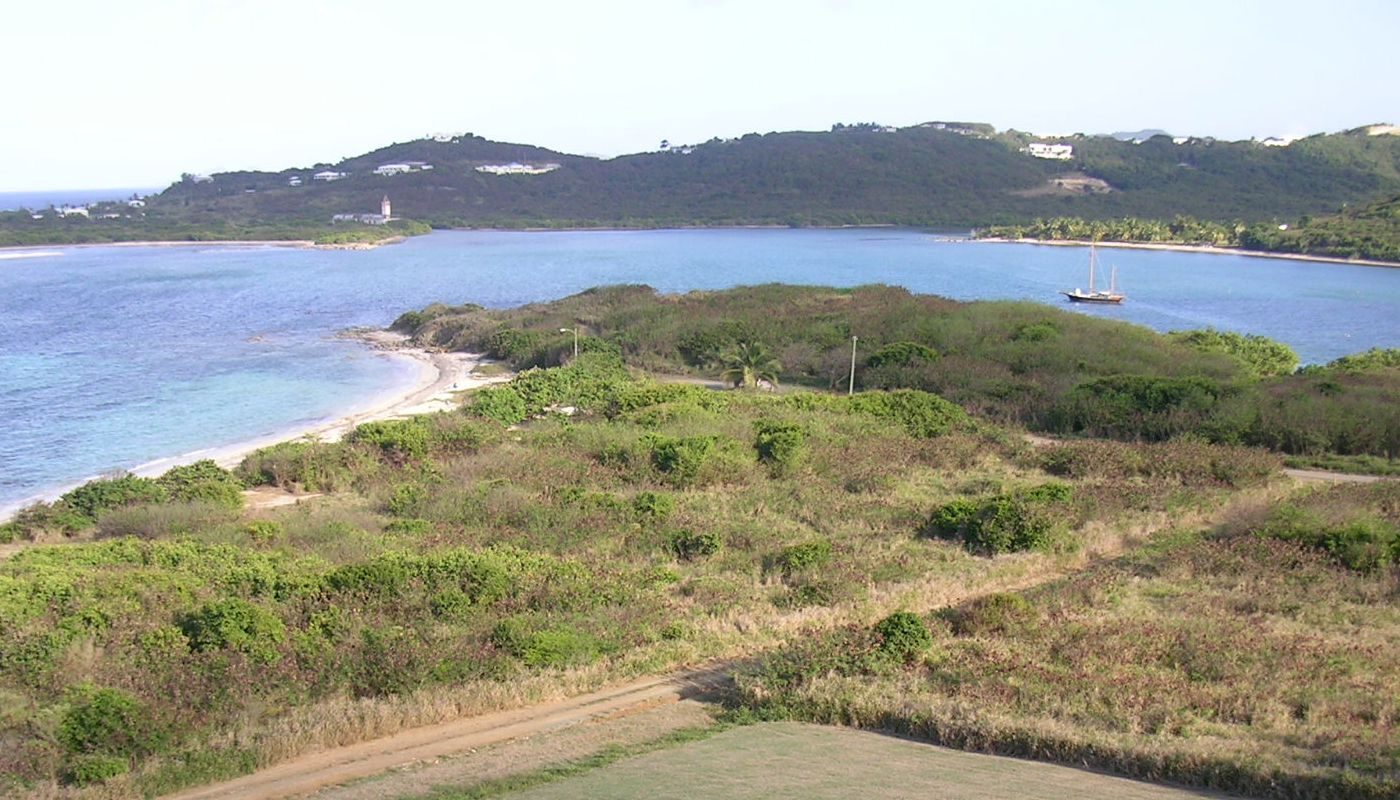
The one built thing you can see at the landing site is not from 1493 at all. On the point at the west side of the bay's mouth are the low banks of an earthen fort from the middle of the 1600s — the only known structure on St. Croix that survives from that first European period. It was a small, roughly triangular earthwork rather than a stone fort, and the sources do not agree on who threw it up: one account has the Dutch building it and calling it Fort Flamand, the Flemish Fort; another has the English starting it in 1641 and the Dutch finishing it in 1642. What the sources do agree on is that the French took over the site in 1650 and renamed it Fort Salé, and that name is the one on the map today.
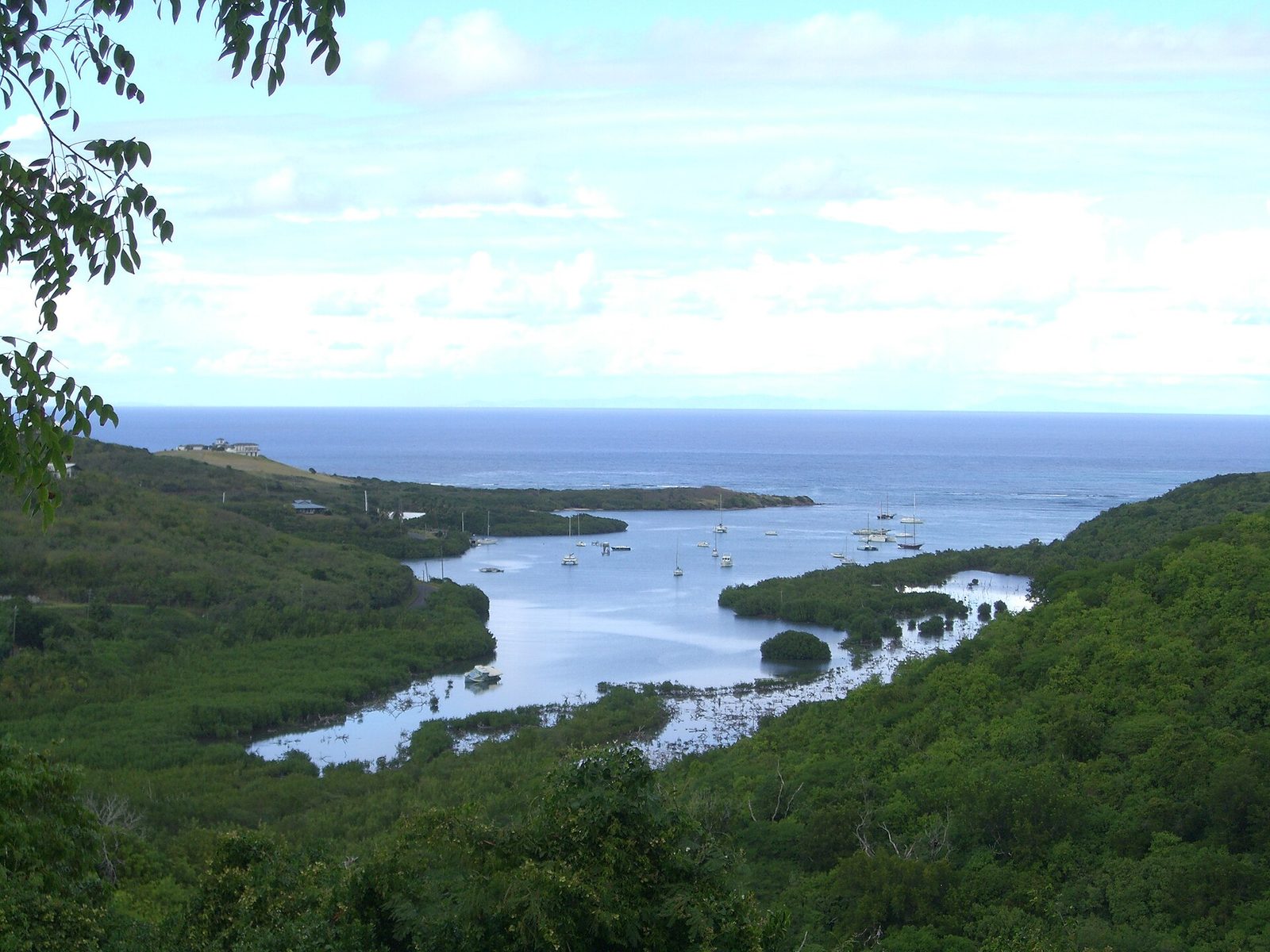
Why here? Because Salt River was the harbor of those first European attempts: a sheltered estuary on the north coast, and the place the Dutch, English and French tried to hold in the 1640s — the fort is the proof. The seven-flags story on St. Croix begins at this bay, not at Christiansted or Frederiksted, which came later under the Danes. Whoever held the point at the mouth held the anchorage. An earthwork with a few guns on the point was the seventeenth-century answer, and it is still there because nobody bothered to build over it.
France's hold on St. Croix was never strong. In 1733 France sold the island to Denmark, and the Danes, whose interest was sugar and whose towns were Christiansted and Frederiksted, let Salt River go back to being a bay with plantations around it. The point stayed rural through the Danish centuries, through the American purchase in 1917, and into the modern era — which is the only reason a 1640s earthwork and a 1300s ball court were still in the ground for the archaeologists and the landmark surveyors to find.
What you see today is modest: grass-covered banks, a shape you read better from the air or a map than from the sand, and the position — the reason for the fort — which is obvious the moment you look at the mouth of the bay. Do not look for walls. Look for the ground rising, and then look at what it commands.
From landmark to national park: 1960 and 1992
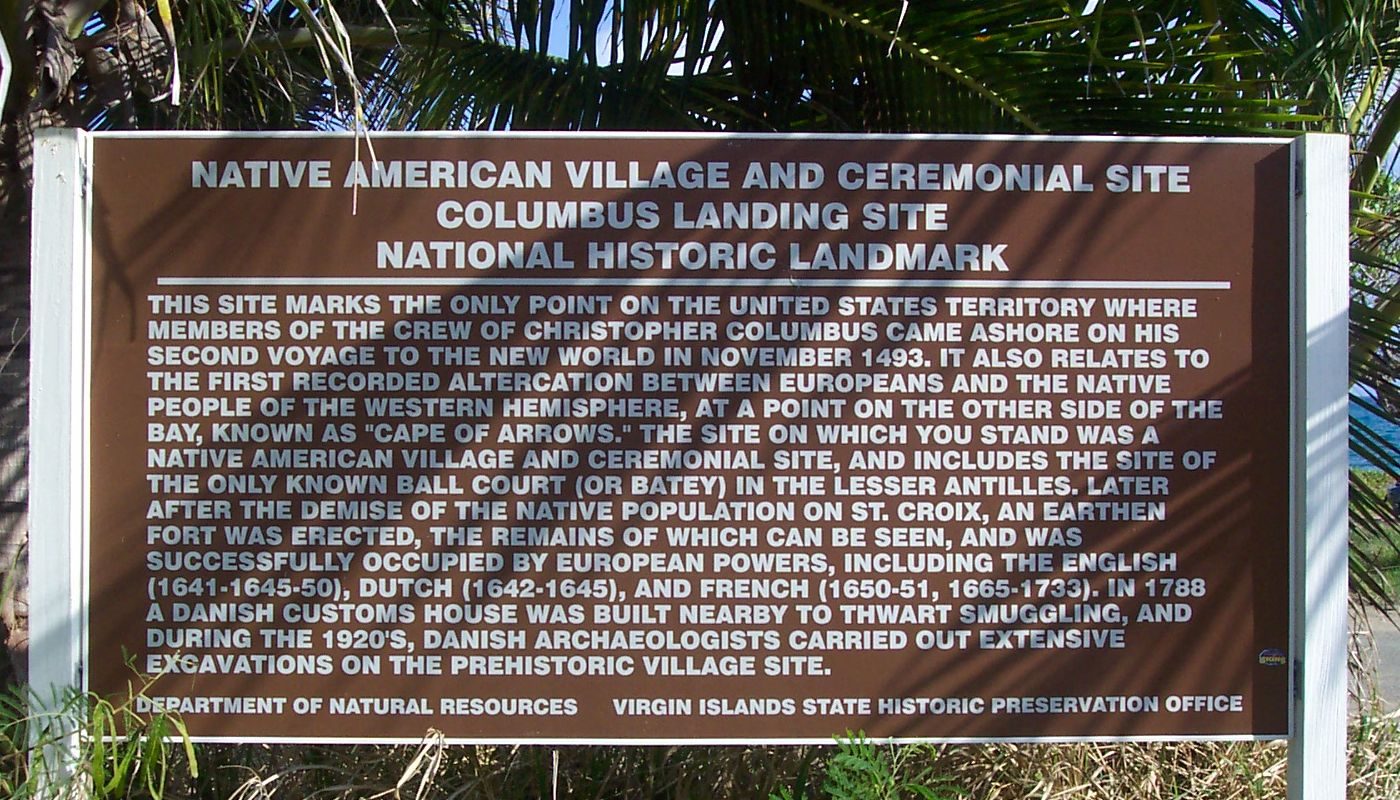
The federal recognition came in two steps a generation apart. On October 9, 1960, the Columbus Landing Site was designated a National Historic Landmark — the federal designation for nationally significant historic places — for the 1493 landing and the fight at the Cape of the Arrows. For the next thirty years it stayed a landmark without a park around it, known to archaeologists and to the local families who used the beach.
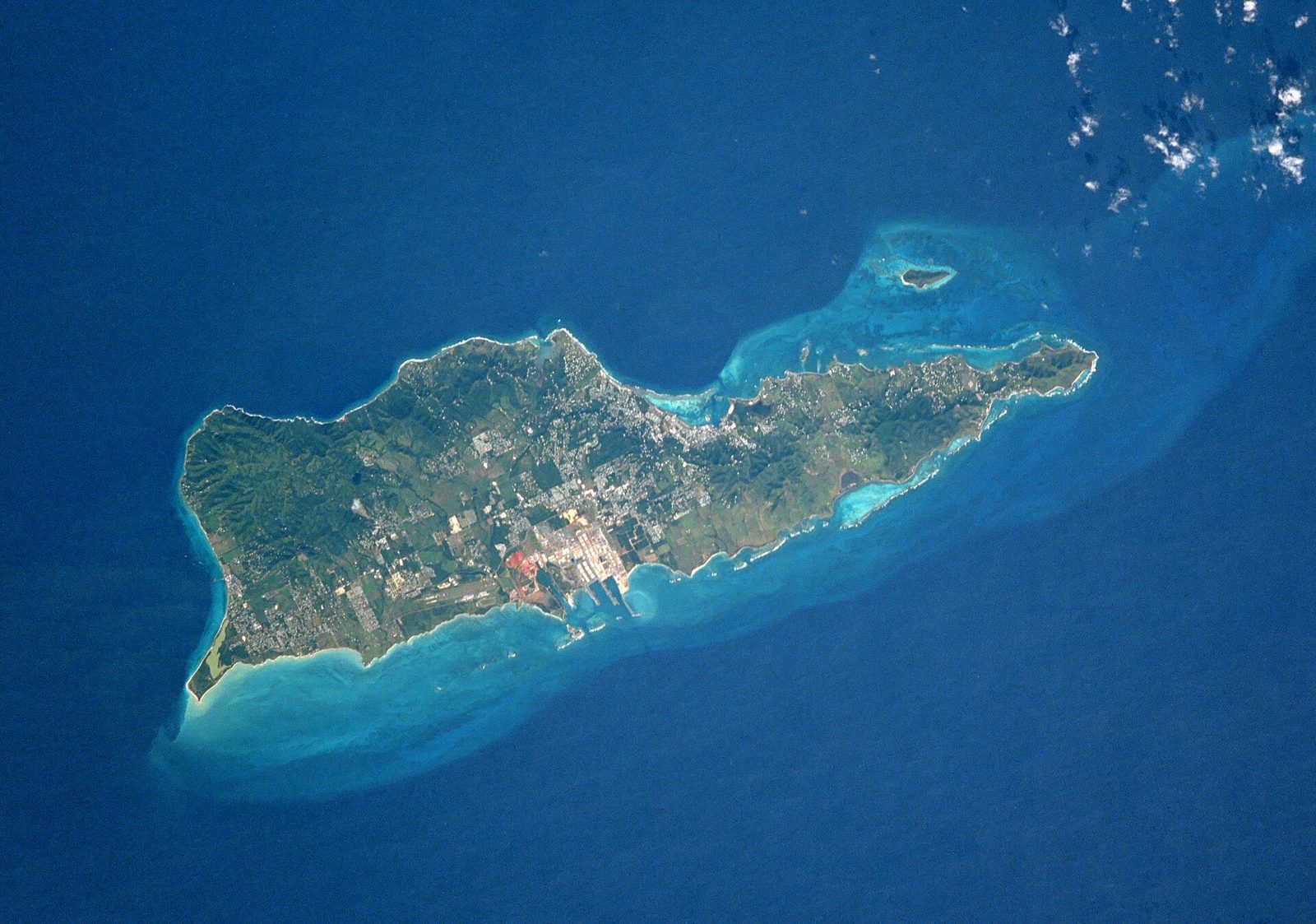
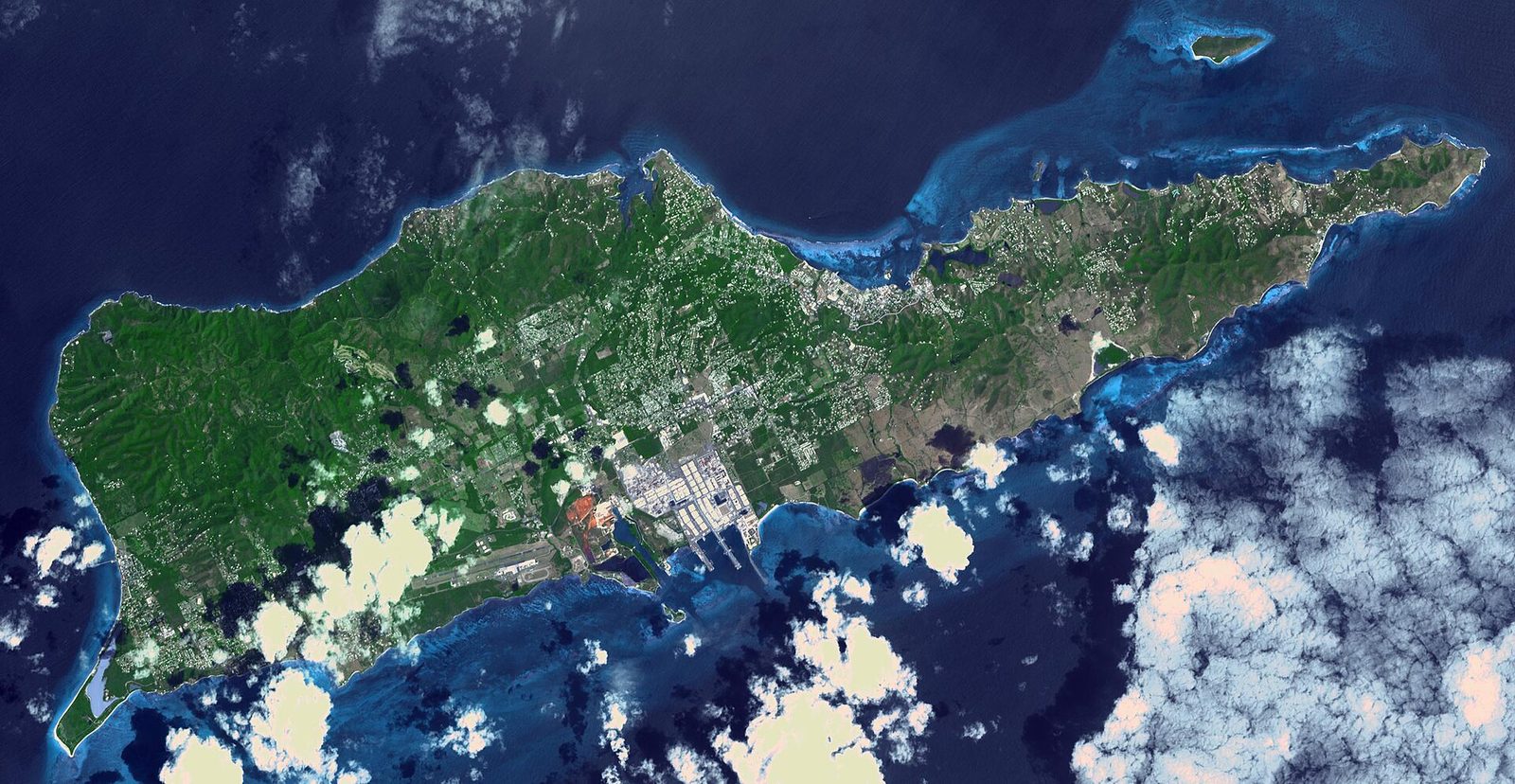
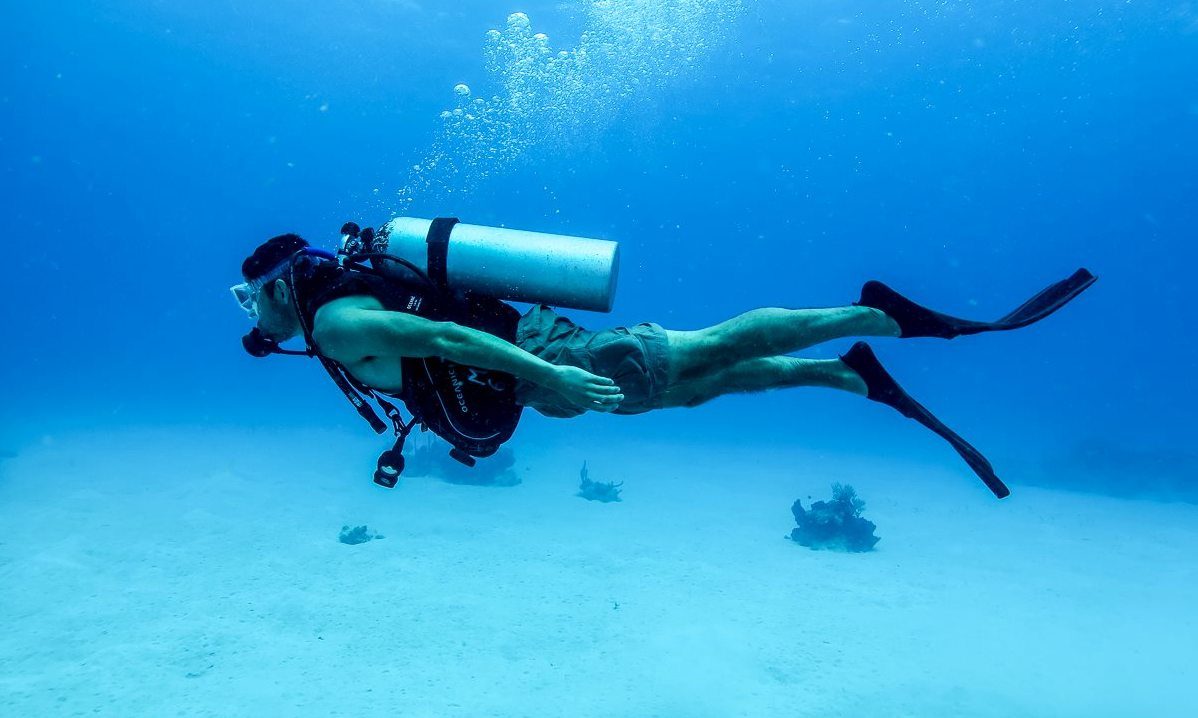
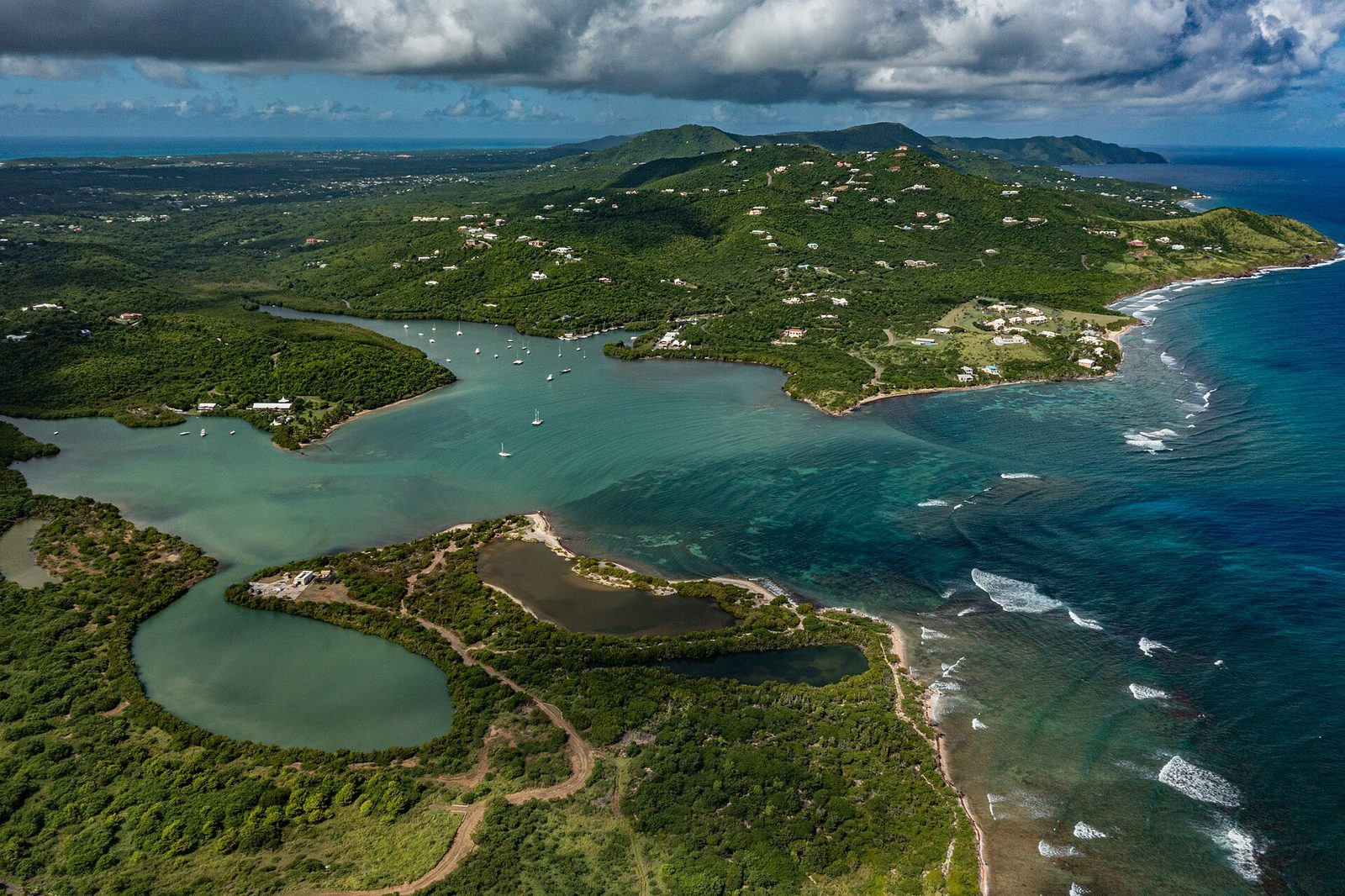
On February 24, 1992, Congress created Salt River Bay National Historical Park and Ecological Preserve. Two things about the law are unusual. It protects nature and history in one unit — "Historical Park and Ecological Preserve" is the full name for a reason — and it is co-managed: the National Park Service and the Government of the Virgin Islands run it together, and the landing-site parcel is, per the NPS's own page, owned by the territorial government and co-managed with the park. The park is about a thousand acres (the NPS says 1,015; another source gives 985.76), and beyond the landmark it takes in some of the largest remaining mangrove forests in the Virgin Islands, coral reefs, a submarine canyon that drops to nearly 500 feet just off the mouth of the bay, and one of St. Croix's two bioluminescent lagoons.
It is a small park by the numbers. The NPS counted 12,126 visitors in 2025, against roughly 40,000 at Buck Island — and much of the Salt River count is people in kayaks after dark. There is no entrance gate and no fee booth at the landing beach; the park's mailing address is the NPS office at 2100 Church Street in Christiansted, and its phone number is (340) 773-1460. In 2020 Salt River Bay was put on a U.S. quarter, the 53rd in the America the Beautiful series.
The joint arrangement shapes the feel of the site. The beach is first a community place and second a park exhibit, and the park's information desk is in Christiansted, at the Fort Christiansvaern visitor center, where you pick up the brochure and ask a ranger about programs. The landing site itself stays unpolished, in a way that suits the story.