


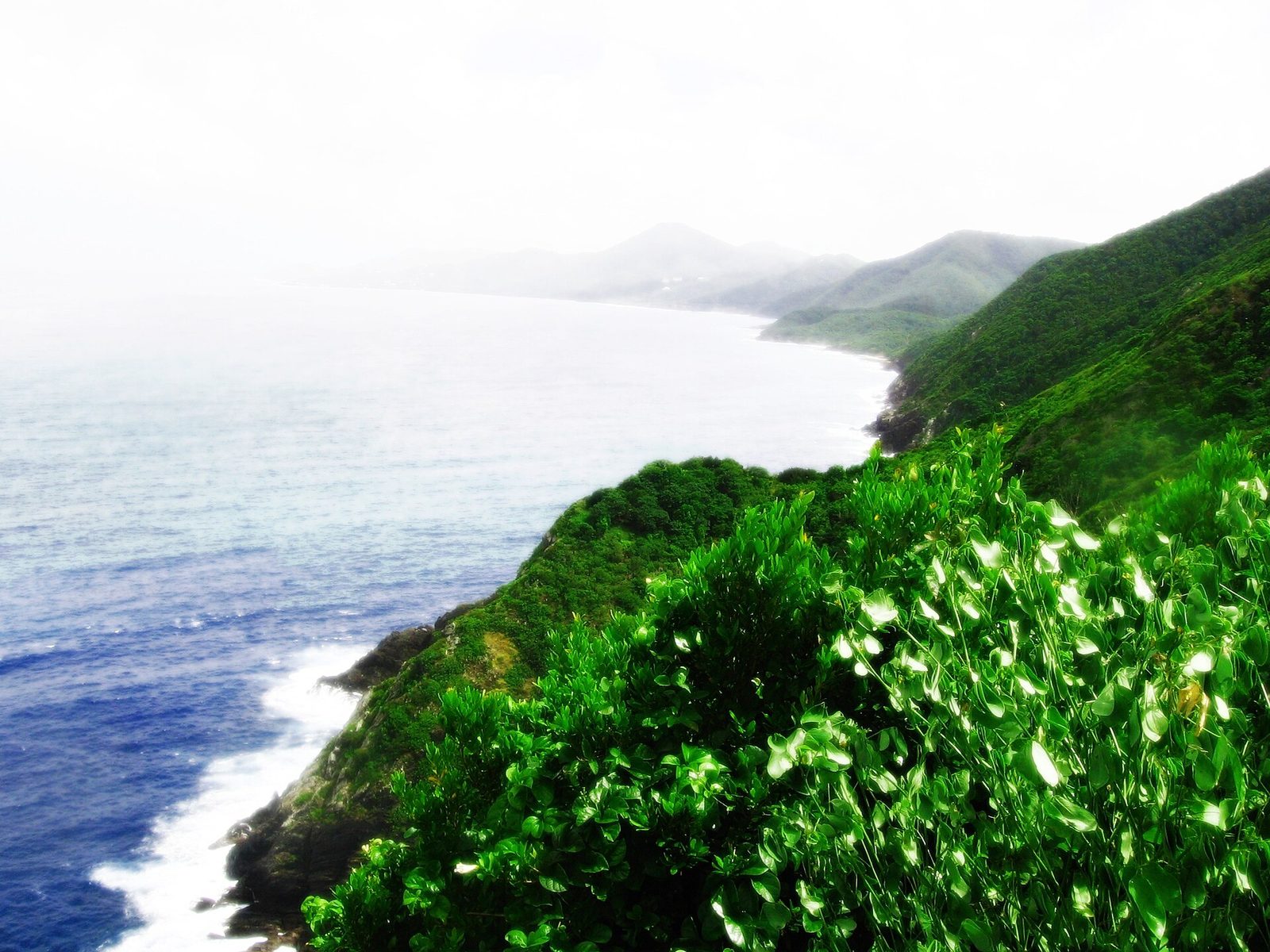
Hidden St. Croix: Monk's Bath
If you're planning a trip to St. Croix, U.S. Virgin Islands, your travel guides might suggest that you check out the famous Annaly Bay Tide Pools. And they aren't wrong—Annaly Bay is gorgeous. But if you want to find a spot most visitors never see, you need to head over to the island's rocky northwest coast and look for Monk's Bath. Part natural wonder, part historical mystery, and entirely off the beaten path, Monk's Bath is a rectangular pool carved directly into the jagged coral coastline.
Myth vs. Fact: The Real History of Monk's Bath
If you talk to locals or browse older internet forums, you'll hear a fantastic story about how this pool came to be.
The Legend: In the mid-1600s, a group of pious monks affiliated with the Knights of Malta carved this bathtub into the sharp volcanic rock. Fresh water was scarce, so they engineered this perfect little rectangular pool to capture sea waves, giving them a calm, safe place to bathe without wasting drinking water. Some conspiracy theorists even whisper that they were looking to hide the Ark of the Covenant nearby - sure….
It's a great story, but the real one is a mix of plantation-era history and mid-century island ingenuity.
The site was originally an 1840s coral quarry. The plantation owner at Estate Northside needed stone to build a sugar mill up on the hill, and laborers cut into the soft coastal coral using specialized hand tools to extract blocks.
Fast forward to the 1950s. A man named Dick Richards lived on the property. Tired of rough waves making swimming difficult, he and a contractor named Ove Olsen smoothed out the jagged edges of the old quarry, chiseled out concrete steps, and transformed the abandoned industrial site into a beautiful, sheltered saltwater swimming pool. No mysterious monks required!
There's a real lesson in that history that's true of a lot of St. Croix: almost everything you'll find out here — a quarry, a ruined windmill, a stone wall in the bush — traces back to the island's sugar-and-slavery era, and then to the generations of Crucians who repurposed what the plantations left behind. Monk's Bath is a small, human-scale example of that longer story. It's the same instinct you see all over the island: take what an earlier era left behind and make it useful and beautiful again, rather than tearing it down. A quarry becomes a swimming pool; a sugar warehouse becomes an art gallery; a Danish fort becomes a place families picnic on a Sunday.
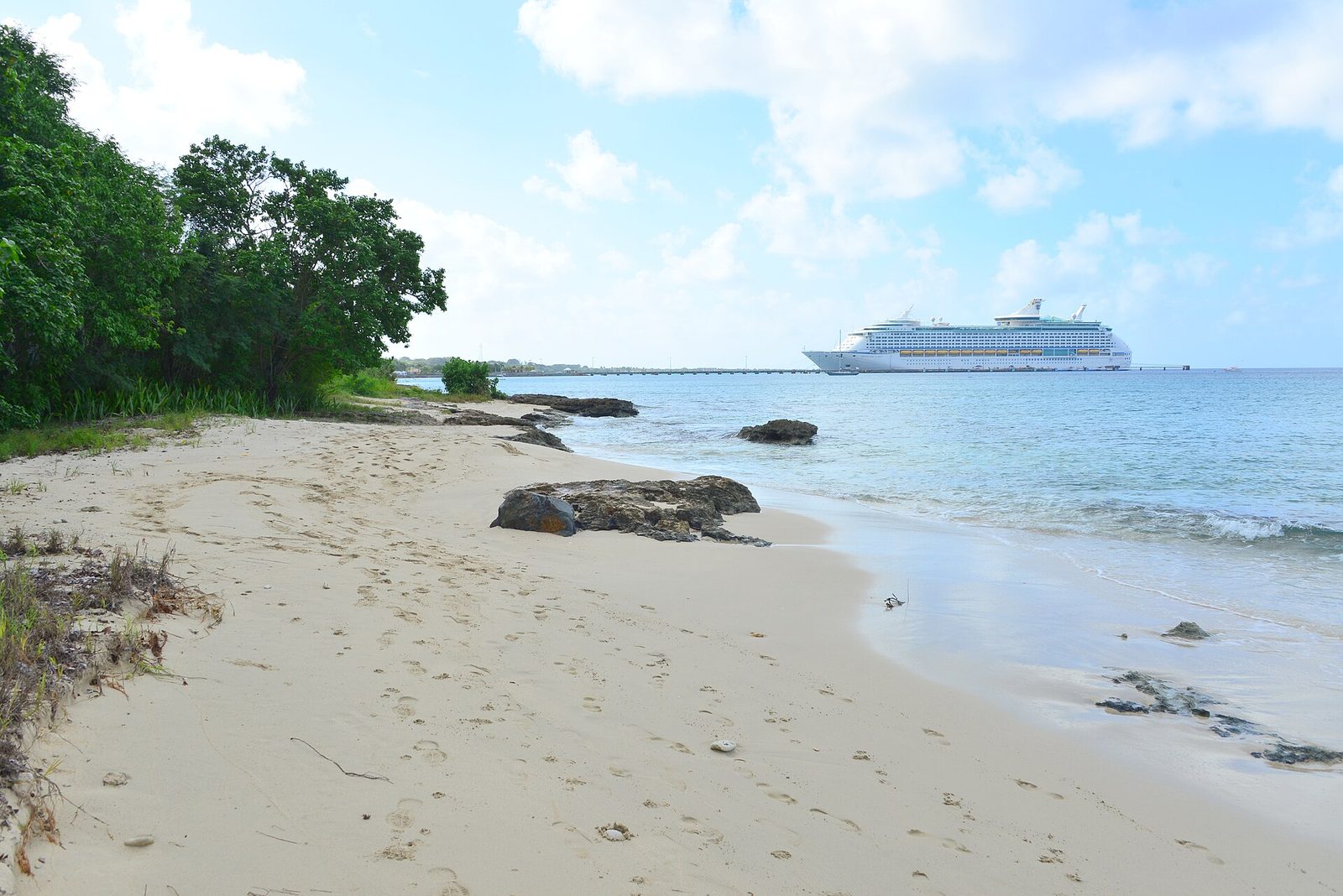
How to Get to Monk's Bath
Monk's Bath isn't marked with signs, and is a bit of a hike, which is exactly why it remains so peaceful.
- The Drive: From the town of Frederiksted, drive about 3 miles north along the coast. You'll pass Rainbow Beach, Sprat Hall, and Butler Bay.
- The Landmark: Keep your eyes peeled on the right for a wooden sign that says "Northside Valley." Drive just a tiny bit further (about a quarter-mile) until you see a large, gated utility/facility building on your right.
- The Trailhead: Directly across the road from that facility, look for a small clearing in the woods. You'll notice a steep, dirt path heading down toward the shore, complete with a hand rope tied to trees to help you stabilize your descent.
- The Walk: The path down is short but quite steep—watch your step around the loose dirt and tree roots. Once you emerge onto the rocky beach, hang a right (head north) and walk about the length of a football field. You can't miss the sharp, geometric right angles of the pool cut into the rock.
A practical note: this is the far northwest corner of the island, roughly an hour's drive from the East End. It's best paired with a west-end day — Frederiksted, the pier, Rainbow Beach, and a sunset over the water, which the west coast has and the East End doesn't.
What You Can See and Do
Once you arrive, the contrast between the Caribbean Sea natural coastline and the straight lines of the hand-carved tidal pool is obvious.
The Pool Itself
The pool is about five feet deep, with concrete steps from the 1950s still intact to help you climb in and out. At the southern end, an underwater opening allows the ocean to continuously pour in and drain out, keeping the water fresh.
Marine Life
Because it functions as a tidal pool, small fish, crabs, and juvenile marine creatures often get washed inside, making it a cool spot to peer into with a snorkel mask. Just be careful where you step or grip the edges: sea urchins love to tuck themselves into the crevices of the coral rock.
Pop's Blow Hole
If you walk just a short distance south along the coast from the bath, you'll encounter Pop's Blow Hole. When the northern swells hit the coastline just right, ocean water shoots up through the volcanic rock shelf, creating a refreshing mist and occasional mini-rainbows in the sunlight.
How Tides and Weather Affect the Pools
Understanding the ocean is the absolute key to having a good experience at Monk's Bath. Because it relies entirely on the sea to refresh itself, the tides change the experience completely.
- High Tide – The Best Time to Visit. The pool fills up beautifully, providing plenty of water for a relaxing, waist-deep soak.
- Low Tide. The water level drops significantly. The pool can become shallow, warm, and a bit stagnant since fresh waves aren't spilling over the lip.
- Rough Swells – Avoid getting in. Strong waves crashing directly over the outer wall turn the "bathtub" into a washing machine, risking slamming you against the hard coral walls.
The north shore takes the winter swell head-on. From roughly November through March, big northerly groundswells can make the whole coast here dangerous — the same swell that surfers chase at nearby breaks is the swell that turns Monk's Bath into a hazard. Check a marine forecast for north-swell height before you commit to the drive, and if you get there and the sea is throwing spray over the outer wall, admire it from the rocks and skip the soak.
Essential Tips for Your Visit
- Wear proper footwear: Do not attempt this trip in flip-flops. The volcanic and coral rock shelf is incredibly sharp and unforgiving. Sneakers or heavy-duty water shoes are mandatory.
- Go with a buddy: Because this area is highly secluded, you likely won't see anyone else there. Bring a friend along just in case you slip on the wet rocks.
- Leave no trace: There are no trash cans, lifeguards, or amenities here. Pack out everything you bring in so this hidden piece of Crucian history stays pristine for the next adventurer.
- Time it with the light: Since you're on the west side of the island, plan to finish near sunset and drive back through Frederiksted — the west coast gets the best evening light on St. Croix.
Why the legend stuck
It's worth asking why the "monks of Malta" story attached itself to a 19th-century quarry in the first place, because the answer says something about St. Croix. The island really did pass through the hands of the Knights of Malta briefly in the 1600s, along with six other flags, so a story about pious monks isn't as random as it sounds — there's just enough real history to make the legend feel plausible. And the pool genuinely looks ancient and deliberate, cut in clean rectangles into rock the sea has been gnawing at for centuries; it invites a romantic explanation. Islands accumulate these stories, half-remembered and improved with each retelling, and Monk's Bath is a perfect specimen: a real, traceable history of quarrying and mid-century tinkering, wrapped in a much better tale about monks and buried treasure. Both versions are part of what you're visiting. Knowing the true story doesn't spoil the place — it makes the ingenuity behind it more impressive, not less.
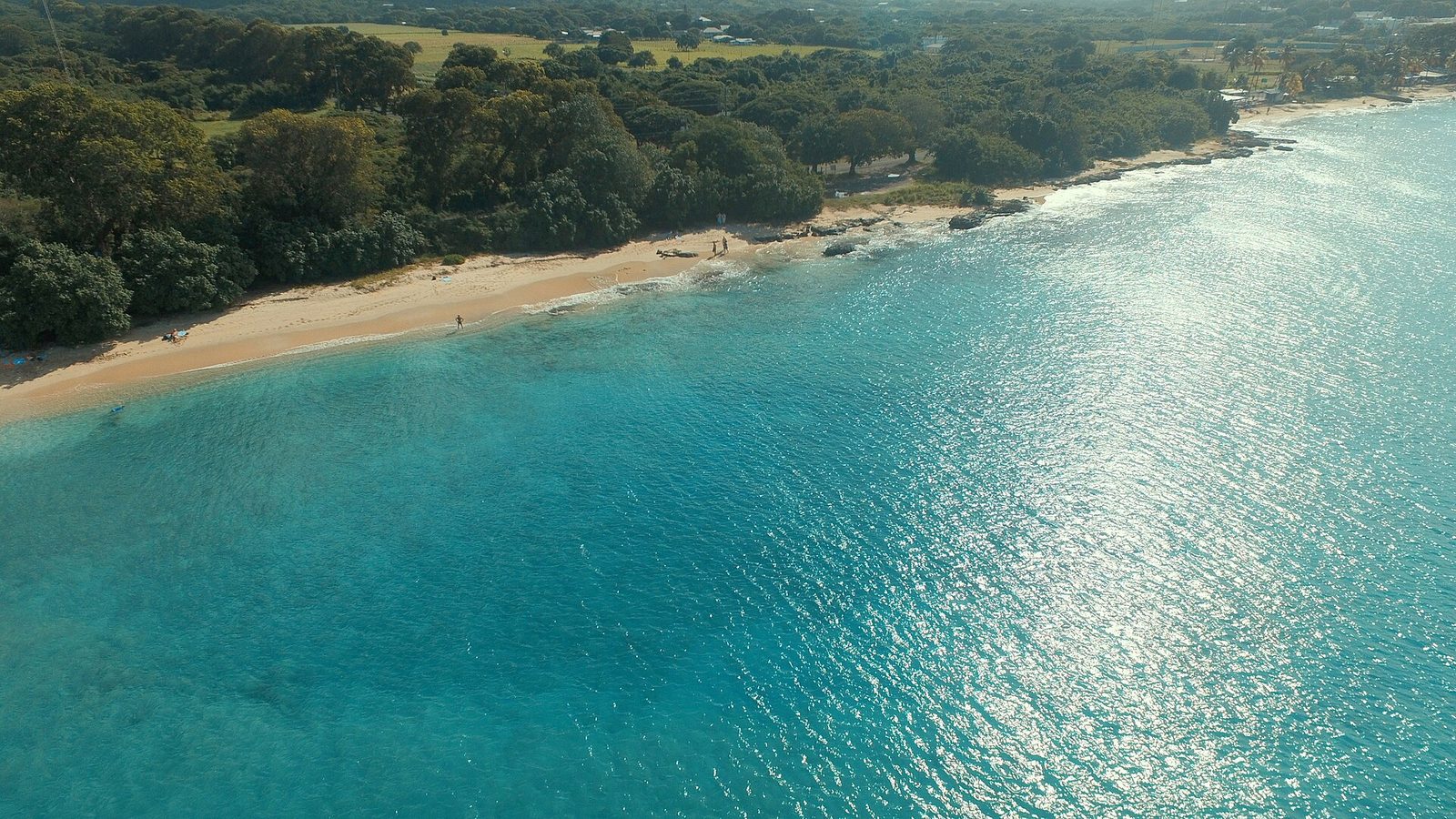
The coast around it
Monk's Bath sits on one of the wildest and least-developed stretches of St. Croix, and it's worth understanding the neighborhood before you go — partly for context, partly because there's more out here than the pool. This is the northwest corner, above Frederiksted, where the rainforest comes almost down to the sea and the coastline turns to black volcanic rock and pounding surf.
A short way up the coast is Ham's Bluff, the island's northwesternmost headland, crowned by a small early-20th-century lighthouse perched high above the water — one of the classic north-shore views. Just south, Butler Bay is known to divers for a cluster of purposely-sunk ships that now form an artificial reef. And between them sits Sprat Hall, a plantation greathouse said to be among the oldest surviving on the island, a reminder that this quiet coast was once busy with the sugar economy that shaped everything here. Threaded through all of it are the ruins — mill towers, boiling houses, cut-stone walls — that the island's plantations left behind.
Why it was cut from coral in the first place
The quarry origin of Monk's Bath is a small window into how St. Croix was built. In the plantation era, before concrete, islanders built with what they had: cut coral limestone from the shore, ballast brick that arrived in the holds of trading ships, and rubble bound with lime mortar burned from more coral. Estate Northside's owners quarried this very stretch of coast for the blocks to raise their sugar works on the hill above. When you look at the old yellow fort in Christiansted, the warehouses along the wharf, and the mill ruins in the hills, you're often looking at the same coastal coral that Monk's Bath was carved out of. The pool is industrial archaeology as much as it is a swimming hole — and then a second layer of history on top, from the 1950s, when one man decided the abandoned quarry would make a fine private bath.
A serious word on safety
It's worth repeating, because this isn't a lifeguarded beach: people have gotten hurt on St. Croix's north-shore rocks. The hazards are the sharp coral underfoot, the steep loose trail down, the sea urchins in the pool's crevices, and above all the swell. When a north groundswell is running, waves break over the outer wall with real force and the "bathtub" becomes dangerous. There is no cell signal to speak of, no one around, and no quick help if something goes wrong. Go on a calm day, in daylight, with someone else, in proper shoes — and if the ocean looks angry when you arrive, take your photos from the rocks and save the soak for another day. The pool has been there seventy years; it'll wait.
Photographing Monk's Bath
It's one of the most photogenic spots on the island, and a little planning pays off. The strong geometry — those hard right angles of the pool set against the chaos of the rock and surf — is the shot, and it reads best from slightly above, so scramble a few feet up the shore side rather than shooting from water level. Light is everything here: the northwest coast faces the afternoon and evening sun, so late-day light is warm and flattering, while harsh midday sun flattens the whole scene. If there's any swell at all, wait for a set to break beyond the pool and you'll catch spray and the occasional rainbow in the mist off Pop's Blow Hole nearby. Keep your gear in a dry bag between shots — salt spray carries a long way on this coast — and never turn your back on the ocean to line up a photo when the sea is up. The best pictures come from patience and a calm day, not from creeping closer to a dangerous edge.
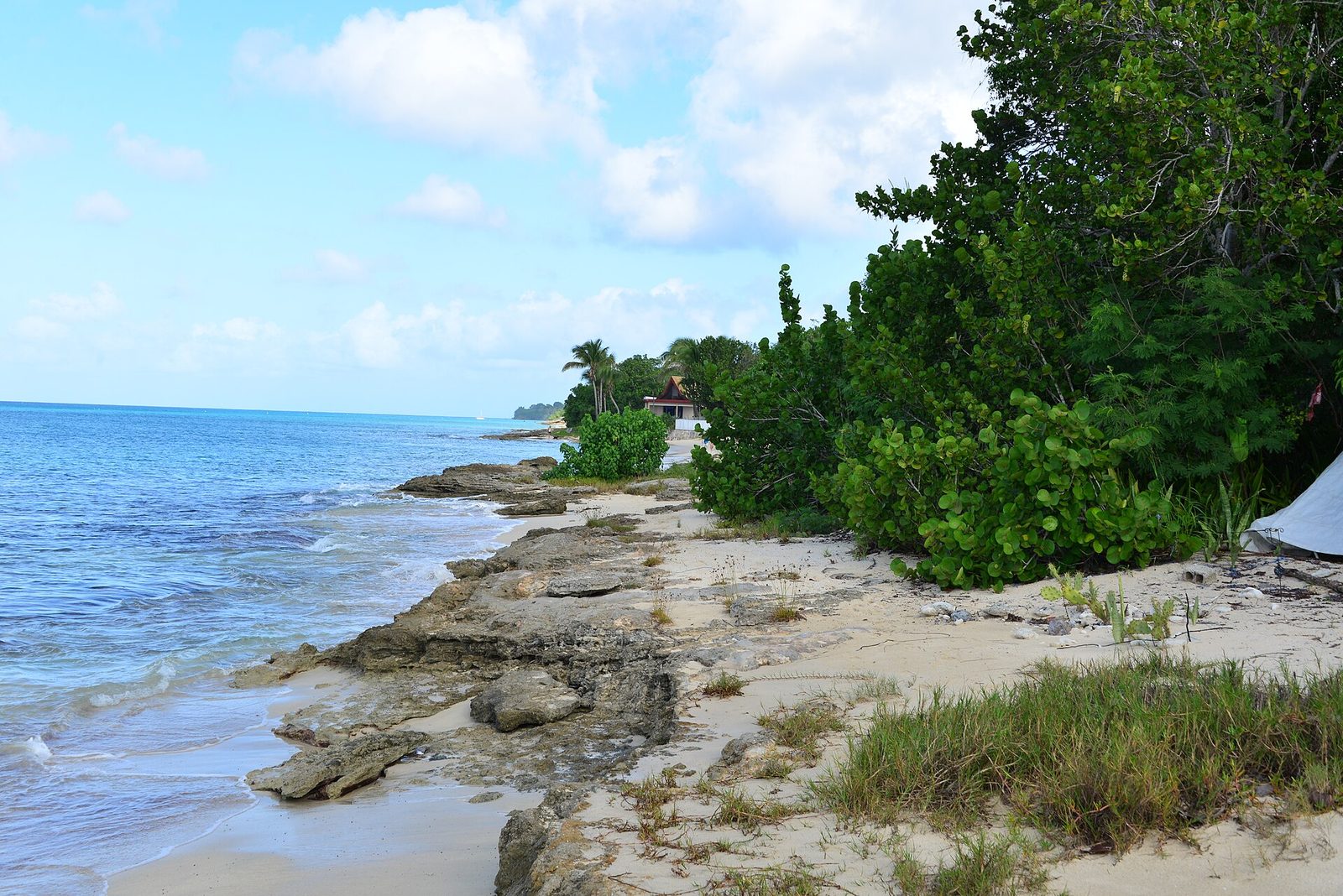
Make a west-end day of it
Because Monk's Bath sits about an hour from the East End, the smart move is to fold it into a full day exploring the west of the island rather than driving all that way for one swim. A natural loop: start with a late morning in Frederiksted — the yellow fort, the long pier, the murals and the waterfront — then work north up the coast, stopping at Rainbow Beach for lunch at a beach bar. Continue to Monk's Bath for an afternoon soak when the light is warm, detour up toward Ham's Bluff for the lighthouse view, and finish back in Frederiksted for the sunset the west coast is known for. That's a genuinely lovely day, and it turns a remote curiosity into the anchor of an itinerary.
Frequently asked questions
How hard is the hike down?
Short but steep and rough — a few minutes down a dirt path with a hand rope, then a walk along a rocky shore. It's not a long trek, but it's not stroller- or flip-flop-friendly. Reasonable fitness and real shoes are all you need.
Is it safe to swim in?
On a calm day with a low north swell, yes — it's a sheltered pool refreshed by the sea. On days with a big north swell it is genuinely dangerous, and you should stay out. Always check the marine forecast and read the ocean when you arrive.
Can I bring kids?
Older, sure-footed kids who swim well can enjoy it on a calm day with close supervision. It's not the right spot for toddlers or non-swimmers, given the terrain and the lack of any facilities or lifeguard.
Are there bathrooms or anywhere to buy water?
No. There are no facilities of any kind at Monk's Bath — bring your own water, snacks, and sun protection, and take all your trash back out with you.
Is it easy to find?
It's unmarked, which is half its charm and half its challenge. Follow the directions above carefully, and don't be shy about asking a local near Frederiksted; most know it. If precise navigation stresses you out, a guided north-shore tour takes the pressure off.
How long should I set aside?
From the East End, treat it as a full outing rather than a quick stop. Reckon on about an hour's drive each way, fifteen or twenty minutes down and back on the trail, and however long you want to linger at the pool and the blow hole — comfortably a half-day, and better folded into a whole west-end day as described above.
What's the best time of day?
Late afternoon. The northwest coast catches the best light as the sun drops toward the water, the heat eases, and you finish perfectly positioned for a Frederiksted sunset on the drive home. Just leave yourself enough daylight for the climb back up the trail.
Is it worth it?
Monk's Bath is not a polished attraction, and that's the point. There's no parking lot, no railing, no lifeguard — just a rope down through the trees, a strange and beautiful pool an anonymous islander carved out of a quarry seventy years ago, and the open Caribbean beyond it. For guests who like the idea of finding something most visitors never see, it's one of the most rewarding little adventures on St. Croix. Go carefully, go on a calm day, and leave it exactly as you found it.
Plan your own week.
Check the villa's calendar and hold your dates.