

Quelbe: the music built from what was at hand
Quelbe is the folk music of the U.S. Virgin Islands, and the 2003 law that made it official defined it as the territory's vocal and instrumental folk style, one that "traces its ancestry to Africa and Europe" and fuses bamboula rhythms and chants with what came later. That is a fair summary. The African side is the rhythm and the call-and-response singing; the European side is the dance forms — the quadrille above all — and the sound of the Danish and British military bands the islands heard for the better part of two centuries. Out of the two came something that is neither, and that sounds like nowhere else.
The names tell you how it was made. In the U.S. Virgin Islands it is quelbe; in the British Virgin Islands the same music is called fungi, after the cornmeal dish that is likewise a mix of whatever is in the kitchen. Everyone also calls it scratch-band music, after the sound of the squash — a dried gourd, serrated and scraped with a comb or a wire-pronged stick — that carries the rhythm. If you hear a dry, rasping pulse under a flute or a banjo on St. Croix, that is the scratch, and that is the band.
The origin story is a plantation story. On the sugar estates under Danish rule, enslaved people used the materials at hand to give rhythm and melody to their storytelling. The plantation owners outlawed drums, so rhythm had to come from other things — scraped gourds, struck metal — and later generations borrowed the instrumentation of the colonial military bands. The instruments were homemade for generations: a flute cut from cane, a hollow open-ended gourd, a banjo built from a sardine can with a wooden neck and strings, and, when cars arrived, a discarded muffler pipe blown for the bass. That is not a colorful detail; it is the whole design.
The music also carried a stigma for a long time, which matters when you meet the people who kept it. Stanley Jacobs, the flutist who has led the Ten Sleepless Knights since the early 1970s, told the National Endowment for the Arts that he remembers people saying you shouldn't be singing that quelbe. It was looked down on as old, rural music made from junk. The 2003 statute, the Smithsonian recording and the Heritage Fellowship are, among other things, the territory saying out loud that it disagrees.
| Instrument | What it is | What it does in the band |
|---|---|---|
| Squash | A dried local gourd, serrated and scraped with a comb or wire-pronged stick | The scratch — the rhythm the style is named for |
| Pipe (tail-pipe) | A discarded car exhaust or muffler pipe the player blows into | The bass line |
| Steel (triangle) | A steel triangle struck with a rod | High, ringing time-keeper |
| Banjo / banjo-ukulele | Small strummed banjo, historically built from a sardine can and wood | Chords and drive |
| Guitar | Acoustic or electric guitar | Chords, added later |
| Flute | Cane flute or metal flute (Stanley Jacobs learned to make cane flutes) | Carries the melody |
| Conga | Hand drum | Extra rhythm in today's bands |
| Modern additions | Electric bass, alto saxophone, drum kit, keyboard | Fill out the stage sound at festivals |
The instruments, one by one
The squash comes first because the music is named for it. It is a local gourd, dried, with ridges cut across its surface, and the player draws a comb, a fork or a stick of wire prongs across the ridges to make the rasp; the Smithsonian and the NEA both gloss it as a gourd rasp. Played well it is not background — it is the engine, and it sits where a snare drum would sit in a band that had one. The pipe is the other instrument that visitors do not believe until they see it: a length of car tail-pipe or muffler pipe, blown like a tuba, that puts a fat bass note under everything. Locals have a ruder nickname for it, which you can ask a band member about.
The steel is a triangle — Crucians say steel — struck with a metal rod for a high, ringing pulse against the squash. Then the strings: a small banjo or banjo-ukulele that strums the chords and much of the drive, and a guitar that came into the bands later. On top of it all is the flute. Stanley Jacobs learned to make cane flutes from Stanford Simmonds, a cane flute player, before he moved to a metal flute; he played flute with Joe Parris and the Hot Shots before he co-founded his own band. In many quelbe tunes the flute is the voice when nobody is singing.
The modern line-up widens from there. On the Ten Sleepless Knights' 2016 recording you hear the squash, the steel, the flute and the banjo-uke alongside an electric keyboard, a drum set, congas and an electric bass, and the NEA's profile lists alto saxophone and electric guitar among the additions modern ensembles use. Some scratch bands have used a washboard for the same rasp the squash provides. None of that changes the identity of the music; a quelbe band with a keyboard is still a quelbe band, and one without a squash is something else.
A practical ear-training tip: listen to the Folkways album once and pick out the squash, the pipe and the steel in turn. When you then walk up to a band at Festival Village, you will hear the four-piece core inside the amplified sound, and how the singer rides the scratch rather than the drum kit.
The songs as the island's newspaper
Quelbe was never only dance music. The lyrics, as the Jamesie Project puts it, fixed significant events in memory, spread rude gossip about the neighbors, and told the day-to-day trials of life on a small island. The NEA's profile of Stanley Jacobs says the songs "speak to Virgin Islands life and can be sharp-witted with humor and social critique." The music tells stories and jokes, often with a risque undertone, and always has. For generations that was one way news traveled between estates: you found out what had happened down the road because somebody sang it.
The repertoire is broader than a visitor might guess. The NEA lists jigs, Crucian merengues and quadrille dance melodies among the forms the Ten Sleepless Knights play. Quadrille is a kind of square dancing that came to the Virgin Islands from the French Caribbean, and quelbe bands have long been the bands that play it. Traditionally, too, the bands went serenading in the small hours of Christmas morning, so if you are on island in late December, listen for a scratch band drifting past at an odd hour.
The subject matter has always tracked island life: work, news, scandal, wit. The songs are handed down and recomposed rather than preserved in amber, so a band will play a tune with a hundred-year-old shape and a verse about last year. If you catch a lyric getting a bigger laugh from the Crucians around you than from you, that is the newspaper function working; ask what the joke was and someone will tell you.
The one thing to keep straight is that this is a living tradition with elders in it, not a museum piece with a plaque. Stanley Jacobs was born in 1941 and raised on St. Croix, and took to quelbe as a boy in the 1940s, when it was still the music you were told not to sing. When you hear the Ten Sleepless Knights or any of the younger bands, you are hearing that history in the room, in the present tense.
“I remember people saying that you shouldn't be singing that quelbe.”
Stanley Jacobs, flutist and bandleader, in his 2022 NEA National Heritage Fellowship profile
Stanley and the Ten Sleepless Knights
If quelbe has a standard-bearer it is this band. Stanley Jacobs co-founded Stanley and the Ten Sleepless Knights on St. Croix in the early 1970s and has led it since. He plays flute — cane flute first, then metal — and the band's line-up around him is the classic core described above: squash, steel, banjo-uke and flute, filled out with keyboard, drums, conga and electric bass. The core of every scratch band you will hear on the island is in that arrangement, and most of the younger bands measure themselves against it.
The recognition came late and then all at once. On February 5, 2016, Smithsonian Folkways Recordings — the nonprofit label of the Smithsonian Institution — released Quelbe! Music of the U.S. Virgin Islands, the band's album, and with it the first widely distributed, properly documented recording of the music. In 2022 the National Endowment for the Arts named Stanley Jacobs a National Heritage Fellow, the NEA's lifetime honor for practitioners of the folk and traditional arts. The same year, the Ten Sleepless Knights Folklife Festival was established on St. Croix, according to the NEA's profile — a festival built around the band and its music.
What that means for a visitor is that this is the one quelbe band you can reliably study before you land. The Folkways album streams on the usual services and sells from the label directly, and the Smithsonian's site carries short films of the band members telling their own stories and of Jacobs talking about the music being made official. Listen to it on the drive from the airport.
Whether you can hear them live during your week is another matter, and we will not promise it. They play festival stages and cultural events on island, and the folklife festival is a natural target if its dates line up with yours; ask the villa concierge to check the current calendar rather than trusting anything printed. The sure thing is the recording, and it is a good one.
Jamesie, Bully, Blinky and the other bands
The other name every Crucian knows is Jamesie. James "Jamesie" Brewster was born on St. Croix in 1929 and led Jamesie and the All-Stars until his death in the summer of 2014. He is the subject of a documentary, "Jamesie, King of Scratch," made by the filmmaker Andrea Leland, and Columbia College Chicago holds the Leland collection and runs an online exhibit on his music under the title "Scratching the Surface: The Quelbe Music of James 'Jamesie' Brewster." In 2024 the project's unedited footage was made available online for free — unedited film of a master scratch-band musician talking and playing, which is more than most folk traditions ever get.
Two more St. Croix names come up in every account of the tradition: Bully and the Kafooners, and Blinky and the Roadmasters. Along with Jamesie and the All-Stars and the Ten Sleepless Knights they are the bands carrying quelbe forward on this island, and the scratch-band tradition has stayed strongest on St. Croix specifically. We have not been able to confirm which of them are gigging in a given season, so treat the names as a listening list rather than a promise, and check the Festival Village schedule when it is published.
Across the water in the British Virgin Islands the same music under its other name, fungi, has its own elders — Elmore Stoutt is regarded there as the Fungi Master — and its own bands, the Lashing Dogs and the Loverboys, plus a Fungi Fest in November. On St. Croix, though, the calendar is the thing, and the next sections are about that.
Act 6642: how quelbe became the official music
The statute is real, and the paper trail is short. On December 16, 2003, the Legislature of the Virgin Islands passed Bill No. 25-0056, sponsored by Senators Shawn-Michael Malone, Lorraine Berry and Emmett Hansen II with five more senators as co-sponsors, designating quelbe the official traditional music of the Virgin Islands. Governor Charles W. Turnbull signed it into law at a ceremony at Government House in Christiansted, and it became Act No. 6642. The Source reported the signing on December 28, 2003, under the headline "It's official: quelbe is V.I. traditional music," and ran a longer piece the following month.
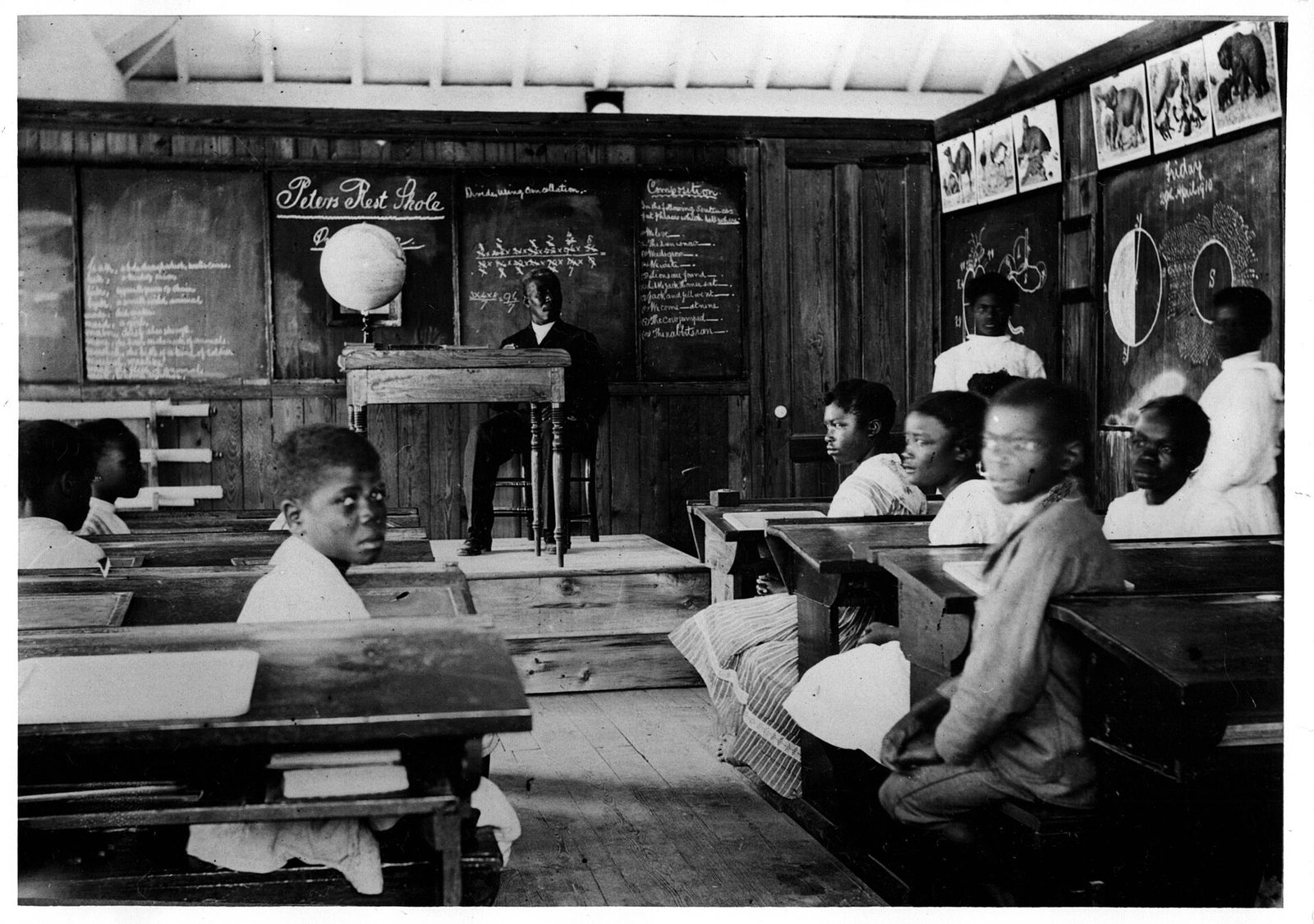
The law did two things. It defined the music — the vocal and instrumental folk style that traces its ancestry to Africa and Europe — which put a legal name on something everyone had known and few had written down. And it required that quelbe be taught in the territory's public schools, which is the part with teeth: it put the music into classrooms rather than leaving it to a handful of bands. A few sources date the law to 2004, when the news reached the wider world; the vote and the signature were in December 2003.
The mocko jumbie has no statute of its own, and it does not seem to need one. It is in the schools through the Guardians of Culture academy, on the museum wall in Frederiksted, and at the head of every parade. Between the law for the music and the academies for the dancers, both traditions are about as well looked after as a living folk art gets — and, unusually, both are easy for a visitor to walk up to.
One footnote: the designation is territory-wide, so it covers St. Thomas and St. John too. But the scratch-band tradition is strongest on St. Croix. If quelbe is on your list, this is the right island.
Where and when to actually see them
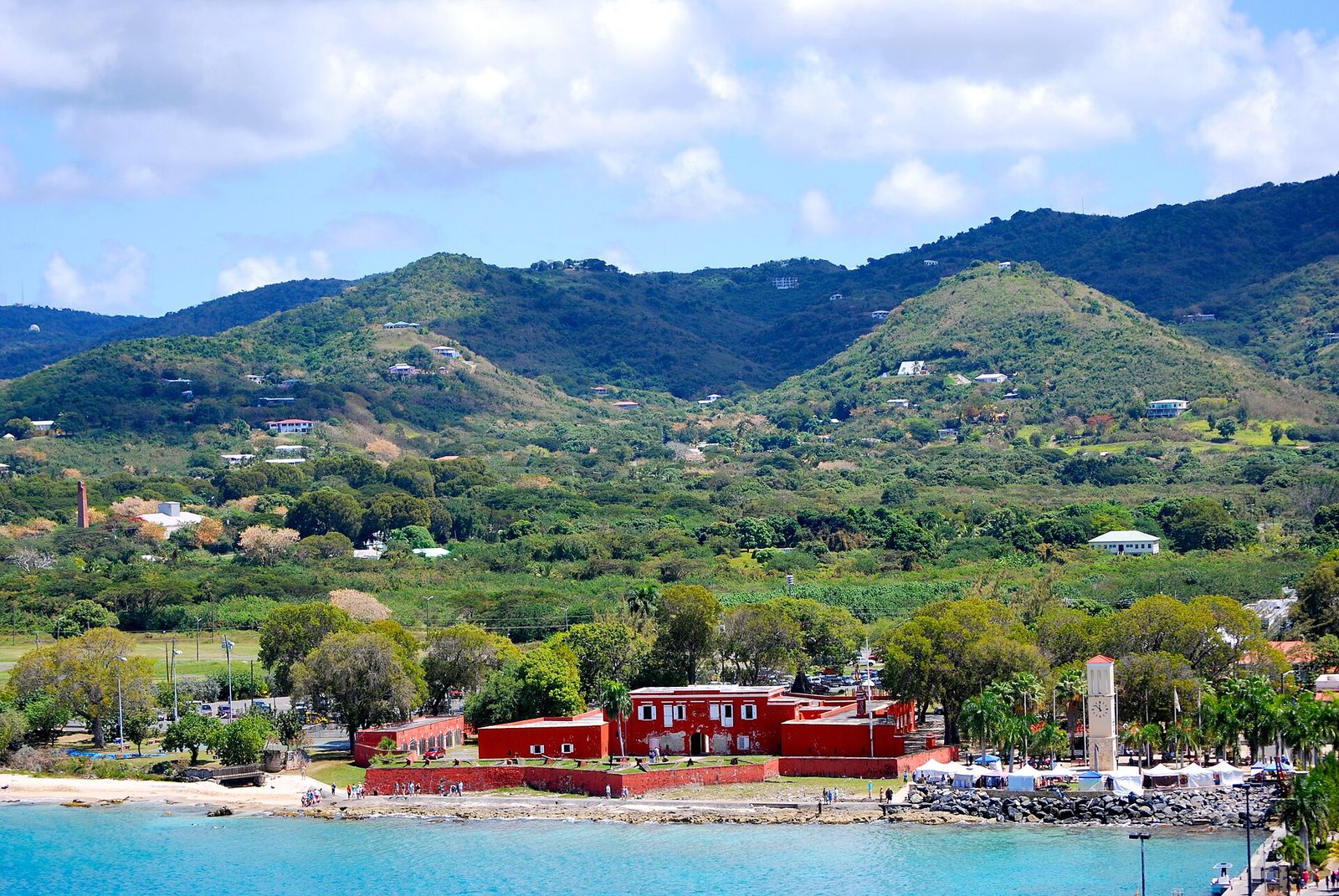
The calendar is the same for both traditions, and it clusters. The biggest single chance is the Crucian Christmas Festival, which opens on December 26 and runs into the first days of January: the Children's Parade and the Adults' Parade in Frederiksted are where the troupes come out in full, and the Festival Village stages are where the bands play at night — the 2025–26 season ran December 26 to January 3, with the parades on January 2 and 3, and the 2026–27 dates are tentatively listed as December 26 to January 2. Our festival guide has the logistics; the short version is that Frederiksted is 45 to 60 minutes from the East End and you park on the edge of town.
The easiest chance is Jump Up, Christiansted's free quarterly street night, which has typically landed around February, May, July and November. The downtown streets close, the shops stay open, scratch bands and DJs take the corners, and the mocko jumbie troupes work the crowd. It is about fifteen minutes from the villa and it is the single best evening for a first-time visitor to meet both traditions at close range. Dates float, so check the island calendars once your travel dates are set.
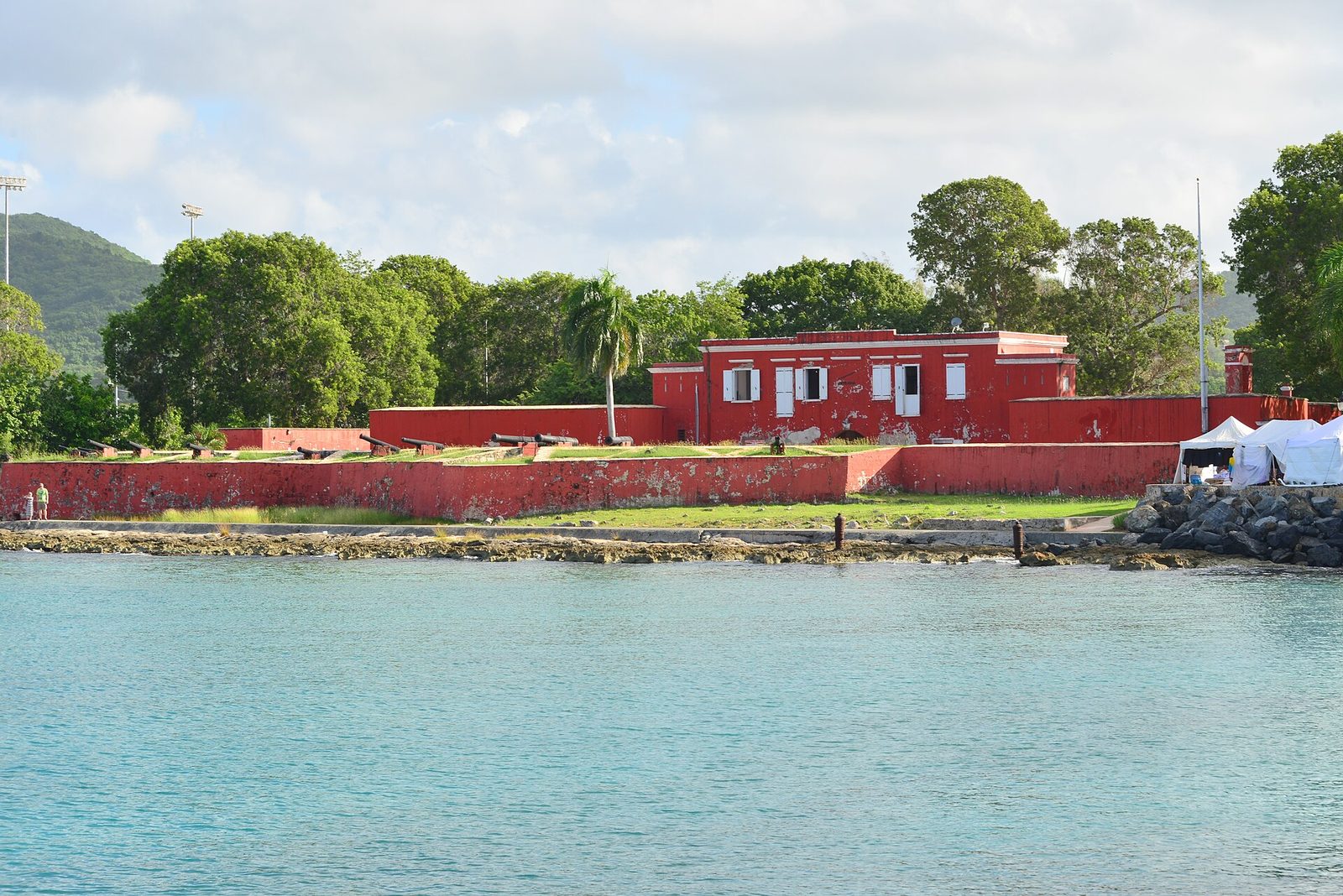
In February, Agrifest at Estate Lower Love — the territory's agricultural fair, held over Presidents' Day weekend, February 14 to 16 in 2026, with $8 adult admission that year — has jumbies working the grounds and cultural performances on its stages; one of the photographs in our library is a mocko jumbie stopping at a juice stand there in 2023. On July 3, Emancipation Day brings observances to Fort Frederik and Frederiksted; check that year's program for cultural performances. In between, watch for the Ten Sleepless Knights Folklife Festival, established in 2022, and for programs at the Caribbean Museum Center for the Arts on Strand Street, whose 2022 moko jumbie performance sold out.
Two hedges. Some resorts and restaurants book a scratch band or a jumbie for a weekly culture night, and the villa concierge can ask around during your week, but those bookings change with the season and we will not name one as a promise. And the territory's arts council, the Virgin Islands Council on the Arts, is another place to look for cultural programming, but the gotostcroix.com and visitusvi.com calendars are the practical places to confirm dates before you drive across the island for something. Confirm first, then go.
How to be a good guest: photos, tipping and the music
The dancers and musicians you will meet are working, teaching, and in many cases performing for free at community events, so the courtesies are simple and worth following. Photograph the parade — that is expected, and the troupes like a crowd with cameras up. Do not step into the route or into a dancer's turning space for a shot, do not use flash close to a stilt dancer's eyes, and if you want a close portrait of a child in a youth troupe, ask the adult with the group first. At Jump Up, dancers pose readily with people who ask politely; ask, and then move on so the next family can.
Money is straightforward. If a troupe or a band passes a hat or a bucket, sells CDs, or has a donation box at a museum event, put in a few dollars; that money is what keeps academies like the Guardians of Culture buying stilts and cloth for forty children. Do not tip a dancer by pressing cash into a hand while they are on stilts — hand it to a troupe adult or the collection. And never, for any reason, touch a dancer's stilts, grab a hand for balance, or ask a working dancer to hand the stilts over for a try.
Buying the music is the easiest way to give back, and the most lasting. The Ten Sleepless Knights' Folkways album is the anchor; from there, ask any band you hear whether they have a CD or a download card, and pay cash. Watch the Jamesie footage online. If you come home with one recording and one photograph of a jumbie against a Frederiksted facade, you have done it right.
Language, last. Both spellings are fine, and nobody will correct you. Do not call the parade a costume party or the jumbie a clown; the figure is a guardian and the people dancing it know that. Ask questions — Crucians are proud of both traditions and happy to explain.
Bring the music home
- Before you fly, stream or buy Quelbe! Music of the U.S. Virgin Islands (Stanley and the Ten Sleepless Knights, Smithsonian Folkways, 2016) so you know the squash, the pipe and the steel by ear.
- At Festival Village, Jump Up or Agrifest, ask the band whether they have CDs or a download card, and carry cash for it.
- Watch the Jamesie Project's free online footage of James "Jamesie" Brewster and the All-Stars.
- Look up the Ten Sleepless Knights Folklife Festival and CMCArts program dates for your week, and ask the concierge to reconfirm.
Mistakes to avoid, and doing it with kids
The first mistake is assuming this is a tourist show that runs on demand. It is not; it runs on the community's calendar, and if your week misses the festival, Jump Up and Agrifest, you may see no jumbies at all. Plan the dates first if it matters to you, and read our best-time guide with the culture calendar in mind. The second mistake is arriving late to a parade in Frederiksted, finding the streets closed, and watching from three blocks back; leave the East End early, park on the edge of town, and walk in.
The third is treating the dancers as props: stepping into the route, grabbing at a stilt, asking a child on stilts to hold still for a minute. The fourth is expecting quelbe in every bar. It is festival and event music and quadrille music, not background sound, and most Christiansted nightlife is DJs, reggae and soca; if you want a scratch band, go where one is scheduled. And the fifth is skipping the museum: on a rainy day, the Caribbean Museum Center for the Arts in Frederiksted is the one indoor place where the tradition is on the wall.
With children, the whole thing gets easier, not harder. The jumbies were made for a crowd with kids in it — leaning down to greet a small child is part of the act, and the youth troupes are full of dancers your children's age, which lands differently than any adult performer would. Agrifest is the gentlest first exposure: daylight, animals, juice, and jumbies at ground level on the fairgrounds. Jump Up early in the evening is next. The parades are loud and long; go for an hour with a shade plan and an exit route rather than the whole afternoon.
If your children come home wanting stilts, that is a normal response and there is a real answer to it. The Guardians of Culture academy on St. Croix has members as young as eight, and Willard John has said he means to run workshops on the sister islands too. A visitor cannot enroll for a week, but the concierge can ask whether a demonstration or a short lesson is possible during a longer stay, and our St. Croix with kids guide has the rest of the island's answers for the days in between.
Questions people ask
What is a mocko jumbie?
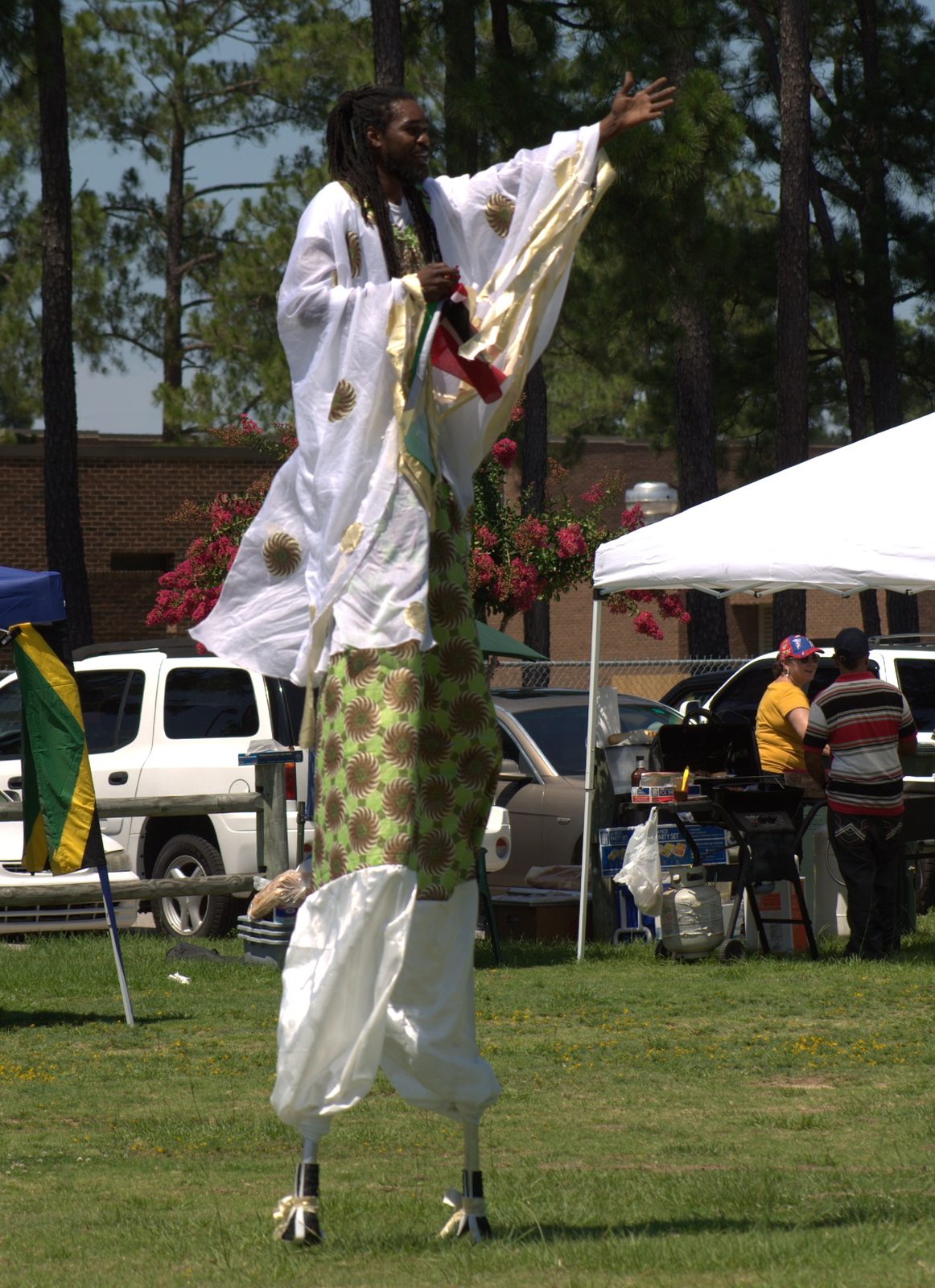
A mocko jumbie (also spelled moko jumbie) is a masked stilt dancer in the Virgin Islands and wider Caribbean masquerade tradition. The figure comes from West African stilt-dance traditions carried across the Atlantic by enslaved people; the jumbie was traditionally a guardian who blessed the crowd and drove off evil spirits. Today troupes of trained dancers, many of them children, perform at parades, festivals and street parties across St. Croix.
Where does the word come from?
Jumbie is the common Caribbean word for a spirit or ghost, related to the Haitian word zombi. Moko is less certain: many accounts trace it to a West African term for a healer or guardian spirit, and others tie it to a Yoruba orisha or a Kongo deity. On St. Croix you will see both spellings, mocko and moko, sometimes in the same parade lineup, and both refer to the same figure.
How tall are the stilts?
It depends on the dancer. Beginners learn on short stilts and move up in stages; experienced dancers use tall sets that sources put at around ten feet, which puts a grown dancer's head twelve feet or more above the street. The stilts are strapped to the legs and hidden by long trousers or skirts, which is why the figure looks impossibly tall rather than like a person on stilts.
What is quelbe, and why is it called scratch-band music?
Quelbe is the folk music of the U.S. Virgin Islands: African rhythms and call-and-response singing joined to European dance forms like the quadrille, played on a band of squash (a scraped gourd), pipe (a car tail-pipe blown as a bass), steel triangle, banjo-ukulele, guitar and flute. Scratch band refers to the scraped gourd that drives the rhythm. In the British Virgin Islands the same music is called fungi.
Is quelbe really the official music of the Virgin Islands?
Yes. In December 2003 the Legislature passed Bill 25-0056, sponsored by Senators Shawn-Michael Malone, Lorraine Berry and Emmett Hansen II with five co-sponsors, and Governor Charles W. Turnbull signed it at Government House in Christiansted as Act 6642, designating quelbe the official music of the Virgin Islands and requiring that it be taught in public schools. A few sources date it to early 2004, when the news spread; the vote and signing were in 2003.
Where can I see mocko jumbies on St. Croix?
The surest places are the Crucian Christmas Festival parades in Frederiksted in early January, Christiansted's quarterly Jump Up street nights, and Agrifest in mid-February at Estate Lower Love. Emancipation Day observances on July 3 in Frederiksted and events at the Caribbean Museum Center for the Arts on Strand Street are other regular chances. Dates move every year, so confirm on the island event calendars before you plan a day around them.
Where can I hear a real quelbe band?
The Festival Village stages during the Crucian Christmas Festival, Jump Up nights in Christiansted, cultural showcases at Agrifest, and the Ten Sleepless Knights Folklife Festival, established on St. Croix in 2022. Some resorts and restaurants book scratch bands for culture nights, but schedules change, so ask the villa concierge to check who is playing during your week. Stanley and the Ten Sleepless Knights' 2016 Smithsonian Folkways album is the easiest way to hear the music before you arrive.
Is it all right to photograph the dancers, and should I tip?
Photographing a parade is expected; the courtesy is not to block the route, not to step into a stilt dancer's turning space for a shot, and to ask before close portraits of children in the youth troupes. If a troupe or band passes a hat, sells CDs or has a donation box, a few dollars is right and helps keep youth academies like the Guardians of Culture running. Never touch a dancer's stilts or grab a hand for balance.
Can visitors or kids try stilt dancing?
Not casually at a parade, and please do not ask a working dancer to hand over the stilts. The Guardians of Culture Moko Jumbies run a youth academy on St. Croix that has trained several hundred children since 1993, with members as young as eight, and Willard John has said he plans workshops on the sister islands. If your family wants a lesson or a demonstration during a longer stay, the concierge can inquire, but there is no walk-in tourist class we can promise.
Doing it from The Cerulean
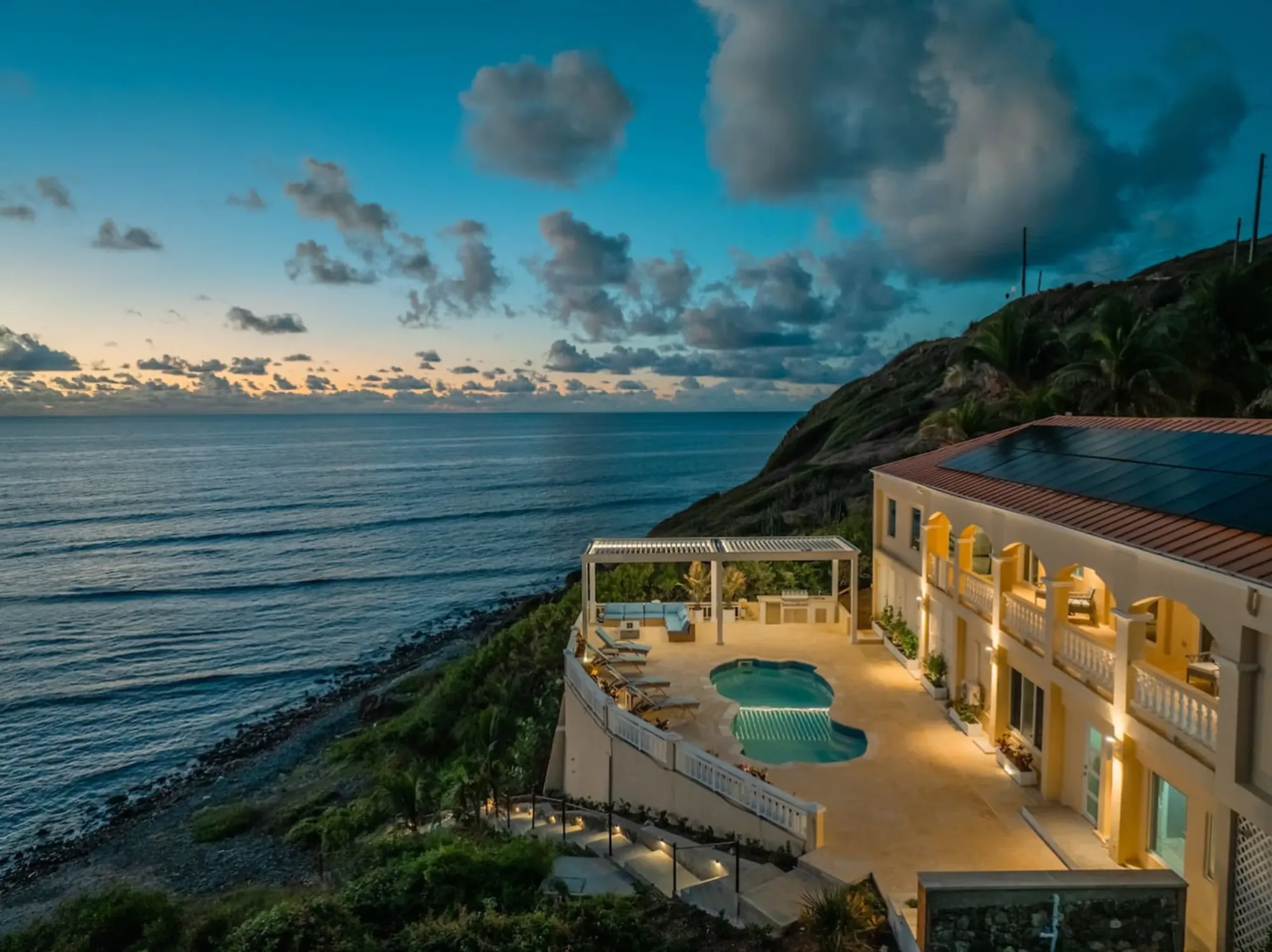
The villa sits on the East End, which is the quiet end of the island and the wrong end for Frederiksted — and that turns out to be the right arrangement. Christiansted, with its quarterly Jump Up, is about 15 to 20 minutes away; Frederiksted, with the festival parades, Fort Frederik and the museum center, is 45 to 60 minutes west along Centerline Road, longer on parade days. Ask the concierge to check the current dates for the festival, Jump Up, Agrifest and any culture nights during your week, and to line up a rental car if you have not booked one; there is no major rideshare on the island.
The rhythm that works is beach morning, culture evening. Snorkel off the private beach or take the kids to the pool until mid-afternoon, then drive to town: Christiansted for Jump Up at seven, back under the stars by ten; or an early start west for a Frederiksted parade day, with the fort, Strand Street and the food fair before the troupes step off, and home for a late swim.
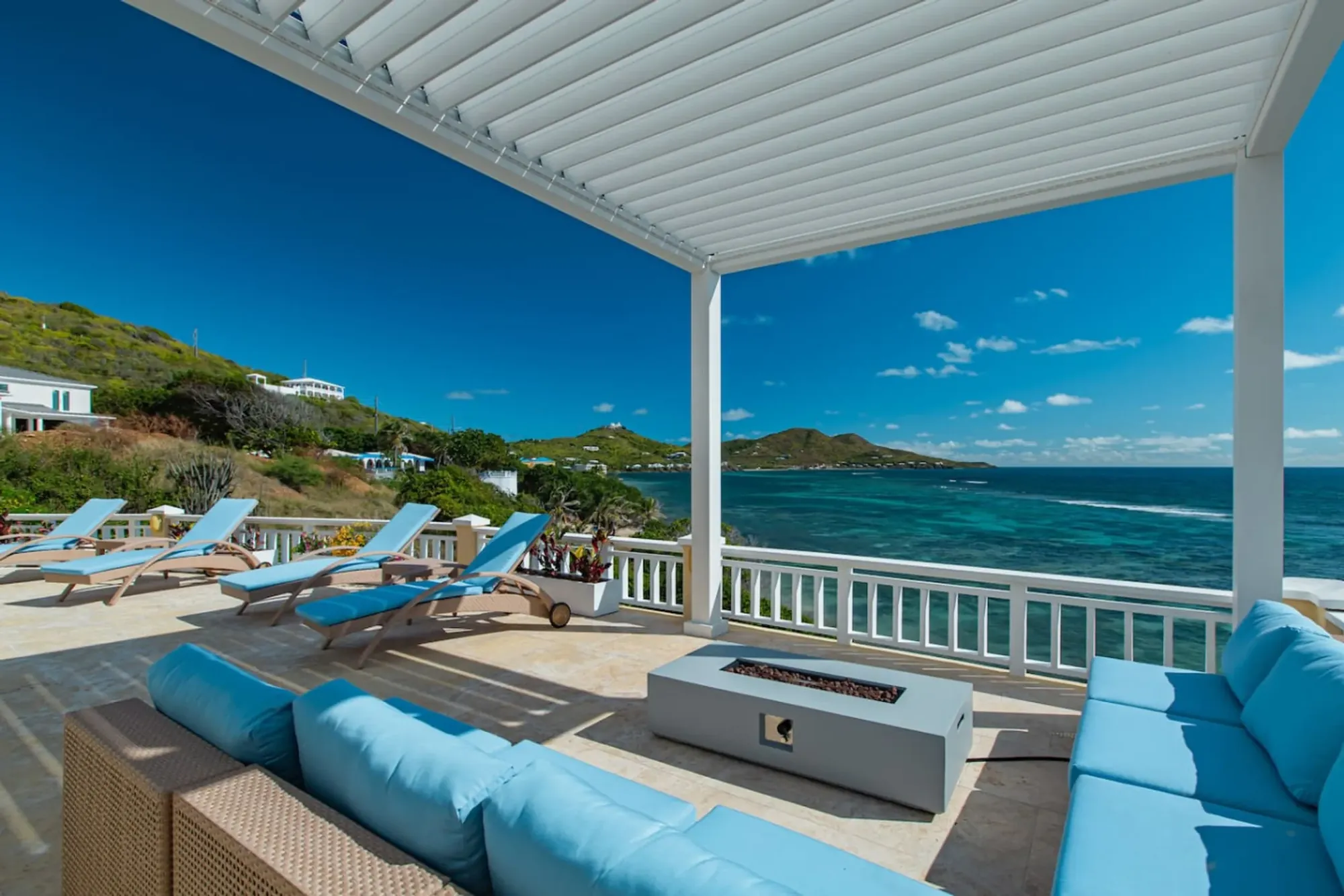
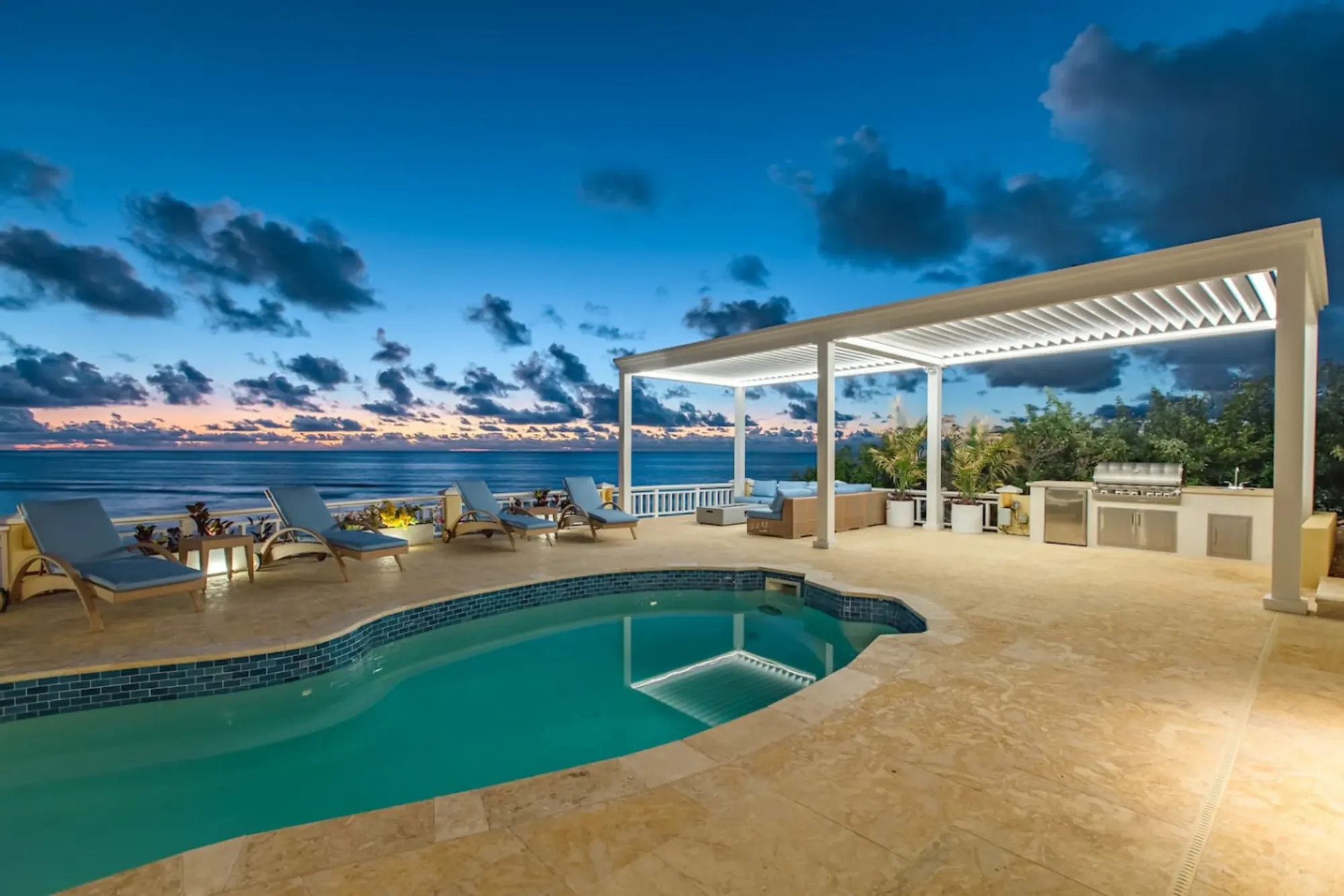
The house does the rest. Put the Folkways album on over the pool deck the first evening so the sound is in everyone's head before the first band; the kitchen and the outdoor kitchen will handle the pates and kallaloo you bring back from a food fair, and the fire pit terrace is where the story of the twelve-foot dancer who leaned down to your youngest gets told for the rest of the week. With five bedrooms across the main house and the guest cottage and room for twelve, the multi-generation math works: grandparents can skip J'ouvert and still hear about it at breakfast.
And if the calendar misses you entirely — no Jump Up, no festival, no fair — the museum in Frederiksted, the Folkways record and the towns themselves are still here, and the cultural and historic directory lists what is open. You did not miss a show. The dancers and the bands will be back on the street next quarter, doing what they have done in these towns since at least 1791.